The Mental Health Crisis in Football: Vincent Gouttebarge's Insights
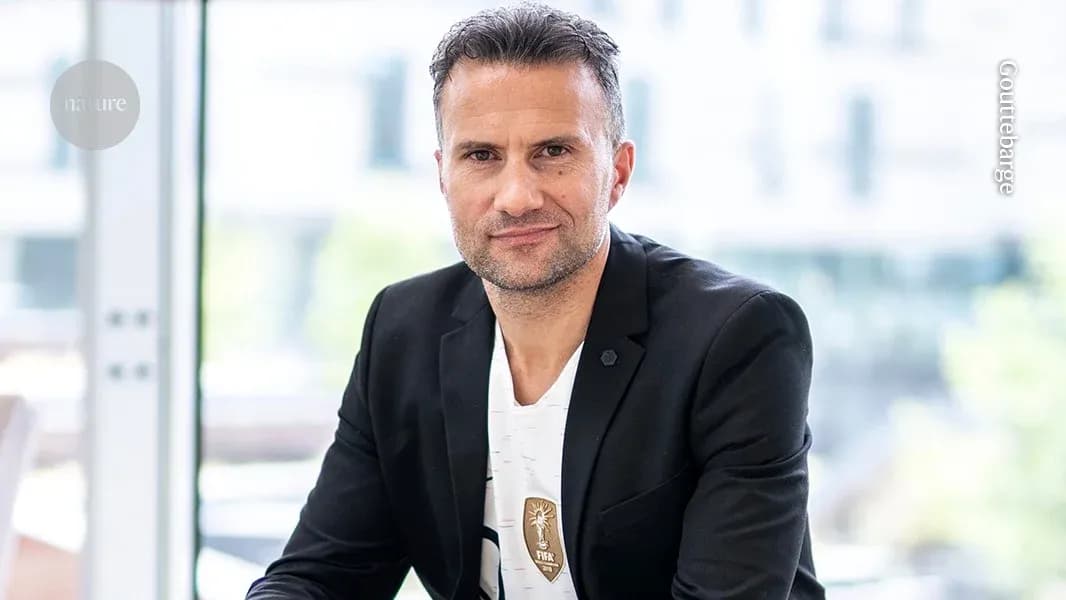
Vincent Gouttebarge knows what it feels like when a body breaks down. For more than a decade he lived the grind in France and the Netherlands, before retiring in 2007 and swapping the dressing room for the lab. Now, as medical director at FIFPRO and chair of the International Olympic Committee’s Mental Health Working Group, he has a blunt message for the sport he once played.
Footballers are not superheroes. They are workers under extreme strain.
As the 2026 men’s World Cup kicks off across the United States, Canada and Mexico, the spectacle will dominate screens and timelines. Behind it sits a quieter story: the physical and mental cost for the players driving the tournament.
World Cup glory, World Cup fallout
Being called up by your country should be the pinnacle. For many, it is. The anthem, the shirt, the sense that a career has reached its highest point.
But the emotional reality is far more fragile. A World Cup can lift a player or slowly crush him, depending on minutes played, results, and the role he is handed. Starters ride the high of victory or the weight of expectation. Those on the bench live a different kind of torment, trapped between pride at being there and frustration at not contributing.
And when the final whistle of the tournament blows, there is barely time to breathe.
Players are rushed back to their clubs. If they are fortunate, they steal a week or two of rest. Many do not. One season bleeds into the next. There is no real off‑switch, no genuine recovery window between campaigns. The calendar rolls on; the players are expected to keep up.
A calendar that grinds players down
Gouttebarge does not dress it up: the modern match schedule is a health issue, not just a performance concern.
At the elite level, some players face two or even three matches a week, stacked one after another, sometimes without a proper day off. Domestic leagues, continental competitions, national-team fixtures, expanded tournaments – each new event squeezes the margins further.
In 2024, FIFPRO and the World Leagues went directly to FIFA, demanding change. The message was clear: reschedule competitions, build in recovery time, stop treating players as endlessly renewable resources.
The overload is not just about tired legs. It hits physically, physiologically, emotionally and cognitively. Concentration, decision‑making, mood, sleep – all of it is under pressure. Then there is the invisible extra layer: the constant noise of social media, the scrutiny that does not stop in-season or on holiday. There is no escape from judgment.
Inside the numbers: symptoms, not superheroes
From the outside, the modern professional can look untouchable: big salaries, big stadiums, global status. Gouttebarge’s research shows something else.
Professional footballers live with many of the same stressors as anyone else: relationships, family issues, financial worries, personal setbacks. On top of that sits a stack of sport‑specific pressures.
Injury is at the heart of it. The data points to a bidirectional relationship between injury and mental health. Poor mental health can make a player more vulnerable to musculoskeletal problems. A serious injury, in turn, is often the most significant adverse life event of a career – months without training, without competition, without the daily structure that defines an athlete’s identity.
Unexpected poor performances add another hit. When your job is played out in front of millions, a bad run is not just a dip in form; it becomes a public narrative you have to live inside.
For research, Gouttebarge and his colleagues focus on symptoms: self‑reported adverse thoughts, feelings and behaviours. Full clinical diagnosis across large groups of elite players is simply not practical. Even so, the patterns are clear, and they are worrying.
The weight of stigma
Mental health remains a taboo topic in large parts of the game.
Football, by tradition, is conservative. In Europe, the conversation has moved. Players speak more openly, clubs run awareness campaigns, and support structures are slowly improving. But the stigma has not disappeared.
In South America, Africa and many parts of Asia, where football’s grip on society is just as strong, talking about depression or anxiety is still widely viewed as a sign of weakness. A player can stand in front of the cameras and explain an ankle injury or a hamstring tear in detail. When the problem is panic, insomnia or a darkening mood, the silence returns.
Players worry about the reaction of the one person who controls their immediate future: the coach. Admit to depression, and the fear is simple – you might never see your name in the starting XI again.
Gouttebarge argues that the sport needs a double push. From the bottom up: education and mental‑health literacy for players and coaches, so that everyone in the dressing room understands what they are seeing and feeling. From the top down: a structural shift in how the game builds its medical teams.
At national‑federation level, medical committees still tend to be built around sports physicians, orthopaedic surgeons and cardiologists. Mental‑health professionals are often absent. For Gouttebarge, that gap is no longer defensible.
Education that changes behaviour
In 2018, FIFPRO rolled out a mental‑health education programme for players. It was not a gold‑standard randomized trial, but it delivered something more important to a sport that often waits too long for perfect evidence: proof of impact.
After the programme, players showed better attitudes and behaviour around mental health than before. The shift underlined a simple point. Invest even a small amount of time in explaining why mental health deserves the same place on the agenda as muscle tears and ligament damage, and the culture begins to move.
The message is not about special treatment. It is about parity. Acknowledging that the brain is as central to performance and wellbeing as the knee or the heart.
Isolation as punishment
One practice particularly infuriates Gouttebarge: the quiet exile of unwanted players.
A new coach arrives. The squad is too big. A handful of players are told to train alone or shunted off to work with the youth team. It is a familiar scene in professional football, treated by many as part of the business.
From a trade‑union standpoint, it is already unacceptable. These are employees with contracts, pushed to the margins of their workplace. From a mental‑health perspective, it is worse.
Social support is one of the strongest protective factors against mental‑health problems. Deliberately stripping a player of that support – their teammates, their normal environment, their daily routines – heightens the risk of serious issues. In most industries, this kind of isolation would trigger outrage. In football, it still happens regularly, a sign of what Gouttebarge calls poor leadership at club level.
As the World Cup unfolds and the world revels in late winners and breakout stars, his warning cuts through the noise. The game’s biggest tournament will create heroes and heartbreak. The real measure of football’s maturity is whether it can protect the people at its core long after the final whistle blows.