Marcus Rashford vs Anthony Gordon: The England Dilemma
Marcus Rashford was never supposed to be a dilemma. He was supposed to be the story.
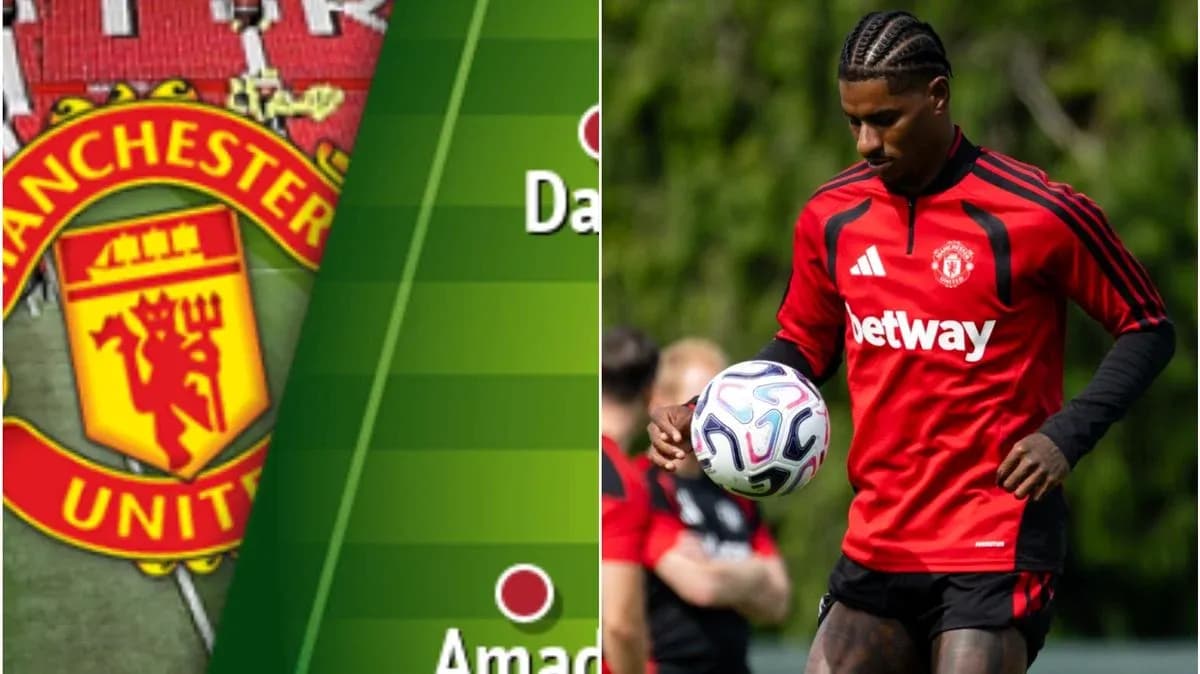
The homegrown icon who dragged Manchester United through dark seasons, the forward whose form once made him untouchable for club and country, suddenly found himself drifting less than two years ago. A clash with Ruben Amorim, a declaration that he was "ready for a new challenge," and a loan to Aston Villa that felt more like a holding pattern than a rebirth. There were flashes in claret and blue, reminders of the player he had been, but everyone could see it: Rashford needed a new permanent home, not another stopgap.
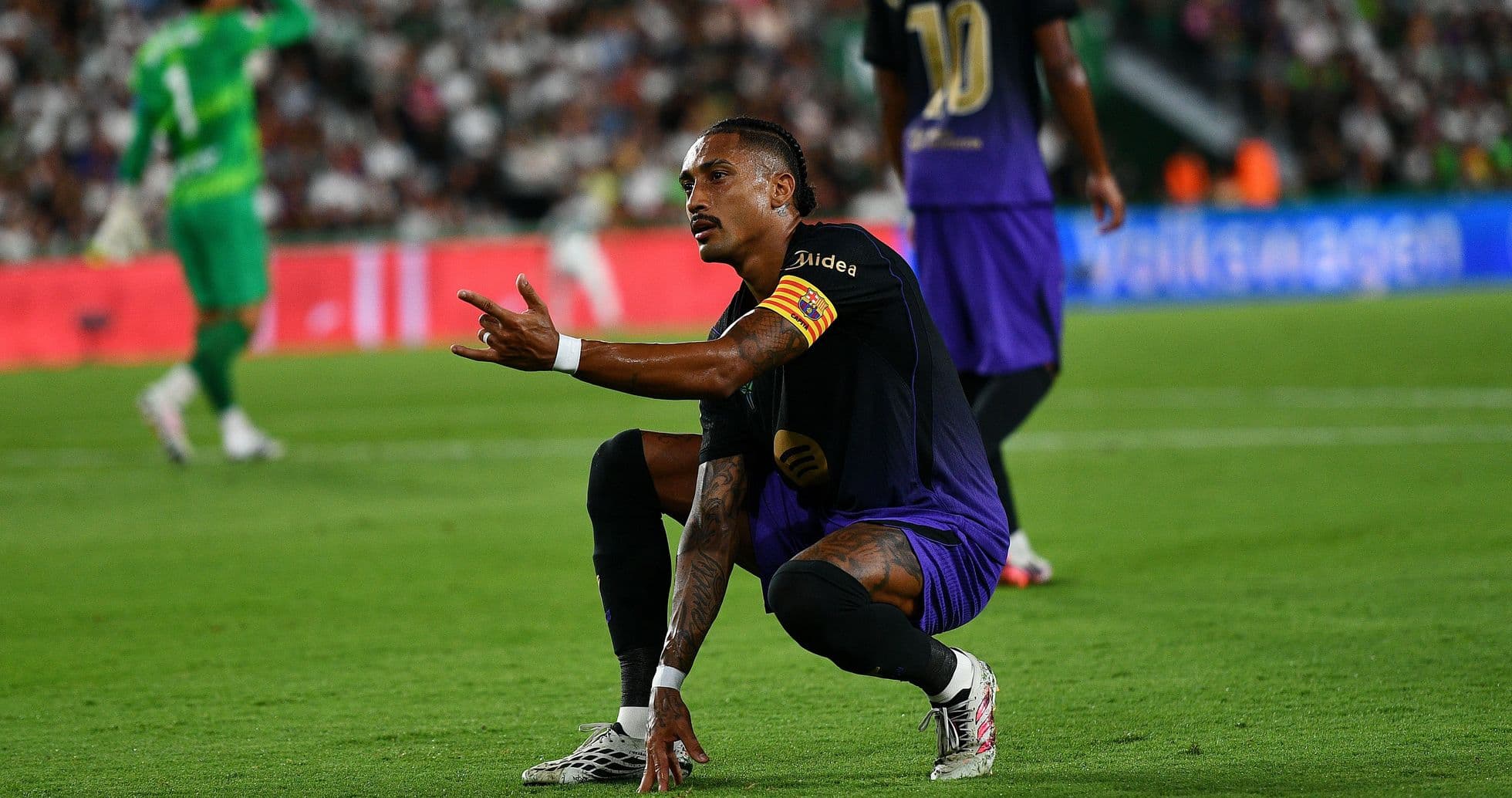
Barcelona offered the lifeline, but on their terms. A loan, not a commitment, with a €30m option tucked into the small print – a modest figure in a market that has long since lost its mind. The competition was fierce: Lamine Yamal, Raphinha, Robert Lewandowski, Ferran Torres. Minutes would have to be earned, not gifted. Still, this was the reset Rashford had been searching for.
Hansi Flick made it clear from the start that this was no vanity signing. "[Barca sporting director] Deco and I, we spoke before the season about what we need. We need a player like him. I'm so happy to have him here in Barcelona," he said in September. Rashford responded the only way that really counts at Camp Nou: with numbers and moments. Fourteen goals, 11 assists, and one outrageous free-kick in May’s Clasico that bent not just into the top corner, but effectively wrapped the Liga title in blaugrana ribbons.
No wonder he has spoken openly about wanting to stay. No wonder team-mates have pushed the club to trigger that option. His form has kept alive the lifeline Thomas Tuchel threw him in March 2025, carrying him all the way to what will be his fifth major international tournament. On pedigree alone, Rashford should be one of the first names on the England teamsheet.
He isn’t. And that’s where Anthony Gordon crashes into the story.
The runner who changes everything
You don’t pick Gordon over Rashford because he scores more or assists more. You pick him because modern international football has become a game of systems and structure, of synchronised movement and selfless running, where the stars only shine if the supporting cast never stops working.
Gordon is that cast. And then some.
Watch him for five minutes and the pattern is obvious. He never stands still. With the ball, without the ball, in possession, out of possession – it doesn’t matter. He sprints the channels, offers for through-balls that never arrive, makes the same run again and again, undeterred by the futility of the last one. Most wingers sulk when they’re ignored. Gordon just goes again.
His work without the ball is even more brutal to play against. A relentless presser, he hounds defenders until their first touch starts to tremble. One sequence from the 2023-24 season still lingers: Gordon mugging Trent Alexander-Arnold, tearing past three Liverpool defenders, then finishing with the composure of a No.9. It looked like chaos. It was pure, weaponised intensity.
The data backs up what the eye test screams. Last term, Gordon ran further per game than Rashford – 7.43 kilometres on average. Statsbomb’s numbers place him in the 96th percentile for defensive actions, 98th for pressures, 94th for counter-pressures among Premier League forwards. These are elite pressing metrics. This is a player who turns work-rate into a tactical platform.
Built for Tuchel, built for Kane
From a tactical standpoint, Gordon fits Tuchel’s England like a glove. Phil Foden and Cole Palmer are more gifted pure technicians, but this is not a five-a-side tournament. Tuchel wants structure. He wants a very specific type of wide forward. That’s why Foden and Palmer are watching this summer from home.
England are built around Harry Kane. Everything bends towards the captain. Tuchel has embraced Kane’s habit of dropping deep, of drifting into pockets to play as a creator as much as a finisher. That only works if someone else is ready to sprint into the space he leaves behind, to become the de facto striker whenever Kane wanders away from the box.
Gordon does that instinctively. It’s his game.
He has played as a No.9 for both Everton and Newcastle, and could easily do the same for Barcelona if Lewandowski’s departure forces a reshuffle. But his footballing education was as an old-school, chalk-on-the-boots winger. Touchline wide, same run, same angle, same timing – until the full-back cracks. That repetition, that reliability, is gold dust for a coach like Tuchel.
With the ball, he stretches the pitch and gives Kane a clear target to hit. Without it, his legs buy Kane a few precious seconds of rest in games that can feel endless in North American heat. The partnership already has evidence behind it: 528 minutes together across 12 matches, nine wins, and a 5-0 demolition of Latvia where both Kane and Gordon found the net. The understanding is there. The numbers say so. The tape says so.
Systems over stars
This is the trade-off. This is the risk.
Tuchel was never hired to keep big names happy. He was hired to build a machine. Dropping Rashford for Gordon would be entirely in character – a continuation of his career-long habit of choosing the system over the superstar. England knew that when they turned to him after the failures of Sir Gareth Southgate’s Euro 2024 campaign, where loyalty to underperforming favourites slowly strangled the team’s momentum.
Gordon is not just a runner who chases lost causes. He can thrill with the ball, too. Last season he completed more take-ons per 90 than any other Newcastle player. He can beat a man, he can light up a game. But it’s the parts of his performance that don’t make highlight reels – the pressing triggers, the cover runs, the lung-bursting sprints into empty space – that make him such a clean fit for this version of England.
Rashford is the opposite profile. More explosive, more unpredictable, more capable of conjuring something out of nothing. He bends games to his will when he’s hot. Yet in a Tuchel structure, that unpredictability becomes a double-edged sword. The German is willing to live with less individual chaos if it means more collective control.
If England are serious about going deep in North America, this is the type of uncomfortable decision that has to be made.
Rashford’s new role
None of this means Rashford is reduced to a tourist with a bib. The climate alone almost guarantees he will be needed. Sweltering conditions, heavy travel, and a tournament that demands repeated high-intensity efforts will force Tuchel to rotate, to protect the legs of his starters.
With Foden, Palmer and other creative options unavailable, Rashford suddenly looks like one of the few genuine game-changers on the bench. He offers something no system can manufacture: the ability to flip a match with one run, one strike, one moment that breaks the pattern. If England are chasing a goal, if the structure needs to be ripped up for 20 frantic minutes, Rashford is the weapon you turn to.
Flip the roles and it’s harder to see Gordon having the same impact as an impact substitute. His value lies in the grind, the repetition, the 70-minute slog that drags defenders into deep water. He’s the starter who softens teams up. Rashford is the finisher who can knock them out.
Barcelona’s decision over whether to make Rashford’s move permanent will add another layer to this story, potentially pitting him against Gordon for minutes at club level as well as for England. That battle can wait.
For Tuchel, the choice he faces right now is brutally simple.
Start Anthony Gordon. England paid €80m for a reason.