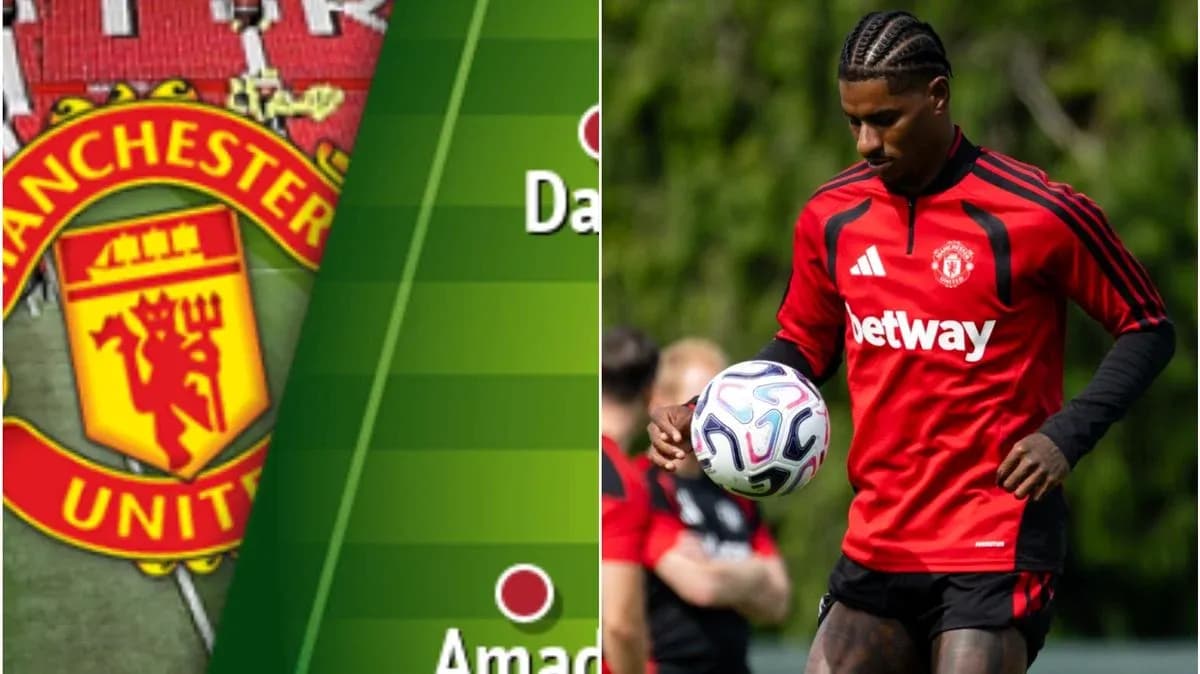
Manchester United's Dominant Performance: Carrick's Vision Takes Shape
Manchester United hit five and, for the first time this summer, looked like a Michael Carrick team with a plan rather than a collection of tired legs playing catch-up.
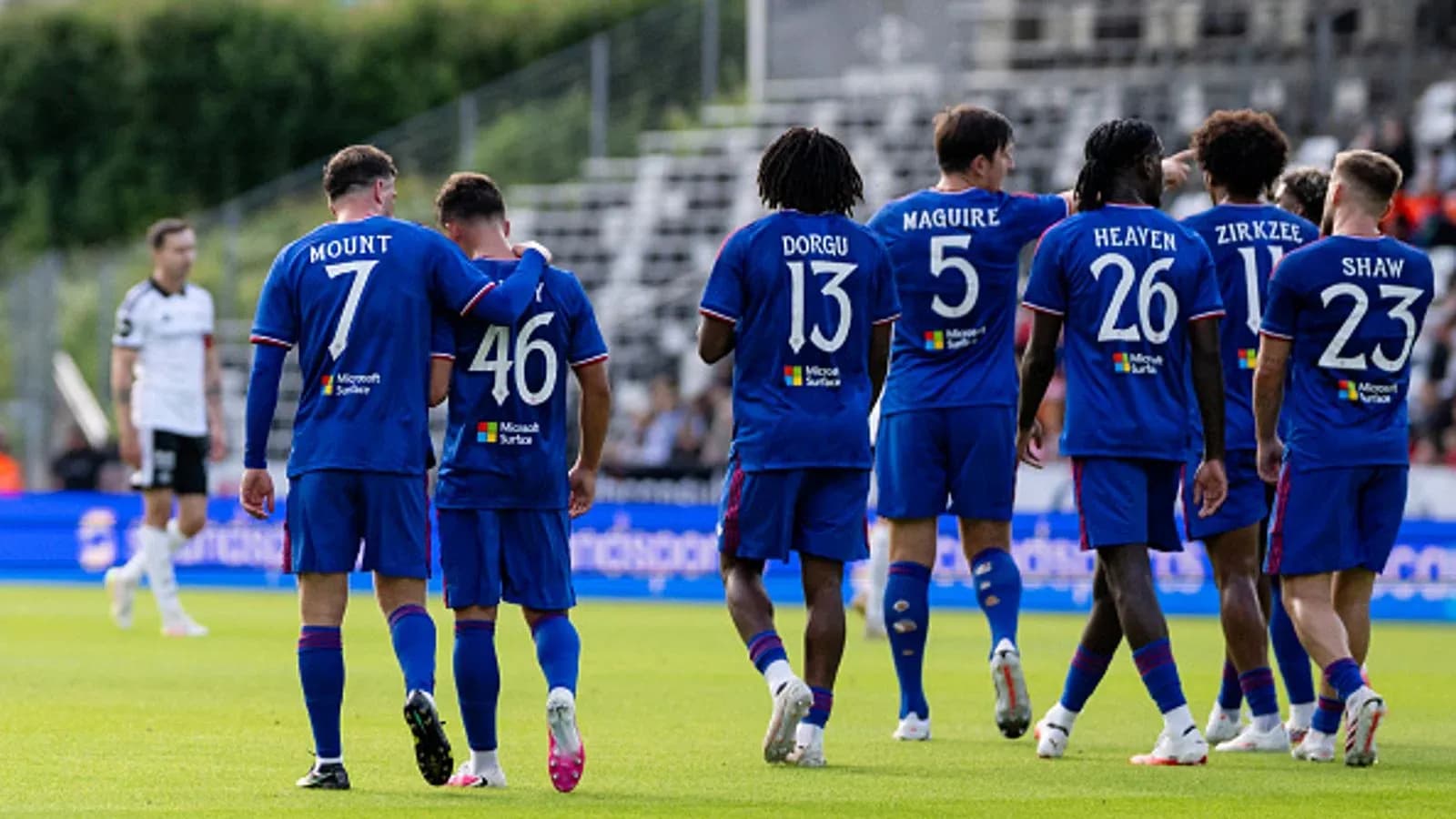
Six days after being turned over by Wrexham, United walked into Trondheim and dismantled Rosenborg 5-0. It was their first win of pre-season, but more importantly, it was the clearest glimpse yet of what Carrick wants this side to become now he is the permanent man in charge.
The scoreline told one story. The football told another.
‘Carrick-ball’ evolves
Carrick’s rescue job last season was built on chaos. Transitions, space, speed. Bryan Mbeumo and Patrick Dorgu tearing away on the break. Bruno Fernandes and Matheus Cunha threading the final pass. United were at their best when the game was stretched and wild.
The numbers backed it up. From Carrick’s first game – that 2-0 win over Manchester City – to the end of the campaign, United ranked third in fast breaks per game. They were joint-top for goals from fast breaks per 90 minutes and second for expected goals from those situations. They lived off the counter.
On the ball, though, they were a different story. Thirteenth in possession, 11th in average possession duration. Another United side, post-Sir Alex Ferguson, that could slice teams open on the run but laboured when faced with a low block.
Rosenborg, 13 games into their league season, should have exposed that flaw. Fitter, sharper, at home. They had every right to dictate the tempo, to keep the ball, to force United to sit and wait for those transition moments.
They didn’t. United took the ball and kept it.
What stood out was that this happened without Fernandes or Cunha on the pitch. No traditional conductor, no usual creative axis. Yet United looked calm, almost assured, in possession. They moved Rosenborg from side to side, pulled them apart, and did it with a clarity that hasn’t often been associated with this team in recent years.
Joshua Zirkzee was central to it. The Dutchman operated as a glue player in attack, taking the ball under pressure, holding off defenders, and giving United a platform to build from higher up the pitch. He made the ball stick. That changed everything.
The counter-attack is not gone. United’s second and fourth goals came straight from that familiar punch through open grass, the kind of moves that defined Carrick’s early tenure. But the balance is shifting. There’s a clear intent to control games more, to use the ball as a weapon rather than just wait for it to break kindly.
It also explains a lot about why Youri Tielemans was such an attractive signing. Carrick wants midfielders who can live on the ball, not just run without it.
Zirkzee’s big night – and the big question
Nobody left Trondheim arguing about the standout performer. Zirkzee was the unofficial player of the match, and by some distance.
Since arriving in 2024, United’s number 11 has been a puzzle. Too languid to be a classic No 9, not incisive enough to dislodge Fernandes as a No 10. The talent has always been visible in flashes – that Berbatov-like touch, the ability to kill a ball and slow the game to his own tempo – but the question has always been what to do with him.
Against Rosenborg, he answered at least part of that.
He played as a possession sponge, dropping in, taking contact, spinning on the half-turn and bringing others into the game. In 60 minutes, he produced two goals’ worth of direct impact: assisting the opener and scoring the second.
His goal was the kind of moment that makes coaches smile and fans fall in love. A sharp give-and-go with substitute Harry Amass, then a burst of footwork that left two defenders committed to ghosts. He repeated the trick in front of the goalkeeper, sent him the wrong way, and rolled the ball into an empty net.
It was audacious, controlled, and ruthless all at once. A highlight reel in a single move.
That sort of performance will fuel calls for Zirkzee to play a bigger role next season. Some supporters will see this as a turning point, the night he finally announced himself.
Reality bites a little harder. The tempo in Trondheim suited him. The game was open, the physical intensity nowhere near Premier League level. Nothing about this outing settles the long-standing doubts over whether he can handle the relentless pace and aggression of English football week in, week out.
Benjamin Sesko still looks the more natural option to lead the line. What Zirkzee showed here might be more revealing about how Carrick plans to use Sesko when he is fully ready – a forward who can link, drift, and combine, not just attack the six-yard box.
For Zirkzee, this was a reminder of what he can be. Whether it changes his place in the pecking order is another matter entirely.
Carrington’s kids take their moment
United’s academy has never been short on stories. Trondheim added a few more.
Shea Lacey started as the No 10 and grew as the game unfolded. The 19-year-old has already flirted with the first team, most memorably when he almost scored a spectacular goal in a 2-2 draw with Burnley. Here, with more responsibility and more of the ball, he looked composed and mature.
His finish for the opening goal summed up his night: calm, assured, no rush in front of goal. United fans voted him player of the match. That says plenty about how his performance landed with the travelling support.
The noise around Lacey had faded over the last year. Once the standout name in the youth ranks, injuries and form took some of the shine off the hype. On this evidence, the talent never went anywhere. There is a first-team player in there if the pathway is handled correctly.
Amass, introduced at half-time, offered a different kind of statement. His progress stalled in the second half of last season after an eye-catching loan spell at Sheffield Wednesday was disrupted by injuries. He looked sharp again here.
His goal showed the instincts of a modern full-back: timing his run, arriving in a dangerous pocket, and finishing with conviction. He also defended with discipline on the left, rarely flustered, and looked tidy in possession. United still want another left-back, but performances like this raise a fair question – should Amass be trusted as Luke Shaw’s permanent understudy?
Jacob Devaney and Ethan Williams will carry their goals with them for years. Those are the moments academy players dream about on long bus rides to youth games: scoring in front of a senior crowd in United colours, even in pre-season.
The other young standout did not find the net, but he left a mark. Jaydan Kamason, 19 and playing at right-back, looked raw without the ball at times. His positioning needs work; he was caught out a couple of times when Rosenborg switched play or broke down his side.
On the ball, he was electric. Two assists, both built on his ability to drive to the byline and pick out low, dangerous crosses. His footwork belonged more to a winger than a full-back, and he carried the ball with real conviction. The fact Carrick trusted him with more minutes than most of the other youngsters felt significant. Trust is hard-earned in pre-season. Kamason took his chance.
The JJ Gabriel wait
One name had dominated the build-up to this tour stop: JJ Gabriel.
At 15, he is the latest prodigy to emerge from Carrington, the kind of talent that turns internal whispers into headlines. His inclusion in the travelling squad lit up social media and stirred the away end in Trondheim. People wanted a glimpse. Anything. A cameo, a touch, a hint of what is coming.
They got nothing.
Gabriel stayed on the bench, fluorescent bib on, watching. No debut, no late run-out, no moment to replay on phones and timelines.
Does that mean expectations should be scaled back? Not necessarily. Carrick had already hinted before the game that Gabriel would get minutes across the friendlies rather than being thrown in at the first opportunity. Protecting a 15-year-old from the weight of instant stardom is not the worst idea in the world.
The message from Trondheim was clear enough. United’s future was on the pitch and on the bench. Some of it is ready now. Some of it can wait a little longer.
For Carrick, that’s the real win: a team learning to control games, a misfit forward reminding everyone of his talent, and a line of academy graduates pushing at the door.
Pre-season is not about points or tables. It is about direction. On this evidence, United finally look like they know which way they’re going.