Leeds United's Tactical Transformation: From Relegation Fear to Top Three
The Premier League table is still stretching its legs, but one sight already jolts the memory. Leeds United, in third place. It feels like a flashback to the early 2000s, when Elland Road lived permanently in the top five and European nights felt routine.
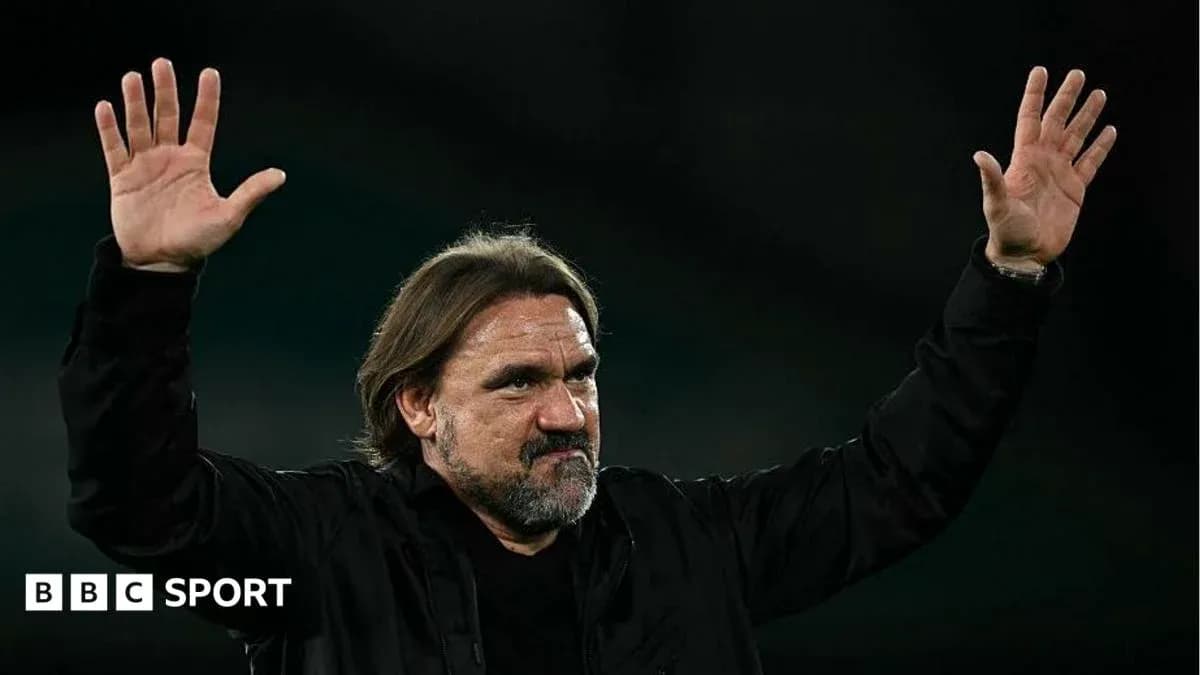
On Monday, a 4-1 dismantling of Newcastle United under the lights pushed Daniel Farke’s unbeaten side to eight points from four games – their best start to a top-flight campaign since David O’Leary’s 2001-02 team. It looks like a surge out of nowhere. It isn’t.
This rise has a timestamp: 29 November, away at Manchester City.
The night everything flipped
Leeds went in at half-time at Etihad Stadium 2-0 down, outgunned and outmanoeuvred. Farke walked into that dressing room with a season – and perhaps a job – on the line. He walked out having ripped up his shape.
Out went the back four. In came a back three.
The impact was immediate. Leeds clawed it back to 2-2, went toe-to-toe with City, and only succumbed in stoppage time. The result stung. The performance lit a fuse.
From the next game – a home win over Chelsea on 3 December – the numbers tell the story. Just five defeats in 29 league matches since that tactical switch. Stretch that over a full season and those results would place Leeds fifth in a hypothetical table over that span. Not bad for a side that, at one point last season, looked nailed to the bottom end.
This is not just about a new system, though. It’s about a deliberate shift in what Leeds are physically and psychologically.
Building a taller, tougher Leeds
In the 2025 summer window, Farke and new sporting director Adam Underwood went shopping with a clear brief: size, power, presence. The Premier League is unforgiving in the air and in the duels. Leeds had been one of the smallest squads in the division. That was no longer acceptable.
Of the 10 permanent signings, eight came with a clear common trait. Jaka Bijol, Sebastiaan Bornauw, Dominic Calvert-Lewin, James Justin, Lukas Nmecha, Noah Okafor, Lucas Perri and Anton Stach all stand over 6ft tall.
Farke didn’t hide the logic when he spoke in July 2025. He pointed out that arriving in the Premier League with one of the smallest groups brought extra pressure compared with the Championship. You have to stand up to crosses. You have to compete in both boxes.
This summer, after losing centre-back Pascal Struijk to Brighton, Leeds doubled down. In came World Cup defenders Tarik Muharemovic of Bosnia-Herzegovina and Switzerland’s Nico Elvedi to reinforce that three-man back line.
Muharemovic has already stamped his authority on the side. Yes, his late error opened the door for Bazoumana Toure’s consolation for Newcastle, but across the opening weeks he has looked composed and imposing, playing every league minute in front of James Trafford.
Trafford, at 6ft 5in, is another towering presence and a statement of intent. The England international became the most expensive British goalkeeper in history for the second time when Leeds paid an initial £40m to prise him from City. Behind that back three, he gives Leeds a physical spine they simply didn’t have before.
Add in Harry Wilson, one of last season’s standout performers in the league, snapped up on a free from Fulham, and the recruitment looks less like a gamble and more like a carefully drawn blueprint.
From relegation fear to defensive steel
It’s easy to forget how precarious things looked. Leeds lost eight of their first 13 league games in 2025-26. They sat 18th. Relegation wasn’t a doomsday scenario; it was a genuine threat.
Reports at the time suggested Farke, fresh from edging Burnley to the Championship title the previous season, was on the brink. The formation change and the squad rebuild were not tweaks. They were survival measures.
They have done far more than that.
Since the switch to a back three, Leeds have tightened up to a remarkable degree. Among the ever-present clubs in the division over that period, only champions Arsenal, City and Nottingham Forest have conceded fewer goals. This is a team that now relishes defending as much as attacking, a team that can handle the aerial bombardment and the physical grind.
But the transformation has not just shored up the back line. It has unlocked their main striker.
Calvert-Lewin, finally unleashed
Dominic Calvert-Lewin arrived with expectations and baggage. At first, he looked isolated. As the lone centre-forward in a 4-3-3, he often found himself wrestling centre-backs, starved of service, waiting for wide players who never quite got close enough.
The new shape changed his world.
With Farke alternating between 3-4-3 and 3-5-2, Calvert-Lewin now has company. A proper strike partner. Often it’s Lukas Nmecha. Sometimes it’s Noah Okafor, who has seven goals and an assist in his past 11 league appearances and brings a relentless, darting energy that defenders hate.
Calvert-Lewin has been explicit about the difference: he enjoys having bodies around him. The numbers back him up. Since last December, only Erling Haaland, Ollie Watkins and Joao Pedro have scored more Premier League goals than his 14. That is elite company, and it’s no hot streak. It’s the product of a system built to play to his strengths.
Now he stands on the brink of history at Elland Road. With Crystal Palace visiting on Saturday, Calvert-Lewin is chasing a record that has stood since 1932. One more home league goal, and he becomes the first Leeds player since Arthur Hydes to score in six consecutive league matches on this ground.
Europe on the horizon?
The personal stakes are rising too. Calvert-Lewin missed out on England’s World Cup squad, a blow for a forward who has long flirted with the national set-up without ever quite nailing down a place. With three goals in all competitions already this season, and Thomas Tuchel set to name his squad for a Nations League quadruple-header on Friday, the timing could hardly be better for a recall push.
So where does this leave Leeds?
They have a manager who survived the storm by ripping up his own plan. A defence rebuilt around height, aggression and clarity. A goalkeeper signed to dominate his box. A forward line finally given structure and support. Eight points from four games and a place in the top three are not a quirk of the calendar; they are the product of nine months of hard choices.
The question now is no longer whether Leeds can stay up. It’s whether this re-engineered, physically imposing, tactically sharp side can carry this form deep into the season and drag Elland Road back into Europe for the first time in 24 years.