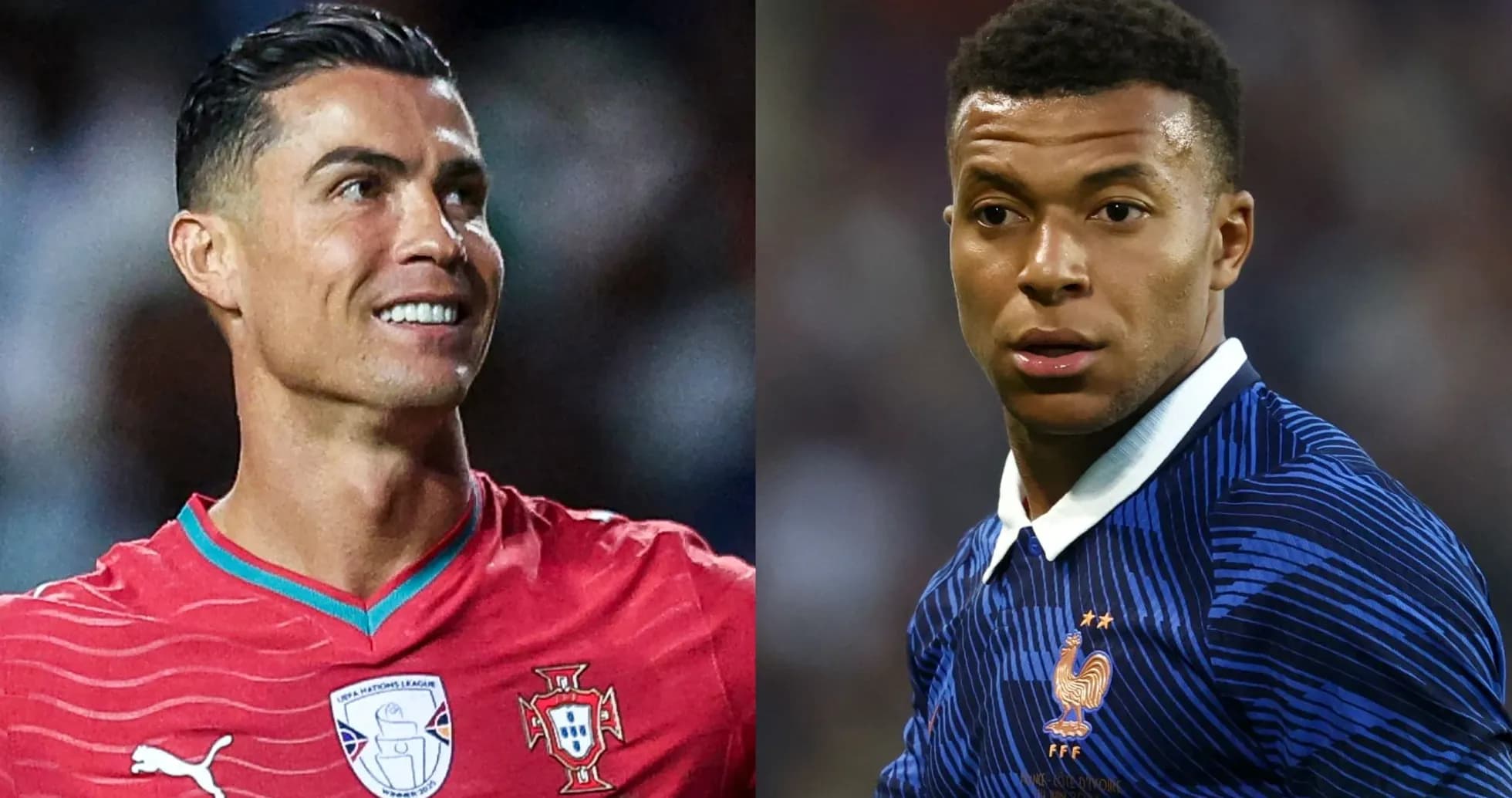
Kylian Mbappé: The Prodigy Created to be the Main Man
Kylian Mbappé has spent his entire life being told he was born to be the leading man. At eight, he was earmarked for greatness. At 27, he is living it under the harshest floodlights in world football, racking up numbers that drag him into the same statistical orbit as Lionel Messi and Cristiano Ronaldo.
But for Frank Leboeuf, that is only half the story – and not the most important half.
“Created to be the main man”
Leboeuf, a World Cup winner with France and a long-time observer of the game’s biggest egos and brightest talents, believes Mbappé has been hard-wired for stardom since childhood.
“He's been created to be the main man,” he told GOAL, speaking in association with World Cup Betting. The former defender paints the picture of a prodigy groomed for individual glory: a boy told from the very beginning that he would be one of the best, and who then did everything required to get there.
The problem, as Leboeuf sees it, is that football has moved in a very different direction to the cult of the individual that surrounds Mbappé.
“We have discovered lately, or he has discovered lately, that football is the collective game and in fact the team is a star,” he said. Title-winning sides at the very top level – Liverpool in the Champions League, the best versions of Paris Saint-Germain, the Real Madrid that keeps surviving impossible ties – all have one common thread in his eyes: a ruthless, unshakeable collective spirit.
Leboeuf’s verdict is blunt. “I think Kylian doesn't have that in his computer and when you don't have it it's hard to put it in.”
The “dictator of emergency” and the cult of the star
Leboeuf does not place the blame solely on Mbappé. He sees a wider culture that feeds the obsession with individual status.
“We live in a dictator of emergency,” he said, describing a football world that demands instant stardom, immediate validation, constant headlines. The Ballon d'Or, once a brief accolade quickly forgotten in the grind of a season, now sits at the centre of the sport’s narrative.
“It's a different world and it's not only Kylian Mbappe guilty for that,” he argued. The game, he feels, has inflated the importance of individual awards and personal brands at the expense of the only thing that truly works: a team moving as one.
Football keeps offering the same lesson, he insists. Ignore it, and you lose.
He points to the high-profile attacking combinations that have failed to fully click. Neymar, Messi and Mbappé together at PSG. Now Vinicius Jr and Mbappé in Madrid. On paper, unstoppable. On the pitch, not always in tune with the collective demands of the game.
“It doesn't work because they don't fit into a collective spirit and that's what it is,” Leboeuf said.
Why Liverpool’s stars were different
To underline his point, Leboeuf goes back to Liverpool’s peak under Jürgen Klopp. Who was the star there? Mohamed Salah, of course. But not only Salah.
Virgil van Dijk, Alisson, Andy Robertson, Trent Alexander-Arnold – in his eyes, they all shared the spotlight, all elevated each other. The full-backs crossed for one another to score. The goalkeeper and centre-back were as decisive as the forwards. The whole machine shone.
“They were the stars,” Leboeuf said. “They were crossing to each other to score goals. That was insane.”
That, for him, is football at its purest. Not the solo dribble, not the highlight-reel run past four defenders, but the player who sees the picture before the ball arrives.
“I don't care about Mbappe dribbling four players. It doesn't impress me because he doesn't see the game,” he admitted.
He cites Rodri and Kevin De Bruyne as the modern archetypes of what he loves: players who already know where the ball is going before it reaches them. One touch, the right pass, total anticipation.
“Anticipation is the special skill for me,” he said, even confessing he was never a huge fan of Diego Maradona’s dribbling despite recognising his genius. The pass, not the dribble, is what seduces him.
A goalscoring machine, still searching
Mbappé’s numbers remain outrageous. Eighty-six goals in 103 games for Real Madrid. Fifty-six for France. He continues to score at a rate that few in history can match.
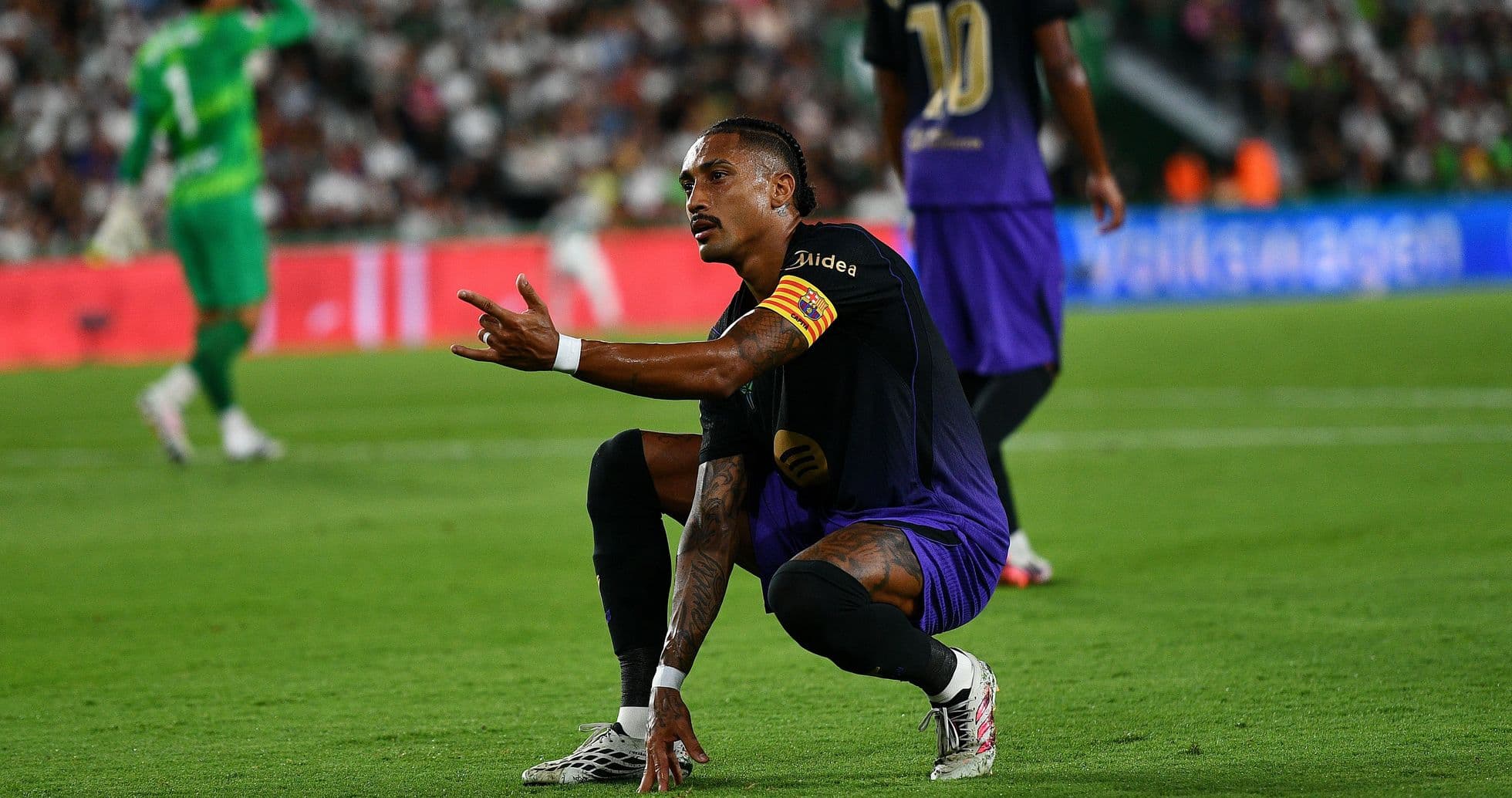
Yet the body language has shifted at times in recent months. The celebrations, the gestures, the looks towards the bench or the stands – the frustration has crept in. When a player that dominant starts to look agitated, the same question always follows: is he already thinking about the next challenge?
For Mbappé, that hypothetical next step inevitably leads to one league.
Could Mbappé really thrive in the Premier League?
Leboeuf has no doubts about Mbappé’s talent. The question is not whether he is good enough for the Premier League. It is whether the Premier League – and the clubs that could realistically afford him – would give him the role he craves.
“The Premier League has changed,” Leboeuf said. In his era, he would have said Mbappé was not ready for the physicality and intensity. Now, with the space that can be found and the speed of the game, he believes the Frenchman could excel.
“With the pace that he has and the possibility that you can find in England when you play in the Premier League, yes I think Kylian Mbappe can play in any league in the world,” he said. The idea of Mbappé going head-to-head with Erling Haaland for the Golden Boot clearly appeals to him. “That would be nice to see him in the Premier League fighting with Erling Haaland as a top scorer. That would be insane.”
Reality bites quickly, though. The cost of any deal would be astronomical. Transfer fee, wages, bonuses – Leboeuf struggles to see any club paying it.
“With the price that it would cost, nobody can buy him right now. I don't think so,” he said, doubting that any of the usual contenders will be in a position to move next season.
Tactical clashes and bruised egos
Even if the money existed, there is the tactical fit to consider.
Arsenal, for example, clearly need a striker, but Mikel Arteta’s system does not revolve around a traditional No. 9. “They don't use strikers,” Leboeuf said. He imagines Mbappé growing increasingly irritated if asked to play a role similar to Viktor Gyökeres – waiting for crosses, waiting for passes that never arrive often enough for a player of his ego and rhythm.
He then turns to Haaland’s situation under Pep Guardiola at Manchester City. The Norwegian has accepted long spells of anonymity in games, sometimes touching the ball only once or twice in a half, trusting that his moment will come.
Leboeuf is not convinced Mbappé would tolerate that.
“What Haaland has been capable of accepting with Pep Guardiola's system, touching one or two balls per period, I'm not sure Kylian Mbappe will accept that,” he said.
In his mind, Mbappé would respond by dropping deeper, demanding more touches, trying to become a No. 10 as well as a No. 9. That, he fears, would “maybe create a mess on the coach’s tactic.”
So the paradox remains. Mbappé, a player sculpted to be the main man, is playing in an era that keeps proving the team is the only true star. Leboeuf’s challenge is clear: can one of the game’s most devastating individuals ever fully surrender to that idea, or will the search for a stage built entirely around him never really end?