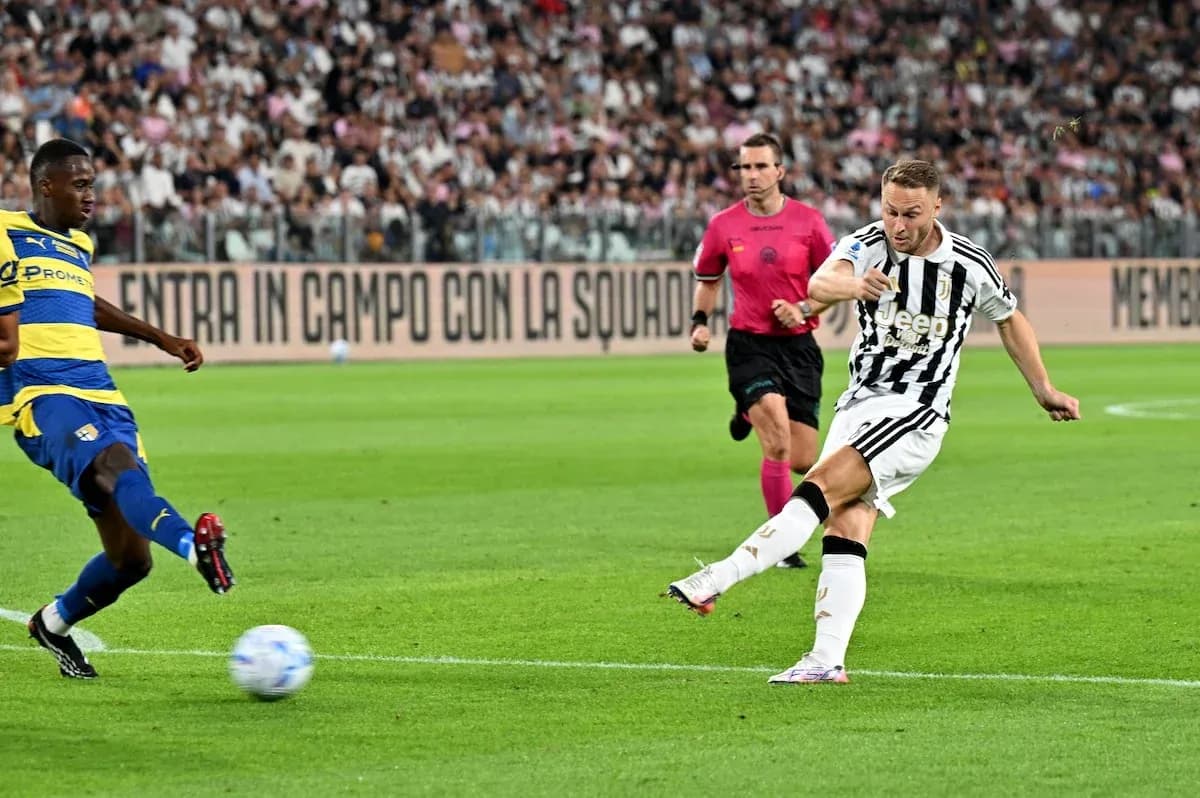
Juventus Dominates Parma 2-0: A Season Statement
Under the Turin lights at Allianz Stadium, Juventus’ 2–0 win over Parma felt less like a narrow early‑season step and more like a statement of structure. After two rounds of Serie A, the table already tells a story: Juventus sit 3rd with 6 points, a goal difference of +3 from 3 goals scored and none conceded, while Parma are 16th with 0 points and a goal difference of -3, still searching for their first goal of the campaign.
I. The Big Picture – Spalletti’s new spine
Luciano Spalletti’s Juventus have started the 2026 season with a clear defensive identity. Overall they have played 2 league matches, winning both, with 3 goals for and 0 against. At home, they have played 1 game, scoring 2 and conceding 0; on their travels, they have played 1, scoring 1 and again conceding 0. The averages underline the control: overall 1.5 goals scored per game and 0.0 conceded, with clean sheets in both fixtures.
Against Parma, Spalletti set up in a 4‑4‑2 that looked compact and purposeful. Guglielmo Vicario anchored the side behind a back four of P. Kalulu, Bremer, J. Lucumi and Z. Çelik. Ahead of them, a midfield line of Francisco Conceição, M. Locatelli, Douglas Luiz and J. Boga supported a mobile front two, R. Kolo Muani and J. David.
Parma mirrored the 4‑4‑2 on paper under Carlos Cuesta, with E. Corvi in goal, a back line of E. Delprato, M. Troilo, D. Drobnic and E. Valeri, a midfield quartet of S. Britschgi, C. Ordonez, A. Bernabe and M. Keita, and the forward pairing of S. Lontani and E. B. Toure. But the symmetry of the formations only highlighted the asymmetry in control.
II. Tactical voids – absences and discipline
Juventus came into this fixture without several creative and rotational options. W. McKennie (muscle injury), K. Thuram (knee injury), K. Yildiz (foot injury) and E. Zhegrova (muscle injury) were all unavailable. That stripped some vertical running and bench unpredictability from Spalletti’s toolbox, but also clarified the hierarchy: Locatelli and Douglas Luiz as the double pivot, Conceição and Boga as the wide catalysts.
Parma were missing H. Nicolussi Caviglia through a groin injury, a notable absence for a side already struggling to progress the ball and retain control in midfield.
The disciplinary data from the opening rounds framed the psychological tone. Juventus’ yellow cards this season have been spread with a clear intensity spike after the break: 25.00% of their cautions have arrived in minutes 0–15, 50.00% in 46–60, and 25.00% in 76–90. It paints a picture of a team that tackles aggressively early in each half and is willing to foul to protect a lead late on. Players like A. Cambiaso and Z. Çelik, each already booked this season, embody that edge; Cambiaso has come off the bench twice, winning duels and committing a foul in just 31 minutes, while Çelik has 5 tackles and 5 interceptions across 159 minutes, with 2 fouls committed and a yellow card.
Parma’s cautions have clustered differently: 33.33% of their yellow cards have come in 46–60, 33.33% in 76–90, and 33.33% in 91–105. That late‑game pattern hints at a side increasingly stretched and reactive as matches wear on, chasing games rather than controlling them. Abdou Konate, M. Troilo and E. Del Prato all carry early bookings this season, each trying to hold a fragile defensive line together.
III. Key matchups – Hunter vs Shield, Engine Room
The “Hunter vs Shield” duel in this contest was less about a single scorer and more about a collective threat. Juventus’ attack is still spreading the goals around – 3 in total, 2 at home and 1 away – but the underlying profiles matter.
Teun Koopmeiners, already with 1 goal this season in just 20 minutes, is emerging as a late‑game specialist from midfield. He has 1 shot and 1 on target, converting clinically, and his presence on the Juventus bench changes the geometry of the final half hour. Against a Parma side that has conceded 3 goals overall – 1 at home and 2 away, an overall average of 1.5 goals against per match – his ability to arrive from deep is a looming threat whenever Spalletti calls on him.
On the flanks, Francisco Conceição is the creative accelerant. Across the campaign he has 1 assist, 70 passes at 90% accuracy, 6 key passes and 12 dribble attempts with 6 successful. His duel volume – 23 contested, 8 won – shows how often he is targeted and how often he forces defensive decisions. Up against Parma’s full‑backs, especially Delprato on the right and Valeri on the left, his capacity to drag markers out of shape is crucial. Delprato has been busy already, with 86 passes, 2 key passes and 2 blocks, plus 1 yellow card; Troilo, inside him, has blocked 2 shots and made 2 tackles, but every step they take wide to contain Conceição opens corridors for Kolo Muani and David.
In the “Engine Room” battle, Locatelli stands as Juventus’ metronome. He has 159 passes at 90% accuracy, 5 key passes, 2 tackles, 1 blocked shot and 7 interceptions so far, plus 1 assist. He is not merely recycling possession; he is dictating where the game is played. Against Parma’s central trio and then quartet – Ordonez, Bernabe and Keita in particular – his ability to screen transitions and then immediately play forward passes denies Parma the counter‑attacking oxygen they need.
On the other side, Konate and Bernabe are Parma’s most promising midfield stabilisers. Konate’s 50 passes at 84% accuracy, 3 tackles and 2 interceptions show a young player willing to work both ways, but his 3 fouls committed and 1 yellow card underline the strain he is under. Troilo, behind him, has 145 passes at 91% accuracy and 2 blocked shots, evidence of a centre‑back who can both build and defend, yet the team’s structure is forcing him into too many emergency actions.
IV. Statistical prognosis – Juventus’ control vs Parma’s fragility
Following this result, the statistical direction of travel is clear. Juventus remain perfect in terms of results and clean sheets: 2 wins from 2, 3 goals scored overall, 0 conceded, with 1 home victory by 2–0 and 1 away by 1–0. Their penalty record is clean – no spot‑kicks taken or missed – and their defensive metrics align with the eye test: they have yet to allow a goal in any phase.
Parma, conversely, have lost both matches, scoring 0 and conceding 3 overall. At home they have lost 1–0, away 2–0. They have failed to score in both fixtures and have not had a penalty to potentially tilt momentum. Their defensive averages – 1.0 goal conceded per match at home, 2.0 away – highlight a back line that holds for spells but eventually yields.
The intersection between Juventus’ offensive rhythm and Parma’s defensive vulnerability is telling. Juventus’ yellow‑card spike in 46–60 suggests they ramp up intensity right after half‑time, often to lock down territory. Parma’s own cards clustering from 46 minutes onward reflect a team increasingly on the back foot in that same window. It is in those middle‑third minutes that Juventus’ structure, led by Locatelli’s distribution and Conceição’s wide incursions, tends to suffocate opponents.
Projecting forward, the xG story (though not numerically provided here) would logically favour Juventus: a side averaging 1.5 goals per game overall with complete defensive control against a team averaging 0.0 goals scored and 1.5 conceded. Spalletti’s 4‑4‑2, with the option to introduce Koopmeiners and Cambiaso from the bench, looks built to manage game states, not chase them.
For Parma and Cuesta, the path out of this early‑season hole runs through tightening the midfield screen around Konate and Bernabe, reducing the volume of late‑game fouls, and finding a way to connect Lontani and E. B. Toure to more structured possession. Until then, fixtures like this at Allianz Stadium will continue to feel like uphill climbs against a Juventus side whose numbers and narrative are perfectly aligned.