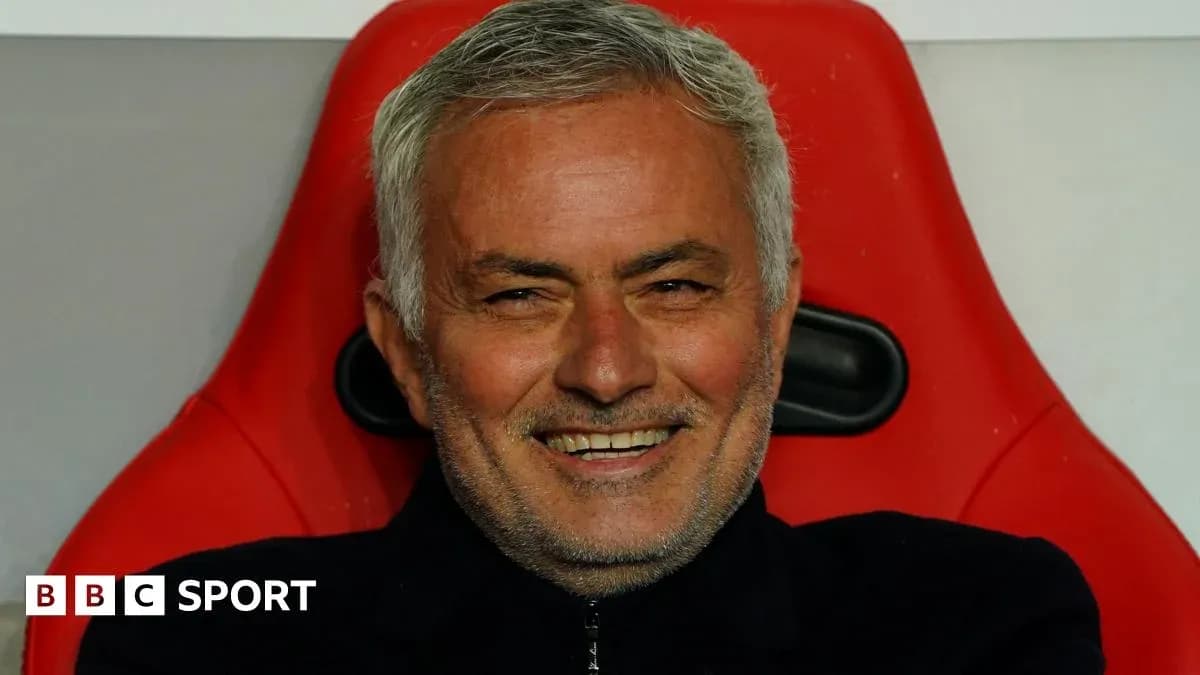
Jose Mourinho's Conditional Return to Real Madrid
Jose Mourinho is heading back to Real Madrid. The Portuguese coach has agreed a three-year deal to take charge at the Bernabéu, marking a dramatic return to a club he once split down the middle and drove to domestic glory.
This is not a straightforward homecoming, though. The contract of the 63-year-old will only come into force if Florentino Perez survives an election that threatens, at least on paper, to end his long rule.
A deal signed in pencil, not ink
Mourinho has committed to Madrid, but he will not be officially presented until after the presidential vote on 7 June. The timing is no coincidence.
Perez, 79, has called the election at a moment of turbulence, using an extraordinary news conference earlier this month to rail against journalists, La Liga and what he described as an “organised campaign” against him. It was a defiant performance from a president who has dominated the club’s modern era, but who now stands accused by some of presiding over drift.
Two consecutive trophyless seasons have darkened the mood around the Bernabéu. For a club that measures time in silverware, that is an eternity. The response from the hierarchy has been ruthless: another reset, another big name, another roll of the dice on a coach who guarantees headlines and confrontation, if not always harmony.
Yet Mourinho’s agreement is conditional. If Perez is removed, the deal dies with him. The coach’s future at Real Madrid rests, unusually, in the hands of the ballot box.
Perez, power and a rare challenger
Perez has been in charge continuously since 2009, and previously from 2000 to 2006, shaping Real Madrid in his own image: galácticos, grand projects, and an unshakeable belief in his vision. For 20 years, that vision has gone unchallenged at election time.
That changes now.
Enrique Riquelme, a renewables tycoon, is standing against Perez in the first presidential election in two decades to feature a genuine challenger. He is expected to lose; Perez remains the favourite to extend his reign. But the very presence of opposition hints at unease among a section of the club’s powerbrokers and socios.
If Perez wins, Mourinho walks back through the front door. If he loses, Real Madrid’s future – and Mourinho’s – will be redrawn overnight.
Mourinho’s unfinished business
Mourinho arrives from Benfica, where he took over in September and steered the Lisbon club to third place in the Primeira Liga this season. It was a short, sharp stint, a reminder that he still has the capacity to stabilise and organise a side quickly.
His relationship with Real Madrid, though, runs much deeper. Between 2010 and 2013, he turned a Barcelona-dominated era into a genuine war. His Madrid side broke records and broke patterns, winning La Liga, the Copa del Rey and the Spanish Super Cup, and forcing Pep Guardiola’s Barcelona to the limit.
It was combustible, divisive and utterly compelling. It ended badly, as Mourinho eras often do, but it left a mark. Those years hardened Madrid’s competitive edge and reshaped the rivalry with Barça.
Now, with the club again searching for an identity and a spark after two barren seasons, Perez has reached for a familiar weapon.
Arbeloa out, Mourinho in – if Perez stays
The man Mourinho will replace, Alvaro Arbeloa, only took charge in January after Xabi Alonso’s departure. Arbeloa, a former Madrid defender and club loyalist, was a stopgap solution who never had the aura of a long-term project.
His brief spell underlined the sense of transition. Real Madrid have been waiting for a figurehead, someone to absorb the pressure and redirect the spotlight. Mourinho has built an entire career on doing exactly that.
The stakes are clear. Perez is gambling that bringing back a coach who once dragged Madrid back to the top of Spain can jolt the club out of its current stupor. Riquelme, should he pull off a shock, would inherit a blank slate on the bench and the chance to choose his own man.
So the question hanging over the Bernabéu is not just whether Mourinho can still bend a dressing room to his will. It is more immediate, more political: will he even get the chance?