Jhon Duran and the Rise of the Modern Football Journeyman
The game still romanticises the one-club man. Ryan Giggs at Manchester United. Paolo Maldini in that red and black Milan shirt. Francesco Totti refusing to leave Rome. Tony Adams anchored to Arsenal’s back line.
They are the statues in the club museum. Unmoving. Unchanging.
But there is another kind of career, just as revealing about the modern sport: the footballer whose suitcase never quite gets unpacked, whose CV reads like a flight map. By 22, some players have already lived more footballing lives than those legends did in a decade.
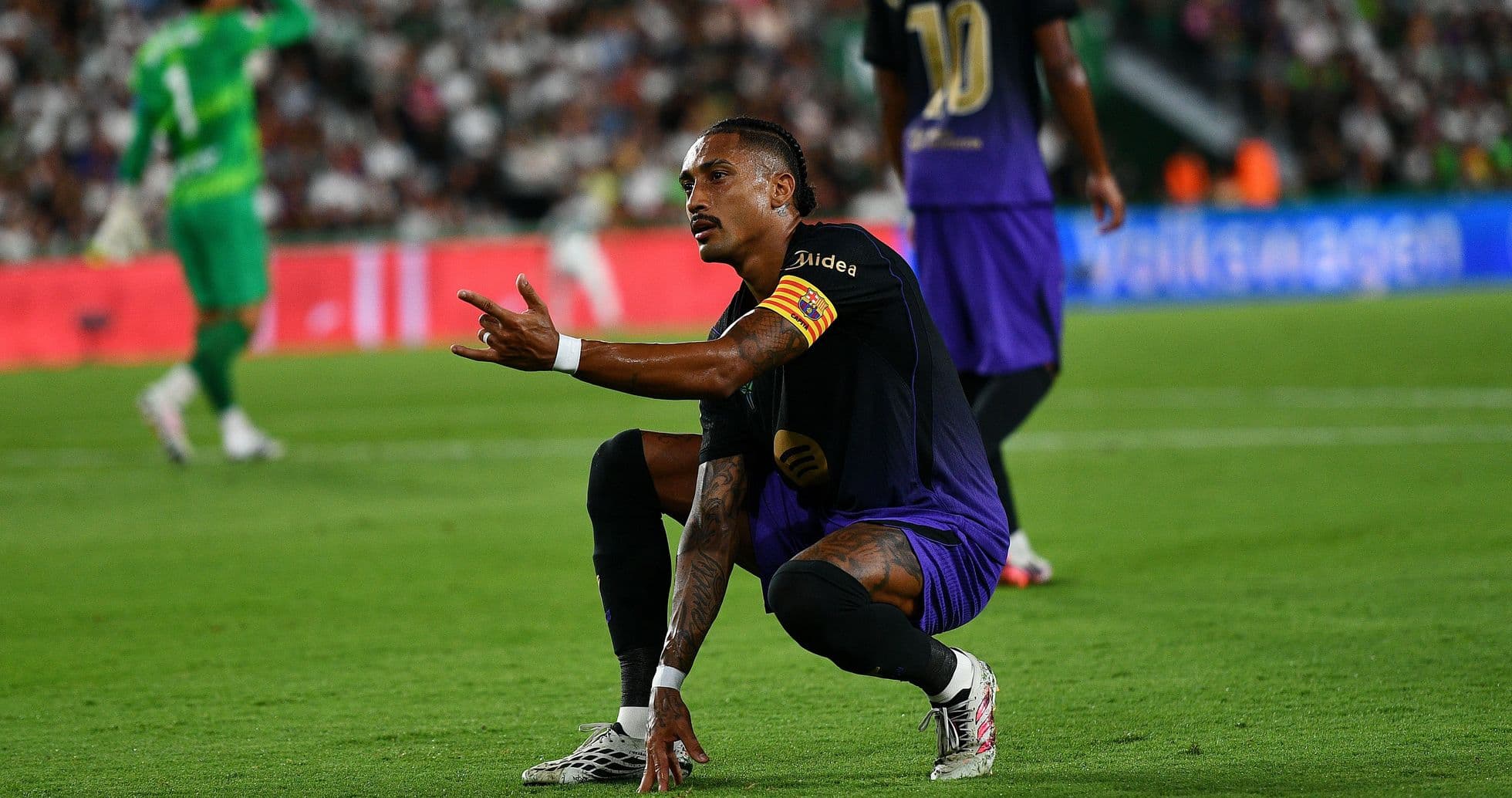
And right now, nobody embodies that better than Jhon Duran.
Duran and the new reality
Last week, the former Aston Villa striker joined the seventh club of his career. He is 22 years old.
Seven clubs by an age when many players are still fighting for a first proper contract. Seven different dressing rooms, seven tactical systems, seven new cities to learn. Duran has become the most visible face of a generation for whom stability is a luxury, not an expectation.
He is not alone. He is just the latest name on a list that stretches back through the past two decades – players who looked like prodigies, assets, projects, and, in some cases, cautionary tales.
Freddy Adu: from “next Pele” to the long road
No story captures the volatility of early hype quite like Freddy Adu’s.
Nike signed him at 13. At 14, he was playing Major League Soccer for D.C. United. At 16, he was making his debut for the United States. The label came early and loud: “the next Pele”.
What followed was not a straight line to superstardom, but a restless journey. Between 2004 and 2011, Adu signed for eight different clubs, criss-crossing the football map before most players have even left their academy sides.
United States. Portugal. Monaco. Greece. Turkey. A trial at Manchester United in 2006. All of it before his 23rd birthday.
In 2012, looking back at one of the pivotal moves, he admitted that joining Benfica in 2007 had been “not a good decision”, pointing to the immediate pressure and the churn of managers. Three coaches in a year. Three new ideas of what he should be.
Adu, now 37, last appeared in 2021 with Swedish side Osterlen FF. The early headlines have long gone, but the journey – the sheer number of stops along the way – still tells its own story.
Nathaniel Chalobah: loans, promise and a stalled rise
Nathaniel Chalobah’s path looked different at first glance, but the theme was the same: movement.
In 2017, Watford signed the 22-year-old midfielder from Chelsea on a five-year deal. On paper, it was his first permanent transfer. In reality, he already felt like a veteran of the circuit.
By that point, Chalobah had completed six loan spells, including a previous stint at Watford in 2012. Seven clubs by 22, without ever truly being “owned” by anyone but Chelsea.
He started brightly at Vicarage Road. His performances earned him a place in the senior England squad for the final round of 2018 World Cup qualifiers, a long-awaited nod for a player long tipped for the top. In October 2018, he finally won his only cap, coming off the bench in a 3-2 Uefa Nations League win over Spain.
That night in Seville looked like a launchpad. It has not turned out that way. Now 31, Chalobah is without a club after leaving Sheffield Wednesday at the end of the 2025–26 season, another career that has drifted away from the early script.
Josh McEachran: chasing stability
Josh McEachran was supposed to be the elegant heartbeat of a new Chelsea. He broke into the first team at 17 in 2010 and made 22 senior appearances, a technically gifted midfielder who seemed perfectly built for the modern game.
Then came the loans.
Swansea. Middlesbrough. Watford. Wigan. In 2014–15 he went to Vitesse Arnhem in the Netherlands, part of Chelsea’s now-familiar satellite network. Each move offered minutes, but never roots.
By 22, McEachran had signed for Brentford for an undisclosed fee. It was the seventh club of his career and, crucially, a line in the sand. He spoke openly about needing “to get out” of Chelsea and wanting “stability”.
He found a home of sorts in the Championship, but the wonderkid aura had long since faded. Now 33, he spent last season with Bristol Rovers in League Two, a long way from the Champions League nights once forecast for him.
Ryan Bertrand: nine loans and a Champions League final
Ryan Bertrand’s journey shows another side of the same system. He began at Chelsea, too, and by 22 he had already worn the colours of six different clubs.
Oldham Athletic. Reading. Nottingham Forest. Two separate spells at Bournemouth. Two at Norwich City. Each loan a short-term fix for someone else’s squad, a temporary solution rather than a long-term plan.
Across his time at Stamford Bridge, the left-back was loaned out on nine separate occasions before finally signing permanently for Southampton in 2015 at the age of 25.
Yet Bertrand’s story also contains one of the great quirks of modern football: a serial loanee starting a Champions League final. He made his European debut in the biggest game of all, Chelsea’s victory over Bayern Munich in 2012, a night that will forever sit at the top of his career highlights.
He left Leicester City in 2023 and has been out of the game since, another example of a player who had to fight for permanence in a sport increasingly built on short-term deals.
Nicolas Anelka: the original modern journeyman
Before Duran, before the loan armies, there was Nicolas Anelka.
By 22, the French striker had already won the Double with Arsenal in 1998 and the Champions League with Real Madrid in 2000. His medal collection was growing as fast as his air miles.
He began at Paris St-Germain but walked away in 1997, frustrated by a lack of game time and convinced it was damaging his international chances. Arsenal gave him a platform and he delivered, but even there, tension simmered. Anelka accused the English media of inventing stories about him, unhappy with the scrutiny and the narrative built around his name.
In 1999 he moved to Real Madrid, one of the most glamorous transfers in the world game at the time. He struggled to settle in Spain and, by 2000, he was back at PSG. A year later, he was on the move again, this time to Liverpool on loan, returning to the Premier League at just 22.
By the end of his career, Anelka had played for 12 clubs across seven countries. He was a superstar and a journeyman all at once, a forward whose talent was never in doubt but whose path rarely ran in a straight line.
For every Maldini or Totti, there will always be a Duran, an Adu, a Chalobah, a McEachran, a Bertrand, an Anelka. Different eras, different contexts, but the same underlying question: in a sport that moves this fast, who really gets to stay still?