Iraola’s Balancing Act as Liverpool Faces Early-Season Challenges
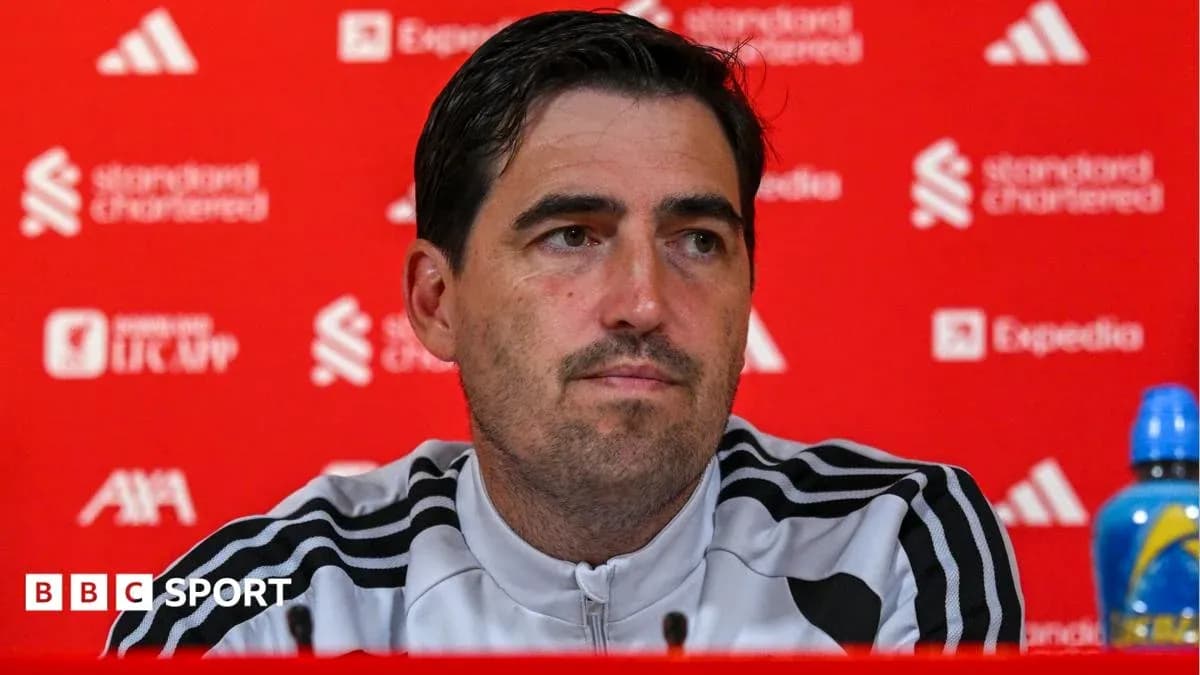
Andoni Iraola is only a handful of weeks into life at Anfield, but the reality of managing Liverpool in a season packed with high‑stakes fixtures has arrived quickly and without mercy.
The Carabao Cup tie against Tottenham comes on Tuesday night. On paper, it’s the sort of competition where a new manager might quietly rotate, test the fringes and blood academy prospects. Instead, he’s staring at a Premier League rival, a bruised fanbase after back-to-back home draws, and a squad already showing signs of strain.
So he’s learning on the job. Fast.
“I have to learn who is ready to play games every three days and who needs a rest so their performance level isn't affected,” Iraola admitted. Some players, he says, are “very robust”, capable of rolling out every 72 hours without dropping their level. Others clearly are not. The schedule is exposing that difference.
He thought he knew which was which. Now he’s not so sure.
Rotation or Reaction? Spurs Tie Complicates the Plan
This is not your typical early-round EFL Cup assignment. No League One away day. No low-pressure backdrop to experiment. It’s Tottenham under the lights at Anfield, with the mood around Liverpool a touch more tense than the unbeaten record suggests.
There is a case for going strong. The crowd felt Saturday’s 0-0 with Fulham as a step backwards after the surge of that midweek Champions League win over Atletico Madrid. A statement performance and result against Spurs could steady everything: belief, rhythm, noise.
There is an equally strong case for holding his nerve and rotating heavily. Liverpool’s calendar is brutal: at least seven more Champions League games, the Premier League grind, and now a domestic cup run to manage. Every time Iraola leans on the same core, he nudges them closer to fatigue and injury.
This is the dilemma. Protect legs or protect momentum?
A Cup That Defines Eras at Anfield
If any competition carries a particular weight for Liverpool, it is this one.
No club has lifted the League Cup more often. Ten times the trophy has ended up in the Anfield cabinet, often marking the start or the confirmation of a successful era.
The first came in 1980-81, the beginning of a remarkable run of four straight wins that ended in 1984 and helped define Liverpool’s dominance of that decade.
Then came the long wait. In 1995, Steve McManaman’s brace at Wembley against Bolton delivered a fifth title and a rare shaft of light in a more uneven period.
The new millennium brought it back into focus. Gerard Houllier’s side claimed the cup in 2001 as part of a famous treble and returned for a seventh in 2003, beating Manchester United in the final.
Kenny Dalglish added another in 2012, his second spell in charge crowned with a penalty shootout win over Cardiff City.
Then came the modern epic: 2022, Jurgen Klopp and Chelsea locked in an extraordinary 11-10 shootout. Two years later, Klopp signed off his Liverpool story in this competition too, beating Chelsea again in 2024 for trophy number 10.
The question now is simple and sharp: can Iraola take Liverpool to number 11?
Flat at Anfield: Fulham Expose Early Strain
The warning signs over workload and rotation were all over Saturday’s goalless draw with Fulham.
Two Premier League games at Anfield. Two draws. For only the third time in 63 years, Liverpool have failed to win either of their opening home league fixtures.
This is not the launch Iraola imagined.
After an energetic, aggressive midweek display to beat Atletico Madrid, the Fulham game felt like a different season entirely. The visitors arrived low on confidence, having shipped seven goals in their first three league matches. Liverpool still couldn’t break them.
They looked tired. Physically and mentally. The edge that rattled Atletico wasn’t there. The intensity that Iraola’s style demands evaporated over 90 minutes that never quite caught fire.
Six points from four league games is not a disaster, but it is below the standard Liverpool set for themselves. Dropped points at home to Nottingham Forest and Fulham, a draw at Newcastle, a solitary win at Ipswich: the numbers tell their own story.
Big Names, Small Impact
This was also the first league start together for Liverpool’s £364m attacking trio of Alexander Isak, Bradley Barcola and Florian Wirtz. On paper, it’s a front line to terrify anyone. On the pitch, it never really clicked.
Liverpool created chances, but nothing like the volume or clarity expected with that kind of firepower. Isak’s involvement was particularly stark: 16 touches in 90 minutes, the second fewest ever recorded for a Liverpool outfield player, having set the low mark himself with 14 touches against Forest a fortnight earlier.
Wirtz, so sharp and inventive against Atletico, looked a shadow of that player. Barcola and Isak had flashes, hints of a partnership that might one day dominate, but right now it’s a work in progress, and progress is slow when the games never stop coming.
Iraola knows he doesn’t have the luxury of time. He has to build chemistry while managing minutes, all under the glare of a fanbase used to chasing titles, not just stability.
Fulham Dig In as Liverpool Falter
The Fulham draw also underlined how little margin for error Liverpool have when their energy drops.
Alvaro Arbeloa arrived under pressure, three straight league defeats hanging over his early reign. He walked away with his first Premier League point and the sense that his team had executed a smart, disciplined away plan.
Liverpool’s problems started early. A mix-up between Alisson and Ryan Gravenberch almost handed Fulham the lead, Jeremy Jacquet scrambling Gonzalo Garcia’s effort off the line to spare their blushes.
Fulham were the better side in the first half. Josh King forced a save from Alisson. Antonee Robinson headed wide when he should have done more. Arbeloa’s reshaped defence, including debutant David Affengruber, held firm.
Liverpool had moments. Victor Munoz saw a header beaten away by Bernd Leno. A Bradley Barcola volley was deflected behind by Timothy Castagne. But the rhythm never settled, the pressure never felt relentless.
Iraola reacted. Kostas Tsimikas, who struggled, went off at the break for Milos Kerkez. By the hour mark, Gravenberch and Munoz were replaced by Alexis Mac Allister and Cody Gakpo, a clear attempt to shift the game’s pulse.
It didn’t fully work. Isak drew a routine save from Leno. Dominik Szoboszlai finally unleashed a powerful strike that the Fulham goalkeeper also dealt with. Later, Rio Ngumoha and Jeremie Frimpong were thrown on in search of a late spark.
Still nothing. Isak headed wide from a stoppage-time corner. Fulham, who threatened through late chances for King and Kevin, walked away with a point that felt earned, not stolen.
Learning on the Run
This is Iraola’s reality now. A squad built for big nights and long runs in multiple competitions, but still adjusting to his demands and the pace of a season that barely allows time to breathe.
He is discovering which players can handle the three-day churn and which cannot. He is seeing how quickly a midweek high can drain into a weekend flatline. He is watching a record-breaking cup history hang over a fanbase that expects a serious tilt at silverware every year.
Tottenham at Anfield in the Carabao Cup will force another decision: rotate and risk another subdued performance, or go strong and push tired legs a little closer to the edge.
If Liverpool really intend to chase honours on all fronts this season, how long can he afford to gamble either way?