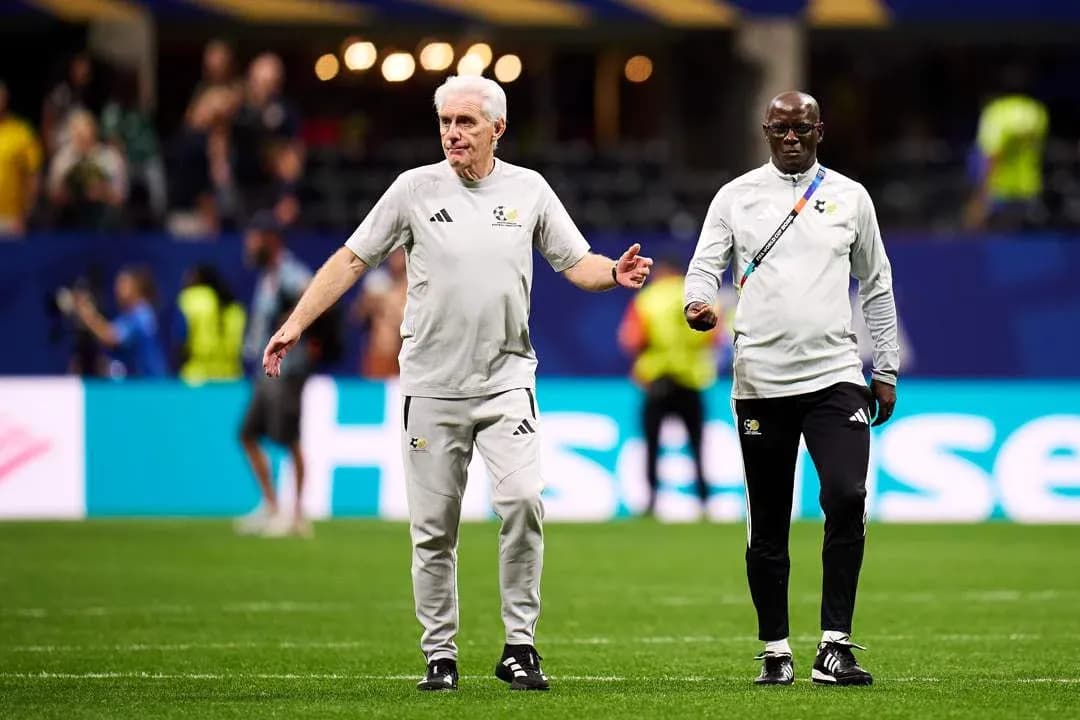
Hugo Broos Critiques Atlanta Stadium After Bafana Bafana's Draw
Hugo Broos left Atlanta with a point, a pulse in South Africa’s World Cup campaign – and a few choice words for the arena that hosted it.
Bafana Bafana’s 1-1 draw with Czechia kept their Group A hopes alive, but their 74-year-old coach walked out of the gleaming Atlanta Stadium convinced of one thing: this, in his eyes, is no place for real football.
Broos vs the building
Under the closed roof of the NFL-style bowl – home to the Atlanta Falcons and MLS side Atlanta United – South Africa clawed back from an early blow to stay in contention for the knockout rounds. The stadium looked spectacular. Broos was unmoved.
“If I can be very honest, this is not a football stadium,” he said afterwards. “It’s a nice stadium, fantastic stadium, everything you want. But only the grass is football. All the rest is not.”
He wanted air, noise, an open sky. He wanted Estadio Azteca.
South Africa opened their tournament with a 2-0 defeat to co-hosts Mexico in that iconic cauldron, and the Belgian could not resist the comparison.
“It’s a covered stadium. I like to play in an open stadium. I don’t feel really the atmosphere in such a stadium. When you compare it with Azteca, for example, that is a football stadium!
“These stadiums are fantastic stadiums for the crowd. I think they see everything in that stadium. There are no places that are covered or whatever. But, again, I rather like a real football stadium.”
The message was clear: the roof, the shape, the showpiece design might work for the NFL. For Broos, they smother football’s soul.
Early punch, late response
The game itself forced South Africa to show a different kind of soul.
Czechia landed the first punch, and it came quickly. In the sixth minute, Michal Sadilek pounced, his early strike handing the Europeans control and threatening to send Bafana spiralling towards another bruising World Cup defeat.
South Africa could have folded. They didn’t.
They kept pushing, pressing, probing for a way back. The equaliser took its time, and the clock became an enemy. Yet the pressure finally told with seven minutes left.
Pavel Sulc was penalised for handling inside the area. Up stepped Teboho Mokoena. No fuss, no drama. He calmly rolled in the penalty, a moment that kept an entire campaign breathing.
The roar that followed might not have convinced Broos that Atlanta is a football cathedral, but it carried all the desperation and defiance of a team refusing to go quietly.
Rhythm vs refreshment
Broos’ irritation did not stop at the architecture. He bristled at the cooling breaks too, questioning why a climate-controlled stadium needed them at all.
“I think it’s very, very useful when it’s hot,” he said. “But in other cases, the rhythm of the game is lost.
“When at that moment you are the best team and you dominate, suddenly your domination is blocked for five minutes or I don’t know how long... in that stadium, we don’t need to drink after 20 minutes.”
For a coach who had just watched his side wrestle back momentum, those stoppages felt like an artificial brake on Bafana’s surge.
Destiny in their own hands
The draw, though, does more than fuel debate about stadium design and hydration policy. It hands South Africa a clear, unforgiving equation.
Their destiny now rests on a decisive final Group A clash against South Korea at Estadio Monterrey in Mexico on Thursday, 25 June. Kick-off is at 03:00 (SA time).
The Taegeuk Warriors arrive wounded, beaten 1-0 by Mexico, and just as desperate. That result has turned the meeting into a high-stakes shootout for both sides.
For Bafana, the backdrop is stark history. This is only their fourth World Cup appearance. They have never been beyond the group stage. Not once.
A win in Monterrey would give them a strong chance of reaching the Round of 32 – either by sneaking into the top two or emerging as one of the best third-placed teams. It would also mark a rare away victory on football’s grandest stage, the kind of result that rewrites how a nation sees its team.
Broos knows it, and he sees something building.
“If we can make another performance like today, I think we have a chance to go in the second round,” he said. “I’m very proud of my team, and this is the real Bafana Bafana.”
The roof in Atlanta could not convince him. The response from his players did. Now they must prove, under an open Mexican sky, that this “real Bafana Bafana” are ready to step through a door the country has never managed to open.