England’s Selection Circus: Ronaldo’s Storm and BBC’s Closing-Link Scandal
The international break is supposed to bring clarity. Instead, it has delivered England squad hypotheticals, a manufactured Cristiano Ronaldo “row”, and an existential crisis over how Mark Chapman says goodbye on Match of the Day.
Quite a week, even by football’s standards.
England’s Fantasy Back Four and the 25th Man Panic
Thomas Tuchel hasn’t even taken charge of a competitive England game and already we’re in the realm of fantasy football.
In his column for The Sun, Charlie Wyett floated the idea that if Tuchel could simply import Arsenal’s back four of Jurrien Timber, William Saliba, Gabriel and Riccardo Calafiori, England would win the World Cup. Just drop in the Gunners’ defence behind an already loaded midfield and attack and the trophy’s as good as on the plane.
Why stop there? If we’re playing Football Manager with real life, David Raya can go in goal, Kylian Mbappé and Lionel Messi can rotate as impact subs, and Djed Spence can apparently keep them company on the bench.
Strip away the fantasy, and Wyett’s real concern is England’s full‑back situation. He calls it “a mess”, and argues that Tuchel should have replaced the injured Tino Livramento with a like-for-like option.
That’s quite the alarm bell to ring over a player who, in all likelihood, would barely have featured. Swapping one potential non‑participant for another does not exactly scream structural crisis. This is the 25th man we’re talking about, not the spine of the side.
Wyett then points to the call‑up of Trevoh Chalobah, a centre‑back by trade, as some sort of emblem of the problem. From there he lands on a sweeping conclusion: England, he says, do not have a fully fit, in‑form, natural full‑back.
You have to work hard to get there. It requires stepping around the two full‑backs who actually started the win over Croatia. You can raise an eyebrow over Reece James’ fitness record and still accept that pretending England have no functioning full‑backs is a stretch.
The criticism extends to Nico O’Reilly, described as “a midfielder who is being squeezed in at the back”. In reality, he’s Manchester City’s starting left‑back. Pep Guardiola has trusted him there. That tends to carry a little more weight than a column-line lamenting his positional purity.
And if “natural full‑backs” are suddenly the gold standard, that dream Arsenal‑built England defence of Timber, Saliba, Gabriel and Calafiori doesn’t contain a single one either.
Luke Shaw and the ‘Ridiculous’ That Wasn’t
Wyett also brands Luke Shaw’s omission “ridiculous” after what he calls a good season at left‑back for Manchester United. Then, almost in the same breath, he notes Shaw has not played for England since the Euro 2024 final and concedes that his absence “was not a surprise”.
You can’t have it both ways. If everyone expected him to miss out, it stops being ridiculous and starts being logical, even if you disagree with the call. The rhetoric is doing far more work than the reality.
Ronaldo, ‘Brutal’ Joao Neves and a Manufactured Storm
Over in Portugal, The Sun’s website went hunting for drama and found… a perfectly normal quote.
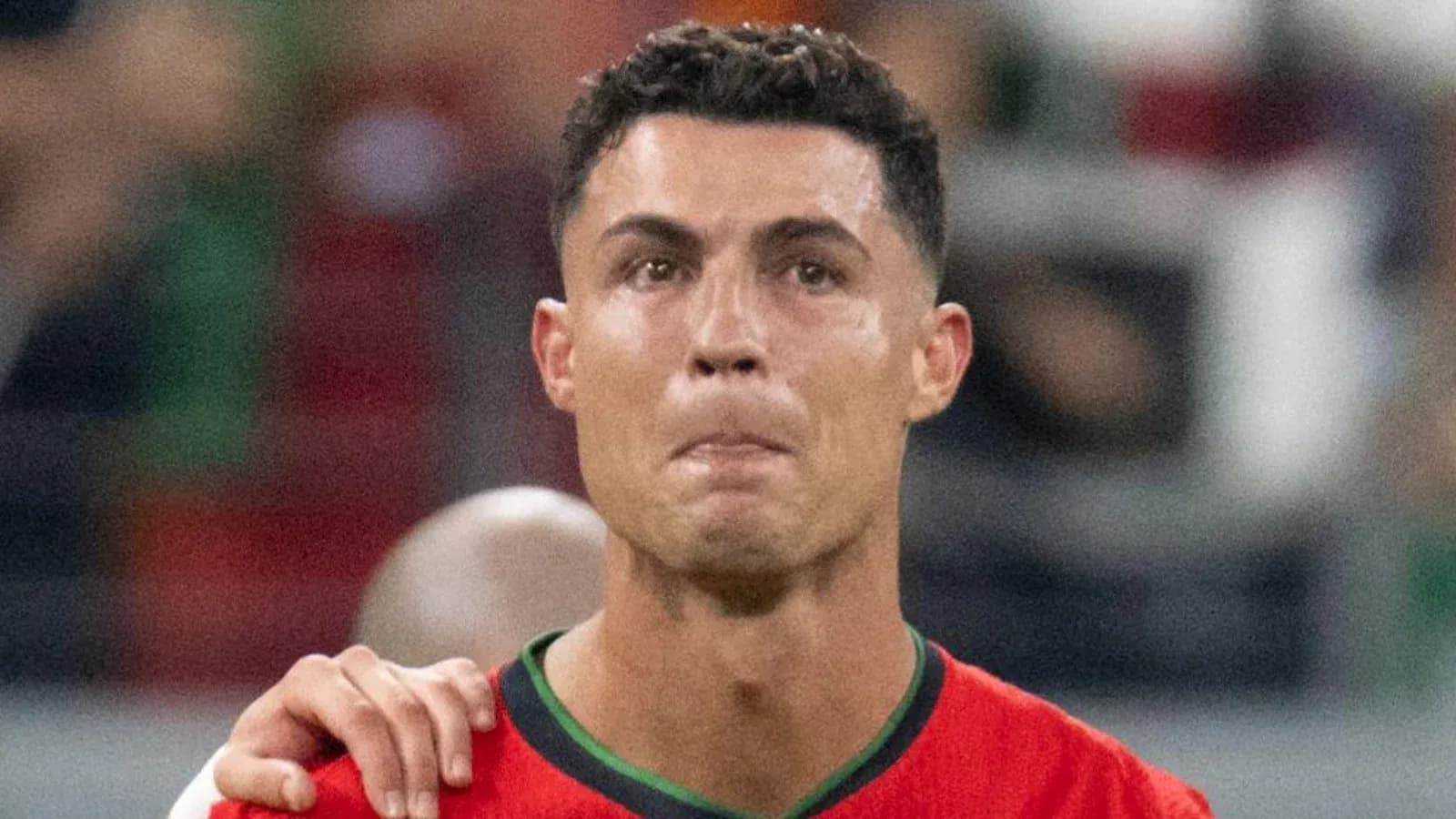
“JUST ANOTHER PLAYER,” screamed one headline. “Cristiano Ronaldo blasted by Portugal World Cup team-mate after DR Congo horror show,” bellowed another. The suggestion: a dressing‑room revolt, a national icon taken down a peg by a fearless youngster.
The reality: Joao Neves, calmly explaining how the current Portugal squad sees its captain.
“We know what Cristiano has done for us, for our national team, and for the world of football. But at this moment, he and we know that he is no different. He is just another player here to help. He is no different from the others. He is here to contribute, just like all of us.”
That’s not a blast. That’s a 19‑year‑old trying to say, as respectfully as possible, that Portugal are a team, not a tribute act. It’s the kind of line every coach in the world wants to hear from a young midfielder in a squad stacked with egos.
Labeling it “brutal” is pure theatre. Calling the social media reaction a “storm” is no less exaggerated. A few fan accounts melting down because someone dared to suggest Ronaldo is part of the group rather than above it does not constitute a national crisis.
Cole Palmer, Jet2 and a Curious Double Standard
Cole Palmer, we’re told, is a “humble star” because he flew with Jet2.
The framing is revealing. Palmer is praised for using a budget airline. Raheem Sterling, when he did something similar a few years back, was accused of “penny pinching” and “slumming it on the budget airline” EASYJET, despite earning £200,000 a week.
Same basic behaviour. Completely different tone.
The contrast is not subtle. The language used for Sterling then and Palmer now speaks louder than any moralising about players’ travel choices. The football hasn’t changed. The narrative clearly has.
Mark Chapman and the Great MOTD Heresy
Even the way a broadcaster signs off a show is now fodder for outrage.
“BBC host Mark Chapman makes feelings perfectly clear after World Cup clash as he breaks unwritten MOTD rule,” ran another Sun headline. This time the supposed crime scene was the BBC’s coverage of Czechia vs South Africa.
Chapman’s line at full‑time? “Sometimes a game does not deserve a really clever closing link. Goodbye.”
That was it. No rant, no ranting monologue, no fourth‑wall‑breaking tirade. Just a dry, self‑aware nod to a dull match and to the tradition that presenters often try to sign off with something neat.
The article insists “it is an unwritten rule in the BBC that there is always a clever link at the end of match coverage”. As if good broadcasting is some sacred code rather than, you know, just the job. Chapman’s sign‑off, if anything, played directly into that idea. It was a clever link about not doing a clever link.
If that’s breaking an “unwritten rule”, the bar for scandal is now on the floor.
Emma Hayes and the ‘Tiny Blackboard’ Outrage
Emma Hayes, stepping into her high‑profile role as a BBC pundit, has also been dragged into the theatre.
“Hayes was forced to do her tactical analysis on a tiny blackboard on a set that looked like a little kitchen, sparking outrage online,” The Sun reported.
“Forced” is doing a lot of heavy lifting there. So is “tiny blackboard”. The set might not be a multimillion‑pound digital cube, but we’re hardly in the realm of a school fete. This isn’t Michael Scott proudly unveiling his “plasma TV” to the office.
Hayes’ analysis remains sharp, whether it’s delivered via touchscreen, chalkboard, or a napkin. If the biggest issue people can find is the size of the board she’s drawing on, she’s probably doing most of the important things right.
From England’s imaginary back four to Ronaldo’s non‑row and Chapman’s supposedly sacrilegious goodbye, the noise around football this week has felt louder than the games themselves. The sport will move on quickly enough. The question is whether the coverage wants to keep chasing storms in teacups, or start treating the audience as if they can handle the truth without the capital letters.