
Henrik Larsson: The Celtic Legend Who Transformed the Club
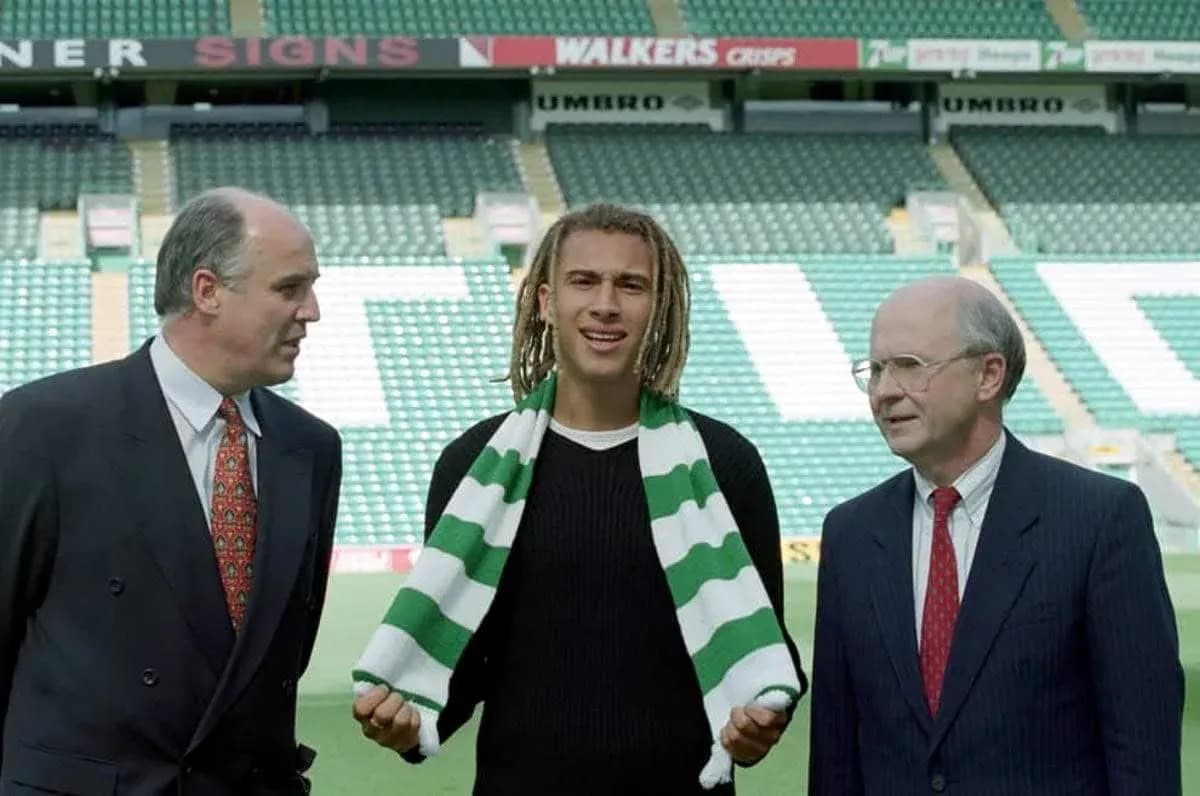
On a damp Glasgow afternoon in July 1997, a slight, dreadlocked forward in a Hoops top and denim jeans stepped out onto the Celtic Park turf. No fanfare, no fireworks. Just a young Swede, Henrik Larsson, being introduced as Celtic’s latest signing.
Few inside the ground that day could have imagined they were watching the birth of a legend.
A Bargain That Changed Everything
Celtic paid just £650,000 to take Larsson from Feyenoord, a fee that looks almost comical in hindsight. New manager Wim Jansen knew exactly what he was doing. He had signed Larsson for the Dutch club a few years earlier and understood the clause in his contract that made the deal possible.
It was shrewd business. It became transformational.
Larsson’s start, though, was anything but smooth. On the opening day of the season at Hibs, he was partly at fault in a defeat that immediately raised questions. This wasn’t a messiah; this was a forward still finding his feet in a new country, a new league, a new pressure cooker.
He answered in the only way that ever really mattered to him: on the pitch, week after week.
From Slow Start to Talisman
As that first season unfolded, Larsson’s influence grew with every game. The dreadlocks, the work rate, the sharpness in the box – Celtic supporters watched a player knitting himself into the fabric of their club.
By the end of that debut campaign, he was central to everything. Celtic lifted the League Cup and, more importantly, claimed their first league title in a decade, stopping Rangers’ bid for ten in a row. Larsson’s goals and all-round play didn’t just help win trophies; they helped shift an era.
He wasn’t done. Not even close.
Under Dr Jozef Venglos the following season, Larsson exploded. Thirty-eight goals. He became the complete striker: movement, finishing, intelligence, and a relentless hunger that defenders simply couldn’t live with.
The Break That Couldn’t Break Him
Then came Lyon. A horror moment that made every supporter wince.
Larsson suffered a dreadful leg break in European competition, the kind of injury that can drain the colour out of a career. For Celtic, it was a turning point too, contributing to the rapid unravelling of John Barnes’ time in charge.
Many players never truly come back from that. Larsson did something rarer. He came back better.
His mental strength, always there in the background, now took centre stage. The Swede rebuilt himself and, in doing so, dragged Celtic to another level.
O’Neill, Sutton and a Season for the Ages
When Martin O’Neill arrived, he found in Larsson the ideal spearhead. Add Chris Sutton, and Celtic suddenly had a forward partnership that bullied, out-thought and outscored almost everyone in front of them.
Larsson hit a staggering 53 goals in O’Neill’s first season. Celtic swept to a domestic treble, their first clean sweep in 32 years. It wasn’t just volume. It was timing, importance, variety. Headers, volleys, chips, one-on-ones – Larsson scored them all, in every kind of game.
He had already become a hero. That season, he became an institution.
Europe Takes Notice
Domestically, Larsson dominated. But it was on European nights that his status stretched beyond Scotland.
His goals powered Celtic to the UEFA Cup Final, where they faced Porto in a gruelling, emotional extra-time defeat. On that stage, under that pressure, Larsson delivered two world-class finishes that underlined his class to the continent.
Even in defeat, he looked like he belonged at the very top. Because he did.
The Numbers – and the Legacy
By the time he left Celtic in 2004, Larsson’s numbers were the stuff of fantasy: 242 goals in 313 appearances. That return cemented him as the third-highest scorer in the club’s unbroken history.
But the statistics only tell part of the story. Larsson wasn’t just prolific; he was decisive. Titles, cups, Old Firm derbies, European ties – he scored when it mattered most, again and again.
For many supporters, he is not just a great Celtic striker. He is the Celtic striker of their lifetime.
King of Kings
Celtic’s history is rich with icons. The older generation will always point, rightly, to Jimmy Johnstone and the Lisbon Lions. Those who watched the 1970s will talk about Kenny Dalglish, another King who would later be voted Liverpool’s greatest ever player.
Yet ask most Celtic fans of the modern era who stands above the rest, and the answer comes back quickly.
Henrik Larsson.
The “King of Kings” banner wasn’t a marketing line. It was a verdict. A player signed for a modest fee on a July day 29 years ago, walking out in a pair of jeans, would become the standard by which every Celtic forward since has been judged.
And all these years on, with the memories of those 242 goals still vivid, the real question for Celtic supporters is simple: will they ever see his like again?




