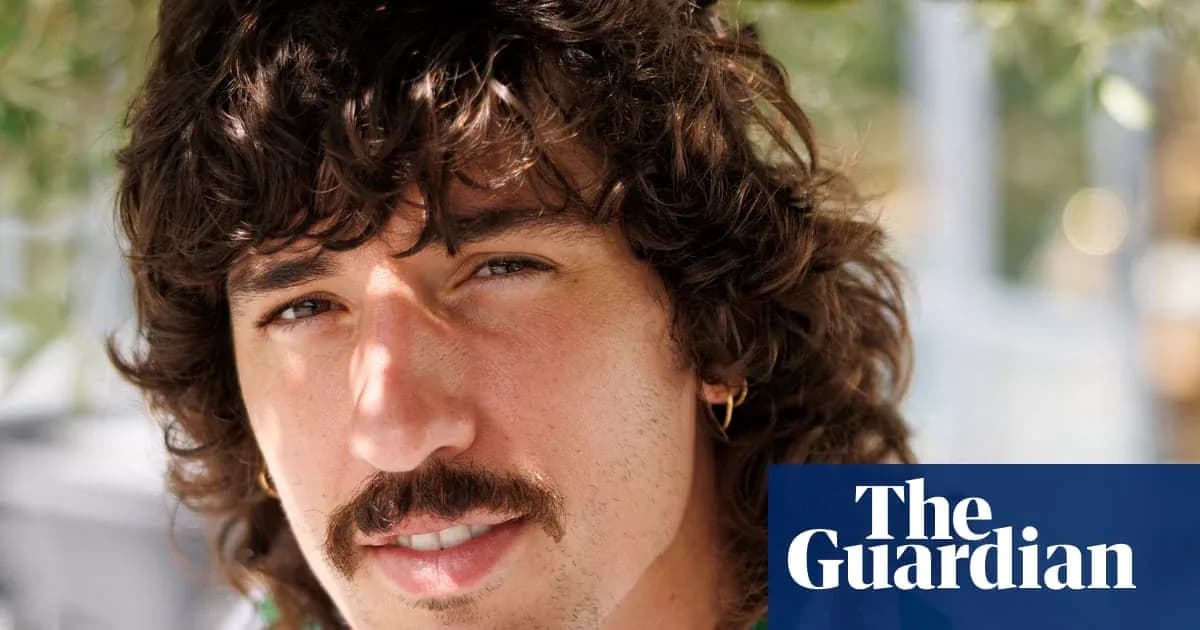
Héctor Bellerín Reflects on His Journey from Arsenal to Betis
Héctor Bellerín still remembers the summons. He was 18, maybe 19, a kid on the rise at Arsenal when Mikel Arteta called and asked him to come over. Bellerín thought it might be lunch or dinner. It was neither.
He walked in that afternoon to find Arteta already seated with a financial adviser. No small talk. Just questions.
“How much do you spend on this?” “How much do you spend on that?”
Bellerín had just started to earn real money and was burning through it on clothes, cars, the usual trappings of a young footballer who suddenly has more than he knows what to do with. He tried to keep the numbers low. He felt embarrassed, even ashamed. But he walked out with something he still carries now: humility, and a sense that someone genuinely cared.
“Mikel was the first player who showed me that I was important to him, that I mattered,” Bellerín says now, sunk into a sofa 30 miles west of Dublin, still in his Real Betis training kit. Arteta didn’t need a hug to prove it. He needed a plan. “He demonstrates real care, if not through a hug. I said: ‘Thank you.’ He said: ‘If you do the same for a teammate one day I’m happy.’”
That, Bellerín says, is the legacy he tries to pass on. Young players should feel looked after. It is also, he believes, a perfect snapshot of who Arteta is.
All these years later, it helps define Bellerín too.
From mates to rivals, just for a night
Thirteen years separate them. Back then, they were teammates at Arsenal. Proper mates. Later, they became coach and player, a relationship that did not always move smoothly from one phase to the next. On Wednesday, in Dublin, they stand on opposite sides for the first time.
It is only a pre-season friendly at the Aviva Stadium, not a title decider at the Emirates. But for Bellerín, now 31 and back at Betis, it is loaded with meaning. He has never faced Arsenal. He had one chance, on loan at Sporting, and then a knee injury struck at precisely the wrong moment. So precise that he still wonders whether his mind had something to do with it.
Now he meets them as Premier League champions, led by the same man who once sat him down and asked about his bank statements.
“I have an incredible feeling of love for the club,” he says. The words come easily, warm and unforced. He talks about Serge Gnabry, Santi Cazorla, Nacho Monreal. He remembers Tomáš Rosický telling him how to beat him in training, a kindness he now repeats with José Antonio Morante, the 19‑year‑old winger who runs at him every day in Seville.
He talks about the darker side of the game too: the greed, the pressure, the abuse. Football, he says, has become the “maximum exponent of greed”, an industry that often makes his “blood boil”. Yet he is clear about something else: he loves it. He is “addicted” to it, committed to it, convinced he deserves his place in it.
Today, though, the conversation keeps circling back to Arsenal.
“There are still players I grew up with: Bukayo [Saka], Ben White, the manager, coaches, staff. It still feels like family for me. My appreciation and affection for them is immense,” he says. “I became a footballer there. I’m sure that my life, my way of being, of thinking, my conscience, all the things that represent me, were latent in me but they needed a place where they could be expressed. London gave me that space where I could explore my world, mature. There are places that could constrain you, but London was somewhere I could expand, explore life.”
A Catalan teenager on the Ridgeway
That journey began in Enfield, on the Ridgeway, with the Twitching family: Donna and John and their children, Tia and Ben. Bellerín was 16, fresh from Barcelona. Jon Toral, his teammate since they were eight, joined him. Two teenagers, a new country, a new club, a new way of living.
“Roast dinner was a tradition,” he laughs. “I didn’t understand that on Sunday you only ate once and then leftovers.” Years later, he found himself in Kentish Town, hunting down a Sunday roast in a pub – only this time it was vegan. “Elements of my personality totally come from England,” he says.
Liam Brady, then academy director, handed him and Toral an Oyster card on day one. Freedom in plastic form. Toral would sit glued to Sky, watching every game, then darts, then snooker. They earned €400 a month, but felt independent. Bellerín asked Donna where he could go. Camden. Covent Garden. Brixton to play pool.
They weren’t wrapped in cotton wool, nor left to fend entirely for themselves. They took two buses and the tube to training. Over 12 years, Bellerín lived all over London. During the pandemic, he ended up on a 17th‑century farm in St Albans, accessible only via a sand track.
He grew up in that city. On and off the pitch.
The Arteta effect
He watched Arsenal’s title parade from afar. Betis still had games to play. But when Arsenal finally ended their long wait, his phone lit up.
“I would have loved to have been to the title-winning parade, but we still had games here,” he says. “I was there in that moment of transition in Mikel’s first year as manager. But we won the FA Cup which was a key moment. One of the lovely things when they won the league was lots of people sent messages and I felt part of it. There are so many people I talk to, we’re all Gunners, and it was like a liberation, a release after so long.”
He still speaks regularly with Monreal and Cazorla. “I was talking to Nacho and Santi: it would be great if the three of us could go for a game. We were the group with Mikel. We knew that with Mikel one day Arsenal would win the league.”
The conviction came from training. Arteta’s curiosity was relentless.
“In training he would ask: ‘What did you do at Barcelona? I would do this …’” Bellerín recalls. Later, when Arteta became his coach, the influence deepened. “I was with him a year and a half and I could say that 80% of my football came through Mikel’s mind. His is a totally different vision. There’s an understanding, an observation, he sees patterns, and has a very specific language.”
Bellerín believes Arteta has extended his career. “I’d go so far as to say that he has put extra years on my career. I play totally differently to how I did at 19. That’s about experience but also a lot about what I learnt from Mikel: how to help my teammate, create advantages in my space. Bloody hell, I owe Mikel so much.”
The shift from friend and teammate to authority figure wasn’t easy.
“Our relationship going from teammates to coach and player was strange,” he admits. “I’m not sure we knew how to manage the transition. But face to face there was always that past there which meant we could talk honestly.”
Leaving, when it came, was not a single dramatic meeting. “I had decided that I had to go, but it wasn’t a conversation; it was lots of them going back a year. I feel huge admiration for him. And Betis arrived in the moment that I needed it.”
A necessary break
Why did he need it? He stops. Searches for the right shape of words.
“There’s not a specific reason. Something happened but it’s not a thing; it’s more that there’s a kind of disconnect in which I felt that I could no longer help the club and the club could no longer help me,” he says. “We managed that in the most amicable way. Maybe I needed to be close to my roots, home. It had been a long time.”
Walking away from a decade at Arsenal cut deep.
“When you leave a club like Arsenal, it’s scary, eh. Scary. It hurts, mate: look, however much you know that your moment is over, it was your home. You were there for 10 years, you leave friends behind, a life … you don’t know what you are going to find on the other side. I was lucky.”
Lucky, because what he found at Betis felt like belonging.
Betis, roots and a wider life
Betis is the club of his grandmother and father. Seville is the city that, he says, has embraced him and allowed his existence beyond football. He cycles to training. He takes writing classes. He designs clothes. He is vegan. He talks openly about environmental issues, sustainability, toxic masculinity, the voracious greed of the sport that pays his wages.
“What most struck me was the dressing room,” he says of Betis. “There is something ‘horizontal’ in the relationship with other employees. At my other clubs that didn’t exist. That’s the essence of us, what sustains us. And it fits with my values. In Seville I have found a city that embraced me, allowed my existence beyond football.”
He rails against what football has become at the top level, yet refuses to fall into cynicism. He speaks because that is who he is, not because he is convinced it will change the industry. The voice, the politics, the activism – they are not a separate persona. They are the same person who once clutched an Oyster card, got lost on the tube, and tried to understand why anyone would eat one huge meal on a Sunday and then live off leftovers.
On Wednesday night in Dublin, he will look across and see the club where he grew up, wearing the colours he once wore, led by the man who once sat him down with a financial adviser and asked him where his money was going.
He will play against Arsenal for the first time. But the ties, on both sides, look like they will be much harder to break.