Manchester United's Left-Back Dilemma: Risks and Decisions
As the clock hit 23:00 BST on 1 September and the transfer window slammed shut, the same question echoed around Manchester United’s fanbase.
What about a left-back?
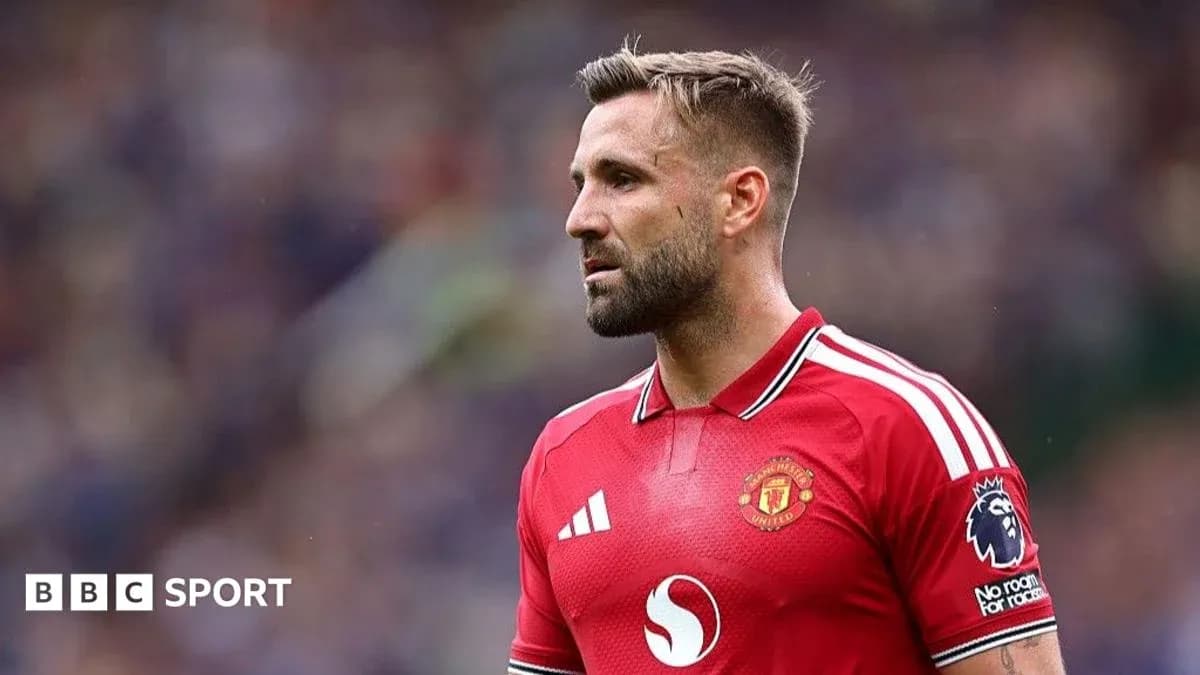
All summer, as the post-2025-26 inquest rolled into a debate over Michael Carrick’s squad, one conclusion felt obvious: United needed cover – and competition – for Luke Shaw.
Shaw was immense last season. Thirty-eight Premier League starts, every single game, from a player whose career has been stalked by injury. Phenomenal, and unexpected. But also unsustainable.
Tyrell Malacia’s exit at the end of June, when his contract ran out, only sharpened the concern. With the 31-year-old Shaw not realistically able to churn through a campaign that could stretch past 60 matches, the logic seemed clear. Someone had to come in.
Names piled up. Lewis Hall at Newcastle. Alejandro Balde at Barcelona. Jorge Salinas at Racing Santander. The late push was for Rayan Ait-Nouri, a bold attempt to tempt him across Manchester on loan. City shut that down.
To make that move work, United would have had to commit to an obligation to buy later on. They chose not to. They chose to wait for what they see as first-choice options.
Now the deadline has gone. The gamble is on. United, and Carrick, will live or die with it until January.
Hall, Baleba and a finite budget
Inside Old Trafford, the feeling about Lewis Hall is clear: they really like him. If Newcastle had been open to a realistic deal, United would have gone for it.
But this was a summer when Newcastle were repeatedly raided by Premier League rivals. When talks turned to the 22-year-old left-back, it became obvious that persuading them would mean a huge fee.
United’s budget was not bottomless. With that reality staring them in the face, they chose to stick to their priority: midfield. The club eventually dropped £70m on Carlos Baleba from Brighton, the big-ticket signing they felt they needed most.
Hall, they decided, can wait until next summer.
The same hardline approach shaped the rest of their left-back search. United were open to taking Balde on loan; Barcelona would only sell. Salinas had a relatively low release clause, but Atletico Madrid were always in pole position. By the time they circled around to Argentina defender Nicolas Tagliafico – and missed out anyway – United’s focus had already shifted.
Their late interest in Ait-Nouri, triggered by an agent’s approach, told its own story. It was a quiet acknowledgement that even they are not completely convinced by the route they’ve taken.
Shaw, Mazraoui… and a teenager in limbo
So this is the plan.
Shaw remains first-choice left-back. Behind him, Carrick will lean on Noussair Mazraoui, who plays on that side for Morocco, with Diogo Dalot able to switch flanks if required, and Harry Amass lurking in the background.
Amass is the curious subplot. A natural left-back from United’s academy, he impressed on loan at Sheffield Wednesday last season before injury struck just after a winter-window move to Norwich. He is 19, and this summer he caught the eye again, tracking Shaw closely during pre-season and looking comfortable in senior company.
Yet United were, at one stage, prepared to let him go.
Back in the summer of 2024, Erik ten Hag left Amass out of his Community Shield squad, even though the teenager had handled himself well against Mo Salah in a pre-season game in the United States just a week earlier. Ten Hag’s verdict then was blunt: physically, Amass was not ready.
Two years on, he should be bigger, stronger, more mature. Interest in him has not been in short supply. His absence from United’s Premier League 2 game against Leicester on Monday, right on the cusp of deadline day, only fuelled the belief that he was heading out on loan.
He didn’t. He stayed. And nobody is quite sure what his role will be in the senior picture.
Yoro’s emergence and a calculated risk
The willingness to see Mazraoui as a left-back option is tied to another development: Leny Yoro’s pre-season.
Signed from Lille in 2024 for £52m as a central defender, Yoro spent much of this summer stationed on the right. Against Ipswich on Sunday, Carrick again used him there, sending him on for Dalot while Mazraoui replaced Shaw on the opposite side.
Yoro is only 20. He has plenty to learn about playing full-back. But he is quick, powerful and comfortable on the ball. United fans need only glance across town at how Josko Gvardiol has adapted to a full-back role at Manchester City, having arrived as a centre-back, to see how such a shift can work.
That is the essence of United’s gamble. They are backing versatility and internal solutions over an emergency signing.
They are also scarred by history. The club was determined not to tear up its summer stance on fees, or to pay beyond what it believed a player was worth. The hierarchy did not want another Alex Telles. Or Matteo Darmian. Or Sergio Reguilon. Deals that filled a hole on paper but fell short of the standard required on the pitch.
On a spreadsheet, the logic holds. The budget went where they felt it was needed most. They resisted short-term panic. They protected future options.
But the game is not played on a spreadsheet.
When Shaw feels the strain of another long season, when Mazraoui is asked to flip sides again, when Yoro is learning on the job and a teenager like Amass watches on, the calculation will be tested in real time.
The judgment will not come from balance sheets or internal briefings. It will come from results, from the noise inside Old Trafford, from the league table in May.
Manchester United have made their bet at left-back. The season will decide whether they were brave – or reckless.