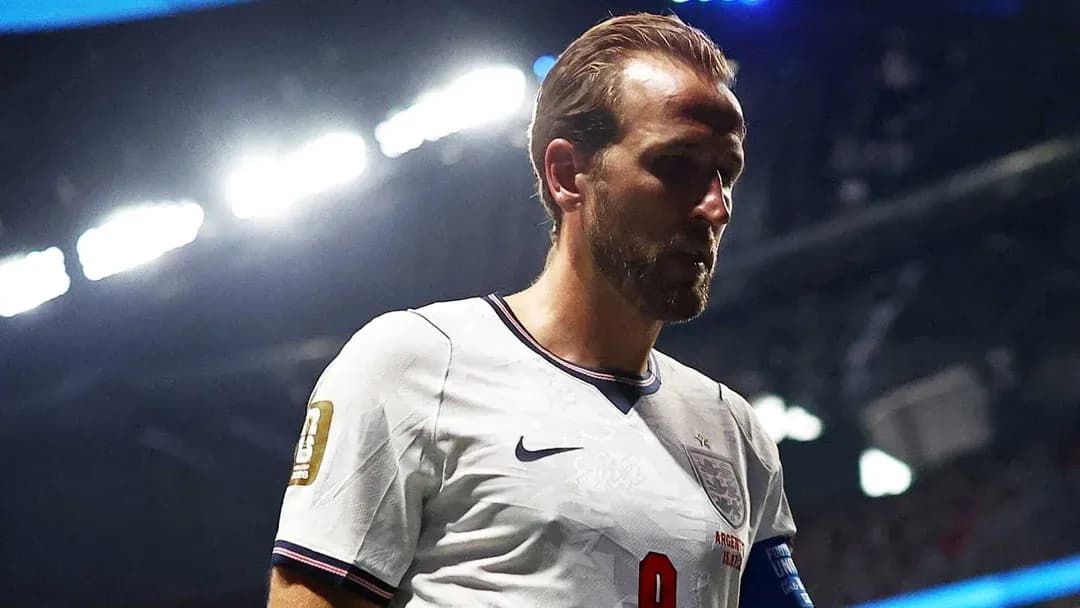
Harry Kane's World Cup Heartbreak: Emptiness After Semifinal Loss
Harry Kane stared at another World Cup dream slipping away and could only describe the feeling in one word: empty.
The England captain, usually measured even in defeat, let the mask drop after the 2-1 loss to Argentina in the 2026 World Cup semifinal. Hours after the final whistle, he took to X and wrote: “There are no words big enough right now to overcome this feeling of emptiness in the stomach.” No spin. No softening. Just the raw confession of a man who has seen this stage turn on him too many times.
England led. That’s what will sting most. For long spells they had a grip on the game, a hand on the ticket to the final. Then the tide turned. Enzo Fernández struck, Lautaro Martínez completed the comeback, and the Albiceleste did what England could not: close the door, slam it shut, and walk through to the grand final.
For England, the pattern is becoming brutal history.
A cruel chapter in a familiar story
England’s relationship with World Cup semifinals is laced with regret. The country that won its first semifinal back in 1966 has now fallen at this hurdle three times in a row: 1990, 2018, 2026. Each exit has carried its own particular pain, but this one cuts along a very specific fault line.
The numbers are stark. In the 21st century, only twice has a team scored first in a World Cup semifinal and still failed to reach the final. Both times, it was England. First against Croatia in 2018. Now against Argentina in 2026.
That is not just misfortune. That is a trend that will haunt debriefs and analysis sessions for years.
Kane’s silent night
Kane’s personal statistics tell their own story. One of the most complete centre-forwards of his generation, a player who thrives in tight spaces and big moments, finished the night without a single touch in the opposition penalty area. For a striker of his profile, that is almost unthinkable.
It has only happened to him twice before at major tournaments. This was the third, and it came on the biggest stage of all, in a game that could have defined his international legacy.
The Bayern Munich forward worked, pressed, dropped deep, tried to knit play, but the decisive actions never came where they matter most. Argentina’s defenders kept him at arm’s length, and as the minutes ticked by, the sense grew that this was not going to be his night.
When the whistle went, Kane did not look angry. He looked hollow.
Emptiness and resolve
His message on X cut through the usual post-match noise. “There are no words big enough right now to overcome this feeling of emptiness in the stomach.” It was a line that captured not only his own mood, but that of a fanbase that has lived this cycle too often: hope, belief, the surge of a lead, then the collapse.
Yet buried in that admission of emptiness is something else: a refusal to accept that this is the end of the story. Kane has carried England through qualifying campaigns, Nations League runs, and deep tournament journeys. This defeat leaves another scar, another semifinal lost, another chance gone. It does not erase what he has already done, and it does not close the door on what might still come.
Tuchel’s task and the road ahead
Thomas Tuchel now faces a ruthless turnaround job. Under his leadership, England have shown enough quality and structure to reach another semifinal, but that is no longer the benchmark. This generation is judged on trophies, not near-misses.
Regrouping will not be optional; it will be urgent. England must shake off the weight of those three semifinal exits and find a way to turn control into closure, leads into finals, promise into silverware.
Kane, meanwhile, carries the wound of yet another World Cup cut short at the penultimate step. The emptiness is real, the frustration obvious. The question that lingers is sharper: can he still bend the arc of his international career toward the ending he has chased for so long, or will nights like this define it?