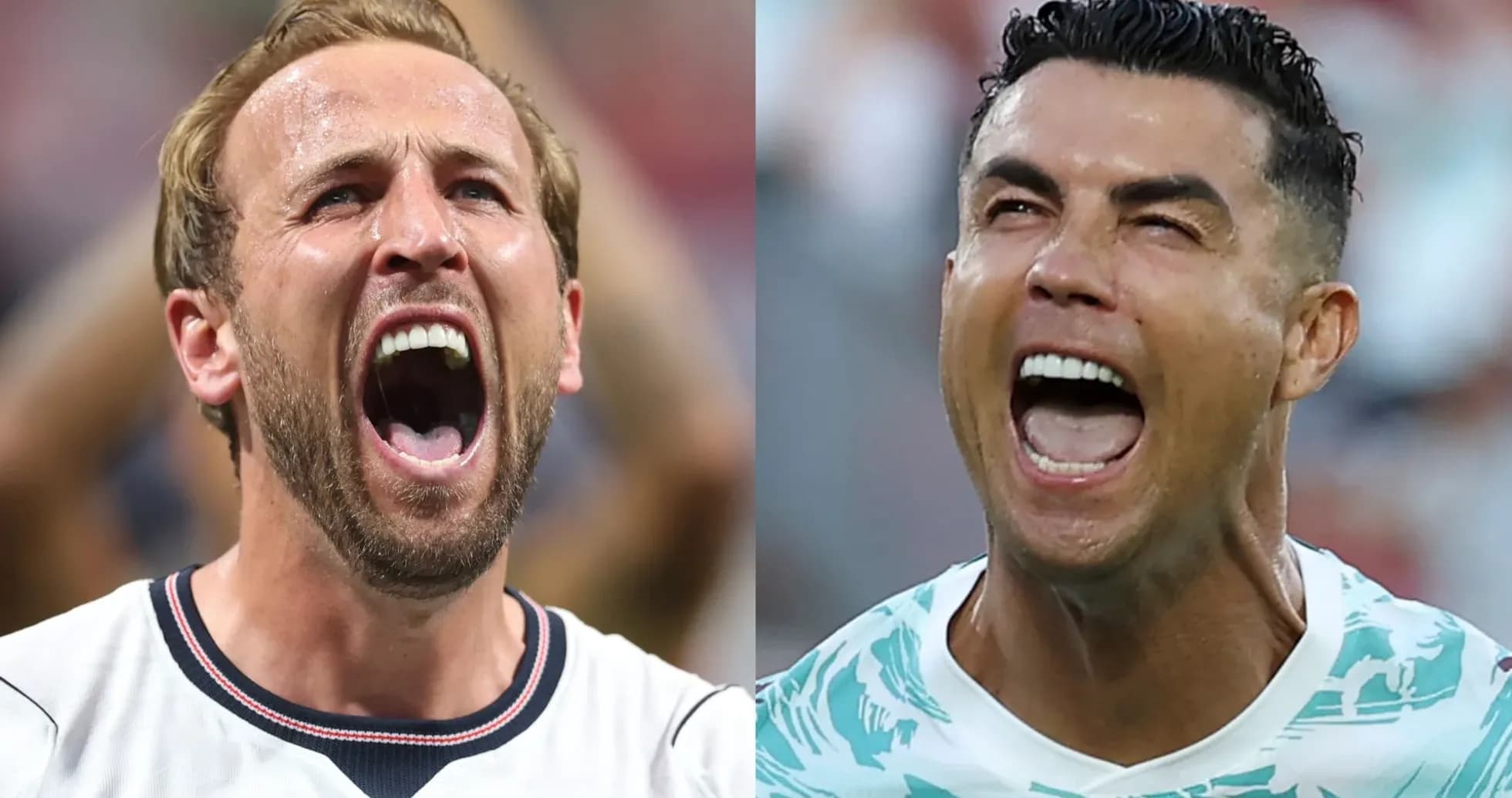
Harry Kane's Longevity: Can He Defy Time in Football?
Harry Kane has spent a decade making the extraordinary look routine. Records fall, milestones tumble, and the England captain just keeps scoring. But even for a striker who has built a career on defying expectation, time remains the one opponent he cannot dribble past.
By the summer of 2028, when England host the European Championship, Kane is expected to stand at the heart of it all once again. He has already led his country to a third-place finish at the 2026 World Cup and sits alone at the top of England’s scoring charts with 85 goals. Only Peter Shilton’s appearance record still stands between him and complete statistical ownership of the national-team history books. Four more caps, and that falls too.
For now, both country and club lean heavily on him. Thomas Tuchel continues to build Bayern Munich’s attack around his No.9, with few genuine alternatives in that role. Kane remains the focal point, the reference, the finisher and the creator rolled into one. But he has just turned 33. The miles on the clock are starting to matter.
The question is no longer whether he is England’s greatest goalscorer. That argument is over. The question now is how long he can keep doing this at the very top.
Cristiano Ronaldo and Lionel Messi stretched the limits of footballing longevity, appearing at the last World Cup at 41 and 39 respectively. They turned age into a challenge rather than a barrier, bending careers into shapes we were never used to seeing. Can Kane do the same? Can a centre-forward whose game has always blended craft with penalty-box ruthlessness carry that burden into his late thirties?
Chris Waddle is not convinced the path is that simple.
Speaking to GOAL in association with BetBrain, the former England winger cut through the romance and went straight to the reality of elite sport. “Fitness is a great thing to have,” he said. “Some players develop, get better as they get older. Some find it easier. Not easier, but easy.”
The Euros on home soil in two years’ time will act as a checkpoint. A measure not just of Kane’s output, but of his legs. Waddle expects the conversation to sharpen by then.
“We'll see how his legs are in two years' time, at the Euros even. People will be questioning that,” he said. “The thing with Harry's advantage is he's a fit lad, we know that. He doesn't rely on pace. He's got a great football brain.”
That brain has already helped Kane adjust his game. He drops deeper, links play, dictates tempo in the final third. He has never been a sprinter in the Kylian Mbappé mould, so he does not lose a weapon he never truly depended on. Yet tournament football is unforgiving. The spotlight is harsh, and the decline of great players often plays out in slow motion for the world to see.
“Sometimes you see players in tournaments and you think, ‘His legs are going there’,” Waddle said. “I'm looking at Ronaldo as an example. I watched Portugal play in the World Cup and his legs were gone in my eyes for that level of football.”
Ronaldo still scores, still dominates headlines, but at international level the intensity exposed the erosion. Messi, Waddle argued, managed the transition more smoothly.
“Lionel Messi still had bits of brilliance,” he said, before adding that the chaos around the Argentina star at times overshadowed his quality. The genius remained, even as the body slowed.
That, in Waddle’s eyes, is the tightrope Kane will eventually walk. There will come a day when the Bundesliga’s tempo bites a little harder, when defenders close him down a fraction quicker than before, when recovery takes longer.
“So I think there's a time and a place where you've actually got to think, ‘Yeah, he can still play, and he can still play like Messi does in Miami, a good level for him’,” Waddle said. “You know, Ronaldo in Saudi can still handle it. And Harry, eventually he'll come to a time where you think the Bundesliga is too quick. Where do you go from there?”
That “where” matters. For Ronaldo and Messi, the late-career chapters came with softened edges: MLS and the Saudi Pro League, leagues where the physical and tactical demands differ from the Champions League and international knockout football. The stage is still bright, but the spotlight less brutal.
Kane’s dilemma, when it comes, will be different. He is not just a star for hire. He is the face of a generation for England, the captain, the penalty-taker, the man expected to deliver in every major tournament. The scrutiny is relentless.
Waddle believes the 2030 World Cup could be a step too far.
“The next World Cup, it's a big ask for him, I think, to play in that tournament,” he said. That is not a question of Kane’s professionalism or desire. It is a recognition of what that level demands from a 37-year-old centre-forward who has carried the load for club and country for so long.
“I think some of these players can think, ‘Yeah, I'm still playing football, but that level's out of me now, and I've enjoyed it’,” Waddle added. “I think some of these players try and play too long and it doesn't look great on them.”
The warning is clear. Greatness can fade gracefully, or it can drag itself across the finish line. The difference often comes down to timing, to the courage to step away from a stage that still feels intoxicating.
Waddle, though, expects Kane to read that moment correctly.
“I'm sure Harry will know when the time's right to say, ‘No, I can't play for England anymore’,” he said.
For now, that decision sits somewhere in the distance. The Euros in 2028 loom first, a home tournament with Kane at the centre of it all once again, chasing one last piece of history on English soil. How many more times he pulls on that shirt after that may define not just how he is remembered, but how long he can keep bending the rules of time.