Group J: Argentina, Algeria, Austria, and Jordan's World Cup Showdown
Anyone pencilling Argentina in for a serene stroll through Group J would do well to rewind to 2022. Saudi Arabia. Lusail. A stunned world. Argentina led at half-time, lost by full-time and turned the group stage into a tightrope walk before they even found their stride. They did not score before the break again until the knockouts.
This time, the cast around them is different but awkward in its own way. Algeria are back, harder and wiser. Austria arrive with a pressing machine built by Ralf Rangnick. Jordan, making their World Cup debut, have already shown they can bloody the nose of a heavyweight by holding South Korea in qualifying.
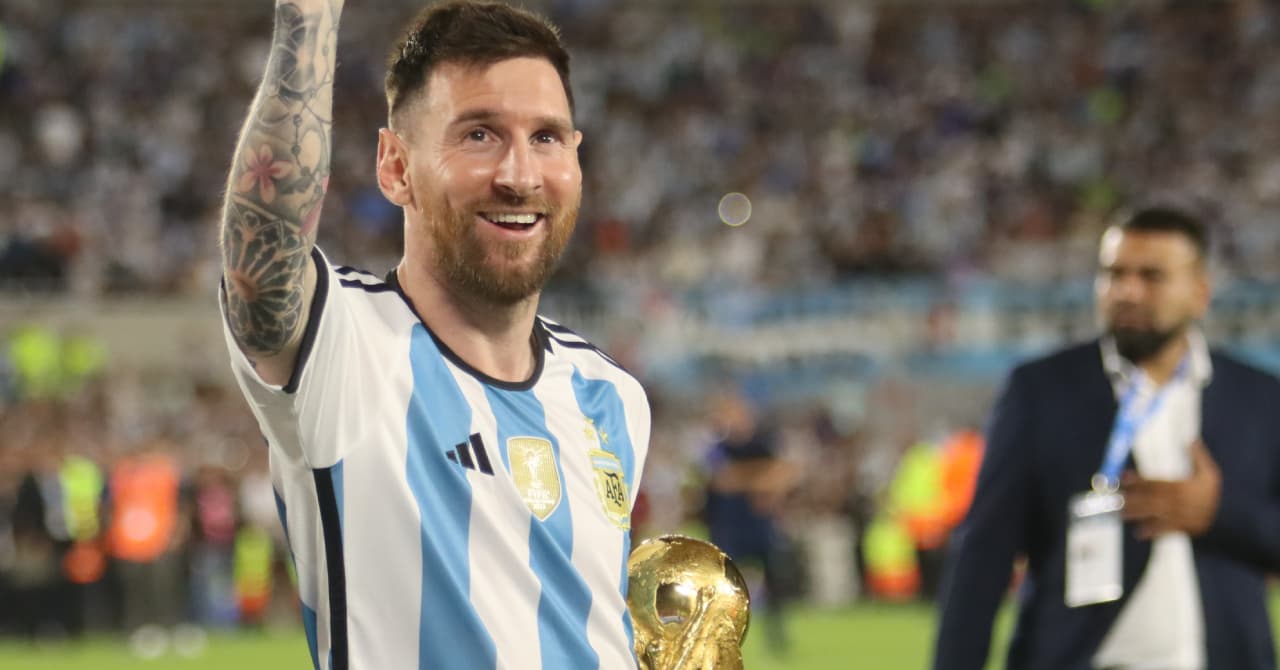
And then there is Lionel Messi, the eight-time Ballon d’Or winner, captain of the holders, turning 39 during the tournament and surely stepping onto this stage for the last time. Group J will orbit around him, but it will not revolve quietly.
Algeria: Mahrez Leads a Renewed Charge
Algeria return after missing two straight World Cups, still chasing the echo of 2014, when they took Germany to extra time in the last 16 and announced themselves as more than just a dangerous outsider. This time, they come under Vladimir Petkovic, a coach with tournament pedigree and a taste for unsettling favourites.
Petkovic’s track record with Switzerland still resonates: Nations League finals in 2018/19, a Euro 2020 run that included wins over Turkiye and France before a penalty shootout exit to Spain. He knows how to shape a team that is hard to shift and even harder to kill off.
The goals in qualifying told their own story. Mohamed Amoura hit 10, seven more than anyone else in Algeria’s group, including a hat-trick against Mozambique. His club form at Wolfsburg began brightly – eight goals in 19 league games – before drying up across his final 11 appearances. Even so, his pace and directness give Algeria a vertical threat few in this group can match.
There is experience and craft everywhere you look. Houssem Aouar, once capped by France, brings Serie A and Ligue 1 nous from his Roma and Lyon days. Amine Gouiri arrives back from injury and with confidence, having scored twice in a 7-0 friendly demolition of Guatemala in Genoa in March. Nabil Bentaleb, now at Lille, adds bite and balance in midfield.
Behind them, Luca Zidane steps into his first World Cup with the surname that always draws a second glance, and with the resilience that comes from returning from a broken jaw and chin at Granada just months before the tournament. On the flank, Anis Hadj Moussa offers end product in capital letters after a season at Feyenoord that brought 14 goals and seven assists.
Rayan Ait-Nouri’s year at Manchester City never quite ignited – early starts, then an ankle injury, AFCON duty and long spells on the fringes – but Pep Guardiola still trusted him with a run of seven straight starts across February and March. That tells you something about his ceiling.
At the heart of it all stands Riyad Mahrez. Captain, reference point, still the man for the moment. Now at Al-Ahli in the Saudi Pro League, he needs eight more goals to become Algeria’s all-time leading scorer. He already has 38 goals and 43 assists from 113 caps, a catalogue that includes driving Algeria to their second AFCON title in 2019 and starring in Leicester City’s miracle Premier League triumph in 2016. He added the Champions League, Premier League and FA Cup treble with Manchester City in 2023, and he remains the player opponents fear most.
He has not slowed much at international level either, scoring three times in two games as Algeria cruised through the 2025 AFCON group stage with a perfect record.
The stakes? High. Their final group game against Austria in particular feels loaded. With eight third-placed teams going through and both nations heavily favoured to beat Jordan, that meeting is likely to decide who qualifies automatically. Algeria have been here before. They will fully expect to be there again.
Argentina: The Champions, the Chase for History, and One Last Dance
No one has retained the World Cup since Brazil in 1962. Argentina arrive in North America determined to end that drought and to close the Messi era on their own terms.
Lionel Scaloni has already changed the history of his country. Copa America 2021. World Cup 2022. Copa America 2024. He is the only Argentina coach to lift both the Copa and the World Cup, the man who finally ended a 36-year wait for that third star on the shirt. This is not a team clinging to nostalgia; it is a winning machine that has grown together.
Much of the Qatar core remains intact. Emiliano Martinez, the penalty-box showman and penalty specialist, keeps the gloves. Cristian Romero and Lisandro Martinez anchor a defence that mixes aggression with control. In midfield, Rodrigo De Paul, Alexis Mac Allister and Enzo Fernandez form a trio that can suffocate games or slice them open.
Up front, Scaloni has options. Julian Alvarez can play wide, through the middle or just off the main striker, a tactical Swiss army knife. Lautaro Martinez leads the line as a pure No 9, relentless in his movement and finishing.
There are absences, and they matter. Angel Di Maria has retired from international football, taking with him one of the defining figures of 2022. Franco Mastantuono, the teenage Real Madrid midfielder whose rise in Argentina drew intense scrutiny during qualifying, did not make the final cut. His omission was the big surprise when the squad dropped.
The one major worry has been Messi’s fitness. A hamstring issue with Inter Miami in May sent a ripple of anxiety through Argentina’s fanbase and dressing room. Scaloni’s public assessment stayed calm, insisting the early reports were “not that bad”, and the expectation is that Messi will be ready for the opener against Algeria in Kansas City.
Messi’s presence is bigger than tactics now. A sixth World Cup. A continent that has adopted him as one of its own. A cultural event as much as a sporting one. He finished CONMEBOL qualifying as top scorer with eight goals and, even at 38, remains the axis of this side. Everything still bends around him.
Argentina should have enough to control Group J. The real judgement on this team will not come in Kansas City, Santa Clara or Dallas. It will come when the knockouts start and the margin for error disappears again.
Austria: Rangnick’s Relentless Pressers
Austria have waited 28 years to come back to a World Cup. They have not returned quietly.
Ralf Rangnick has overhauled the national side with the same clarity he once brought to the Red Bull clubs. High pressing. High risk. High energy. It has transformed Austria from a footnote into one of the tournament’s more intriguing underdogs.
The signs were there at Euro 2024, when Austria finished ahead of France and the Netherlands in their group and reached the last 16. World Cup qualification then underlined the momentum, and this squad may be their strongest since the 1954 team that finished third.
The spine is built in the Bundesliga, a league that mirrors the tempo Rangnick demands. Fourteen of the 26 players are based in Germany. At RB Leipzig, Christoph Baumgartner, Xaver Schlager and Nicolas Seiwald embody the Red Bull philosophy Rangnick helped design: vertical, aggressive, relentless.
Marcel Sabitzer brings 95 caps and the composure of a player who has seen most things with Borussia Dortmund and beyond. Konrad Laimer, now at Bayern Munich, patrols the wide midfield channels with stamina and bite.
David Alaba, at 33, captains the side and remains the calming presence at the back or in midfield. Around him, a new generation is emerging. Carney Chukwuemeka has chosen Austria over England. Paul Wanner, 20 and at PSV Eindhoven, could use this stage to announce himself to a wider audience.
Then there is Marko Arnautovic. Vice-captain. 36 years old. Austria’s record scorer with 47 goals in 132 caps. He travels knowing this could be his last major tournament, one more chance to bend a game to his will.
The standout form player is Baumgartner. The Leipzig midfielder produced 13 goals and 10 assists in the Bundesliga this season, numbers that place him among the most dangerous central players in Germany. His timing between the lines, his late runs into the box, his finishing in tight spaces – they give Austria a scoring threat from midfield that no opponent in this group can ignore.
Austria will not arrive to sit back. They will press, they will chase, and they will test the composure of even the most polished sides. On paper, they look like the most likely team to join Argentina in the top two. The opener against Jordan in Santa Clara offers a platform. How they handle Algeria in that final group game may decide everything.
Jordan: A First Step on the Biggest Stage
Jordan walk into their first World Cup with eyes wide open and shoulders squared. They have not slipped in through a side door; they have fought their way here.
Al-Nashama qualified by finishing second in their AFC third-round group, behind South Korea but ahead of Iraq, Oman, Palestine and Kuwait. That alone speaks to resilience and consistency.
On the touchline stands Jamal Sellami, a Moroccan coach with success in his home league and a continental title on his CV after guiding Morocco’s local-national side to the 2018 African Nations Championship. He has been clear about his ambition: to draw inspiration from Morocco’s run to the semi-finals at Qatar 2022, when they became the first African and Arab nation to reach that stage.
Jordan’s squad has a strong domestic core. Thirteen of the 26 players are based in Jordan, a detail that matters at tournaments where cohesion and familiarity can trump raw talent in the early weeks. They know each other’s habits, strengths, and flaws.
They do, however, carry one major injury blow. Striker Yazan Al-Naimat, a key attacking figure, suffered an ACL injury in December and misses out. It is a significant loss for a side that cannot afford many.
At the back, captain Ehsan Haddad leads from Al-Hussein, while Yazan Al-Arab brings experience from FC Seoul, one of the few in the squad playing outside the Middle East.
The spotlight, though, falls on Mousa Al-Tamari. The Rennes forward is widely regarded as the best player Jordan have ever produced and became the first Jordanian to appear in Ligue 1. At home, the comparisons have earned him the nickname “Jordanian Messi”. The label is heavy, but so is his influence.
If Jordan are to create a shock in this group – a point against Austria, a famous night against Algeria – it is hard to imagine it happening without Al-Tamari at the centre of it.
Their path is clear. Austria in Santa Clara is the most realistic chance of a result. A draw there would resonate far beyond Group J. Anything from Algeria would be historic. And then comes Argentina at AT&T Stadium in Dallas, the final group game, the biggest night Jordanian football has ever known, regardless of what the table says by then.
Group J carries a world champion, a returning force, a rising European project and a debutant with nothing to lose. Messi’s last World Cup, Mahrez’s final tilt, Rangnick’s press and Al-Tamari’s dream all collide here.
The question is not whether Argentina can walk this group. It is who dares to trip them, and who seizes the gap that opens if they stumble again.