Fulham vs Bournemouth: A Clash of Seasonal Identities
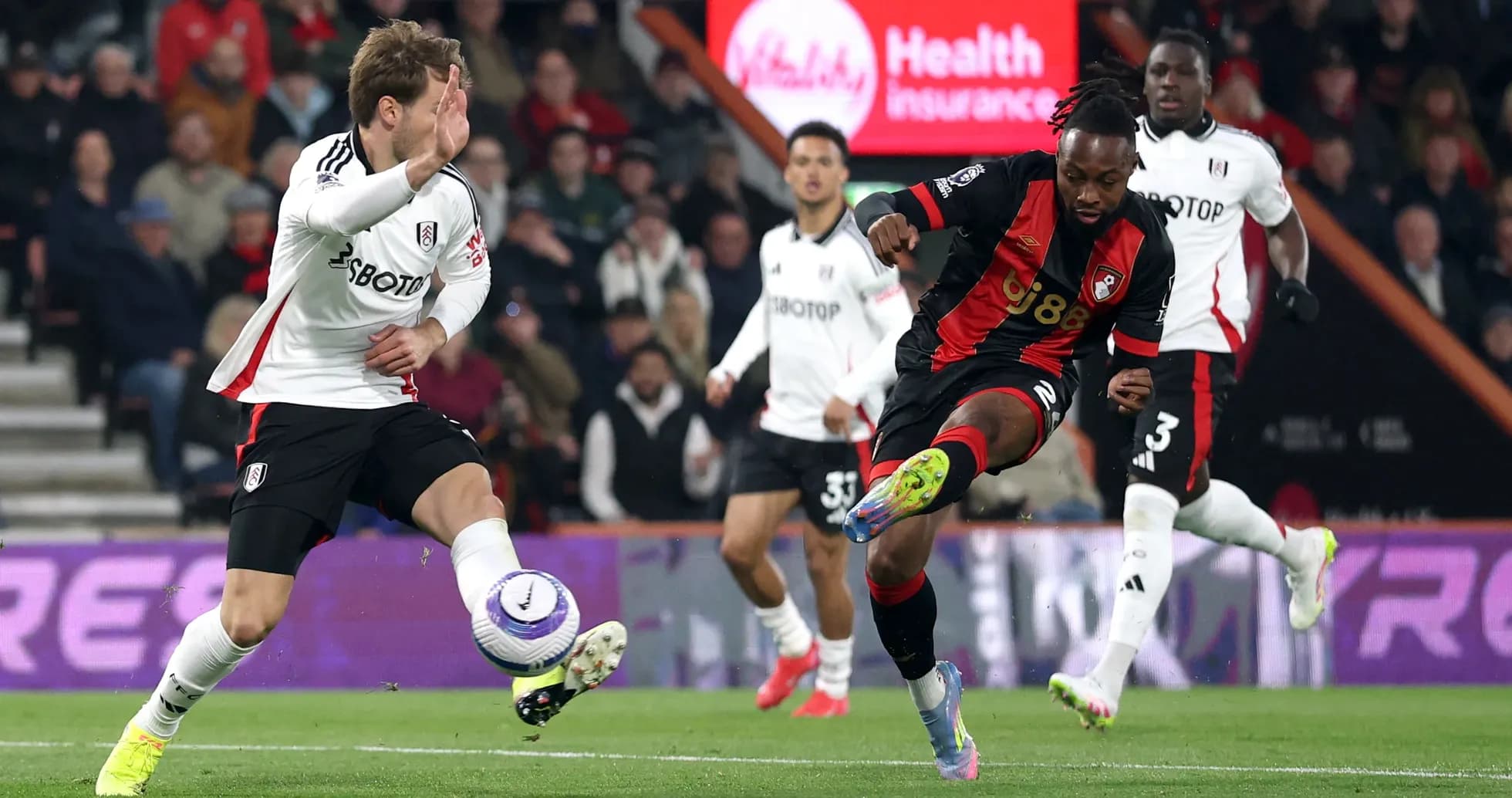
Craven Cottage felt tight and tense as the final whistle confirmed a 0–1 defeat for Fulham, a result that crystallised the contrasting seasonal identities of these two sides. Following this result, Fulham sit 11th on 48 points, their goal difference at -6 (44 scored, 50 conceded overall), while Bournemouth’s 1–0 away success underlined why they occupy 6th with 55 points and a positive goal difference of 4 (56 scored, 52 conceded overall). It was a scoreline that echoed the broader campaign story: Fulham strong but streaky at home, Bournemouth resilient travellers with just enough cutting edge.
At home this season, Fulham have been defined by their Craven Cottage backbone. They have won 10 of 18 home matches, drawing 2 and losing 6, scoring 28 and conceding 20. An average of 1.6 home goals for and 1.1 against paints the picture of a side usually comfortable in their own surroundings. Yet Bournemouth arrived as one of the league’s most obdurate outfits: on their travels they have played 18, winning 6, drawing 7 and losing only 5, scoring 28 and conceding 33, with a matching away goals-for average of 1.6 but a more fragile 1.8 against. The clash was always going to hinge on whether Fulham’s home sharpness could puncture Bournemouth’s Europa League-chasing momentum.
Absences and Tactical Adjustments
The absences framed the tactical voids even before kick-off. Marco Silva had to do without A. Iwobi (injury) and R. Sessegnon (hamstring injury), removing a layer of vertical running and left-sided depth from his options. For a Fulham side that has already failed to score in 11 league matches overall, including 3 at home, losing a versatile ball-carrier like Iwobi mattered. On the other side, Andoni Iraola was deprived of L. Cook and J. Soler (both hamstring injuries), as well as the suspended Álex Jiménez. That stripped Bournemouth of a controlling midfielder and their most combative full-back, a defender who has accumulated 10 yellow cards this season and whose aggressive front-foot style often sets the tone.
In Jiménez’s absence, Adam Smith and Marcos Senesi became even more central to Bournemouth’s defensive identity. Senesi, anchoring a back line that has kept 11 clean sheets overall (5 away), was tasked with organising the block in front of Đorđe Petrović. The goalkeeper’s presence, combined with a compact back four including Adrien Truffert, allowed Bournemouth to sit slightly deeper and invite Fulham into the central channels where they could be pressed and turned.
Fulham’s Formation and Strategy
Fulham’s starting XI reflected Silva’s season-long preference for a 4-2-3-1 base, even if the formation line in the match data is blank. Bernd Leno, backed by the reliable pairing of Joachim Andersen and Calvin Bassey, offered structure from the back. Andersen’s season has been defined by his blend of distribution and last-ditch defending: across the campaign he has made 45 tackles, 19 successful blocked shots and 36 interceptions, but also carries the edge of a defender who has already seen red once. That mix of authority and risk set the tone for Fulham’s high defensive line.
The full-backs, Timothy Castagne and Antonee Robinson, were crucial to stretching Bournemouth’s block. With Saša Lukić and Tom Cairney in midfield, Fulham sought to build patiently before releasing their creative trident: Harry Wilson, Emile Smith Rowe and Samuel Chukwueze behind Rodrigo Muniz. Wilson, one of the league’s most productive wide creators with 10 goals and 6 assists overall, again carried the dual responsibility of scorer and provider. His 761 passes with 38 key passes and 81% accuracy this season underline how often Fulham funnel attacks through his left foot.
Yet Bournemouth’s engine room refused to yield. Alex Scott and Ryan Christie anchored a midfield that was more disruptive than expansive. Christie, who has 27 tackles, 4 blocks and 12 interceptions overall, played the role of enforcer, snapping into duels and bridging midfield to the pressing line of Marcus Tavernier and Eli Junior Kroupi. Christie’s season has also been punctuated by disciplinary edge – 3 yellows and 1 red – but here his aggression was channelled into structure rather than chaos.
The Duel: Kroupi vs Fulham’s Defence
The “Hunter vs Shield” duel was epitomised by Kroupi. As Bournemouth’s leading scorer in the league with 12 goals and 2 penalties converted, he is used to attacking from between the lines, drifting off the flank or from a nominal attacking midfield berth. Against a Fulham side that concedes an average of 1.4 goals per game overall (1.1 at home), Kroupi’s movement between Andersen and Robinson posed a constant threat, even when he wasn’t the one applying the final touch. His 21 key passes and 34 dribble attempts this season speak to a player comfortable both creating and finishing transitions.
Behind him, Evanilson’s presence as the central forward pinned Fulham’s centre-backs, creating pockets for Tavernier and Rayan to attack. Bournemouth’s season-long pattern of late intensity – reflected in their high yellow-card concentration between 76–90 minutes at 27.71% – again surfaced as they dug in to protect their narrow lead, contesting every second ball and accepting the bookings that came with it.
Disciplinary Profiles and Game Dynamics
Fulham’s own disciplinary profile hinted at why chasing the game became increasingly ragged. Their yellow-card distribution peaks late: 23.29% of their yellows arrive between 91–105 minutes, with another 20.55% between 76–90. As Bournemouth retreated into a compact 4-2-3-1, Fulham’s frustration grew, the tackles looser, the attacks more direct and less patterned. Lukić, who has committed 50 fouls this season and collected 9 yellows, embodied that rising temperature in the engine room.
From a statistical prognosis perspective, the result fits the underlying trends. Heading into this game, Fulham were a mid-table side with a strong home record but a negative overall goal difference, suggesting that when they lose, they tend to lose heavily, and when they win, it is often by narrower margins. Their average of 1.2 goals scored and 1.4 conceded overall is the profile of a team living on fine margins. Bournemouth, by contrast, marry a balanced overall scoring rate of 1.6 goals for and 1.4 against with an unusual number of draws (16 overall), indicating a side comfortable in tight, low-margin contests.
Clean sheets offer further clarity. Fulham’s 8 overall (5 at home) are respectable, but Bournemouth’s 11 (5 away) show a defensive platform that travels. In a match where Expected Goals would likely have been close – Fulham probing, Bournemouth waiting for the one decisive moment – the away side’s superior defensive solidity and game management told.
Conclusion
In narrative terms, this 0–1 at Craven Cottage is less an upset and more a crystallisation of identity. Fulham, driven by the craft of Wilson and the distribution of Andersen, remain a side whose best days are expansive and attacking, but who can be suffocated when denied space. Bournemouth, even without L. Cook and Álex Jiménez, showed the hallmarks of a Europa League contender: adaptable structure, ruthless exploitation of moments, and the calm to defend deep under pressure.
Following this result, the table and the numbers align with the eye test. Fulham’s season is one of respectable stability tinged with inconsistency; Bournemouth’s is of incremental, data-backed ascent. On a tight west London afternoon, the margins were small, but the patterns were anything but accidental.