
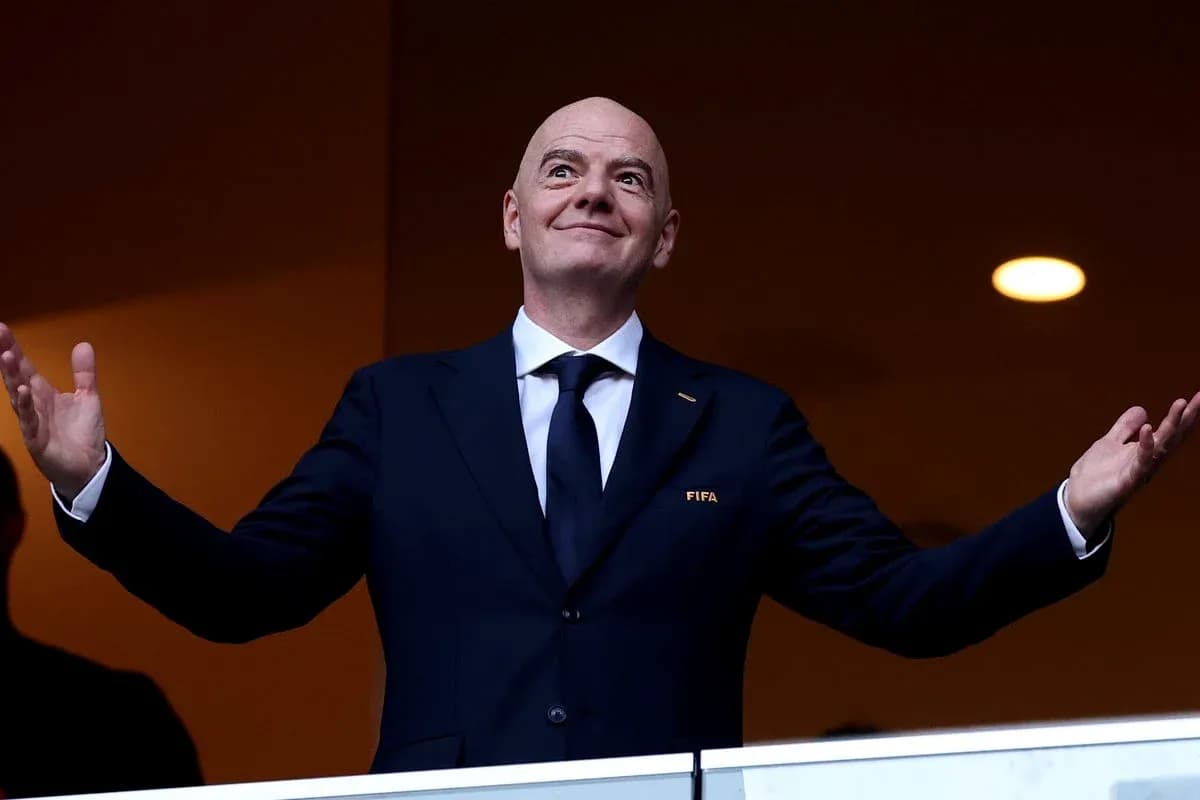
Fifa's Struggle for Trust Amid Controversy
Fifa says confidence is being restored. How do we know? Because Fifa says so.
In a week when world football’s governing body has lurched from crisis to damage control, the organisation has tried to draw a line under the fiasco surrounding its so‑called “Fifa Forward Enterprise proposal” with a joint letter from Gianni Infantino and secretary general Mattias Grafstrom. The message: mistakes were made, trust us anyway.
The problem is that trust is precisely what has been squandered.
A coup in all but name
A global sport found itself on the brink of a structural upheaval because of one man. Infantino either dreamed up a plan to effectively sell off the World Cup and forgot to tell almost everyone, or he attempted a power grab so brazen it left even Fifa insiders stunned.
The list of people left in the dark was staggering: chief operating officer Kevin Lamour, head of global football development Arsène Wenger, confederations, clubs, national associations, players, fans. The very ecosystem that sustains the game. The proposal surfaced without proper consultation, yet carried the promise that FAs who backed it would receive more money from Fifa than those who did not. Many saw that as perilously close to outright bribery, even if Infantino’s letter never goes near the word.
The backlash was immediate and fierce. Member associations queued up to oppose it. Some called directly for Infantino to go. The governing body’s own description of a “constructive and positive meeting held in Rabat, Morocco” jarred with the reality that its only elected official, chosen by 211 associations, now stands at the centre of a storm of his own making.
Orwellian reassurance
Under pressure, the proposal has been taken “off the table”. Fifa’s account of how we got here, though, stretches the limits of credibility.
“Fifa’s top management is fully confident that the outcomes of today’s meeting will help restore confidence in the organisation,” Infantino and Grafstrom declared in a 19‑word sentence that captured the surreal tone of the whole episode. The man who has become arguably the most divisive figure in football now presents himself as the one who will heal it.
“Mistakes made were acknowledged,” the letter added, as if a vague nod towards contrition could erase the secrecy and the attempted end run around the game’s stakeholders. The closest thing to an apology came in one line: “It was agreed that it was not the intention for the Fifa council and Fifa member associations to feel excluded from the process.”
Not the intention? Then why were they excluded?
A scheme known in advance only to a tight inner circle – one so restricted it reportedly extended to members of the Kushner family before it reached much of the football world – was hustled towards a vote with differential funding dangled as an incentive. Now, with the plan shelved, the promise is of a review. But who will run it? The same Infantino‑aligned leadership that drove the project in the first place, and that will be trusted to reach the “right” conclusions.
Thin skin, thick mud
The defensive tone of the Rabat communiqué echoed the touchiness Infantino has shown in recent social media posts. Criticism, in his world, is no longer part of accountability. It is an “attack”.
“It was agreed that Fifa will no longer tolerate any attacks on its integrity, good governance and due process and will take all necessary measures to protect and safeguard its name and reputation,” the statement warned. The language would not look out of place in a political rally. Donald Trump has long painted himself as the victim of witch-hunts and unfair assaults; Fifa now reaches for a similar script.
The problem is that the reputation they want to “safeguard” has already been dragged through the mud by their own actions. Under Infantino, Fifa has become shorthand for greed and favouritism. Decisions have repeatedly bent to suit stars, sponsors and powerful allies.
Suspensions for Cristiano Ronaldo and Folarin Balogun were quashed. Rules were twisted to usher Lionel Messi’s Inter Miami into the Club World Cup. Somali referee Omar Artan was barred from entering the United States, with Fifa effectively acquiescing to a national ban that undermined its own authority. The organisation cosied up to Trump. It even created a peace prize, only to award it to a man who later launched an illegal war.
Each episode chipped away at whatever moral authority Fifa still claimed. The World Cup, the game’s shared treasure, became another asset to be leveraged. In the United States, ordinary fans did not blame “the system” for sky‑high ticket prices. They blamed Fifa by name.
They did not see an impartial guardian of the sport when the Trump administration appeared to receive preferential treatment and White House politics seemed to seep into football’s decision‑making. They did not see a body that represents the global game when Fifa tried to repackage and sell its showpiece tournament without most of that global game even knowing.
What real restoration would look like
Fifa now says confidence is on the mend. It insists the meeting in Rabat has reset the course. It vows there will be no repeat of the way this proposal was handled.
But confidence cannot be restored by proclamation. It cannot be willed back into existence by a joint letter from the same leadership that lost it. It has to be earned, slowly, through transparency, genuine consultation and a willingness to face uncomfortable truths.
That means more than a carefully worded acknowledgement of “mistakes”. It means real honesty. It means accepting that an organisation so compromised cannot be renewed by the very regime that presided over its decline.
For all the upbeat spin from Infantino’s inner circle, the latest dispatch from Fifa world offered none of that. The question now is not whether Fifa can repair its image under this president.
It is whether it can do so at all without changing the man at the top.




