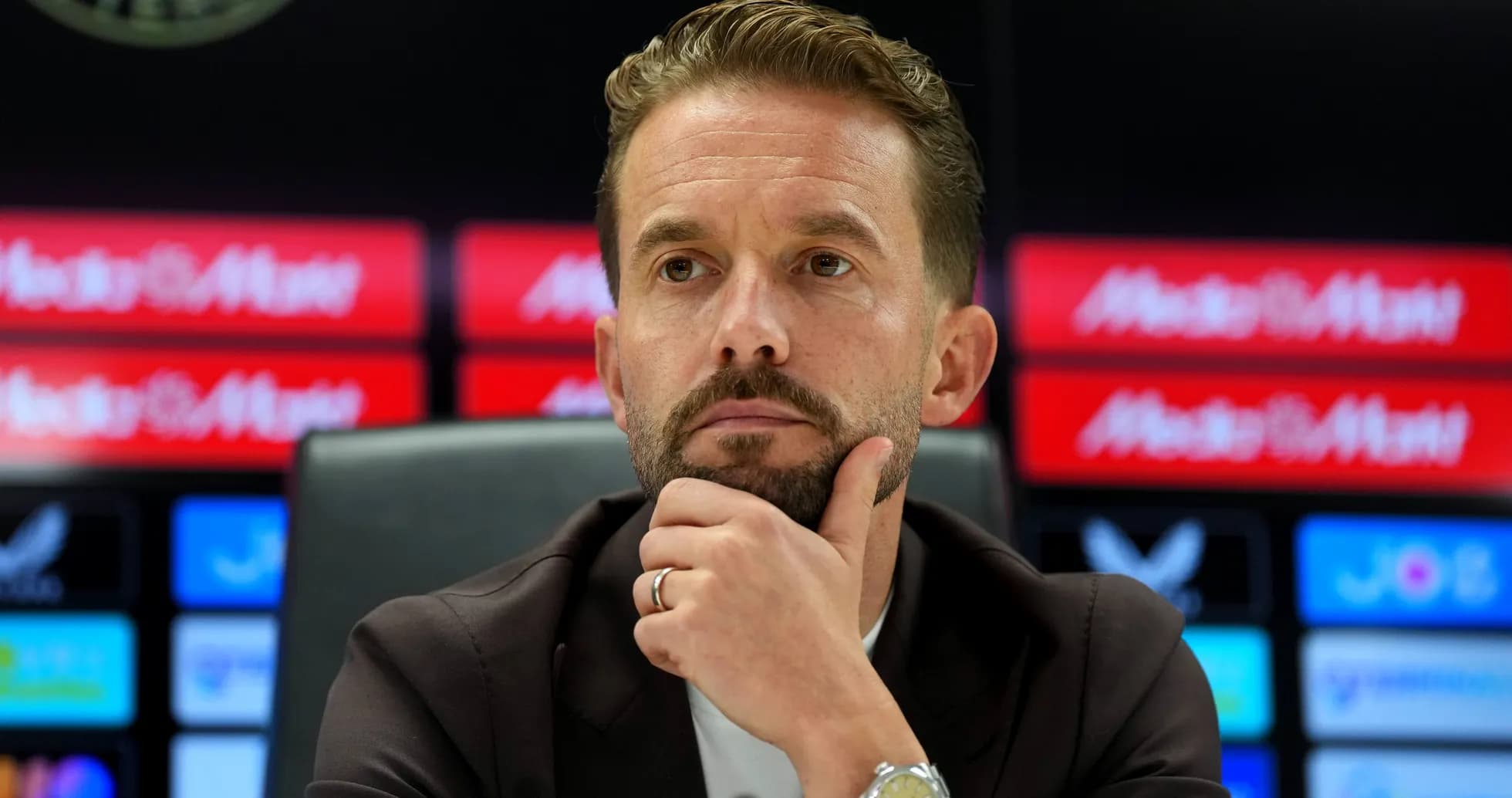
Feyenoord's Technical Director Dévy Rigaux Faces Harsh Criticism
Valentijn Driessen and Mike Verweij have little patience left for Feyenoord’s new technical director Dévy Rigaux. In the Kick-off podcast of De Telegraaf, the pair dismantle his first months in Rotterdam and label his debut transfer window a failure.
‘I fear the worst’
Verweij sets the tone straight away. That much-discussed round-table session Rigaux held with journalists? It rang every alarm bell for him.
"When I look at that round-table discussion by Rigaux with several journalists, I really fear the worst," he says, before drawing a sharp comparison. "I hope this does not become the new Sven Mislintat."
The Ajax reference is no coincidence. Verweij sees the same patterns emerging.
According to him, Rigaux’s statements about key players and transfer dealings betray a worrying naivety. "He says: 'No club is allowed to talk to Hadj Moussa, because he has an ongoing contract.' Well, that is very naive, because it happens everywhere."
The criticism doesn’t stop there. Verweij also points to Rigaux’s handling of the negotiations around Read. The Belgian denied there had been a €30 million offer, insisting only an ‘official’ bid of €26 million existed.
"But in telephone contact Roma immediately indicated they wanted to move towards that 30 million," Verweij counters, suggesting Feyenoord may have downplayed or mishandled the situation.
The Mislintat parallels
Verweij keeps coming back to the former Ajax director. Not just in style, but in recruitment choices.
"He brings in players from the second Bundesliga," Verweij notes, again echoing the Mislintat era in Amsterdam, where signings from Germany’s second tier became a symbol of a failed policy.
There’s another echo he doesn’t like: the reception in the media. "You can sense in the media that everyone is over the moon with Rigaux, as if a world wonder has walked in. That was also the case with Mislintat."
The warning is clear. Feyenoord, in his eyes, risks repeating a very recent Dutch football horror story.
Driessen: ‘Scandalous round-table’
Driessen then steps in and turns up the heat. He calls Rigaux’s media appearance "truly a scandalous round-table discussion."
What irritates him most is the way Rigaux spoke about the period under Dennis te Kloese, the man who helped steer Feyenoord back to the top.
"He did not say it directly, but he did let all kinds of things slip about the Te Kloese period," Driessen says. "Too many players, far too much in wages, too many write-downs... He knew what he was getting into, didn't he?"
For Driessen, Rigaux is trying to distance himself from the past while still benefiting from the foundation it laid.
"Well, I'm very curious whether in that, according to him, 'completely different way' he is going to achieve the same results as Dennis te Kloese," he fumes.
Champions League warning
The sporting consequences worry them just as much as the rhetoric.
Driessen paints a bleak picture of Feyenoord’s European prospects with the current squad.
"You can go into the Champions League with this team," he says, "but you will finish bottom without a chance. And then what is the value of Read, Hadj Moussa and Zechiël?"
The message is brutal: if Feyenoord crash out early and convincingly, the club’s prized assets risk losing shine and market value. For a club that relies heavily on transfers, that’s not a minor concern. It strikes at the core of the project Rigaux is supposed to lead.
‘Everyone falls for his slick talk’
Verweij closes the segment with a fourth comparison to Mislintat, this time aimed at Rigaux’s communication style and his assessment of players.
"Everyone falls for his slick talk!" he snaps, before bringing up goalkeeper Tjark Ernst as an example of what he sees as overblown claims. "Tjark Ernst, material for Die Mannschaft... Every diagonal ball is a goal conceded!"
The sarcasm is unmistakable. So is the verdict.
In their eyes, Feyenoord haven’t just appointed a new technical director. They’ve taken a gamble on a profile Dutch football has already seen explode at a rival. The question hanging over De Kuip now: is Rigaux building a long-term structure, or laying the foundations for the next crisis?