Everton's Season Review: From Promising Start to Disappointment
For much of last season, Everton’s gaze was fixed on the sky.
Jack Grealish, borrowed and brilliant, lit up the early months. Kiernan Dewsbury-Hall kept deciding tight games with the air of a man who relished the responsibility. Up front, Thierno Barry and Beto shook off their stuttering starts and finally began to look like Premier League strikers.
The mood crystallised on 21 March. A 3-0 demolition of Chelsea at Hill Dickinson Stadium pushed Everton up to eighth, three points off the Champions League places with seven matches to go. The new ground felt like a launchpad. Europe wasn’t a dream; it was a plan.
Then the season fell apart.
Everton did not win another game. Not one. It was the club’s longest winless run since David Moyes returned for his second spell in 2025, and it turned a season of promise into one of frustration.
The turning point came at Brentford on 11 April. A 2-2 draw on paper looked respectable. In reality, it marked the start of a slide that left Everton ranked in the bottom three over the remainder of the campaign. Across that stretch, only Burnley and Wolves matched their failure to win a single match. Burnley went down. Wolves flirted with disaster. Everton, somehow, were still talking about Europe.
They reached their final home game of 2025-26 against Sunderland with continental football still mathematically alive. In his programme notes, chief executive Angus Kinnear described himself as “happily dissatisfied” with the season – a phrase that jarred even before kick-off. Ninety minutes and a 3-1 defeat later, it sounded badly misjudged.
Promoted Sunderland rode that result and their momentum all the way to seventh, securing European football for the first time in 53 years. Everton, who had spent most of the year peering upwards, watched them disappear over the horizon.
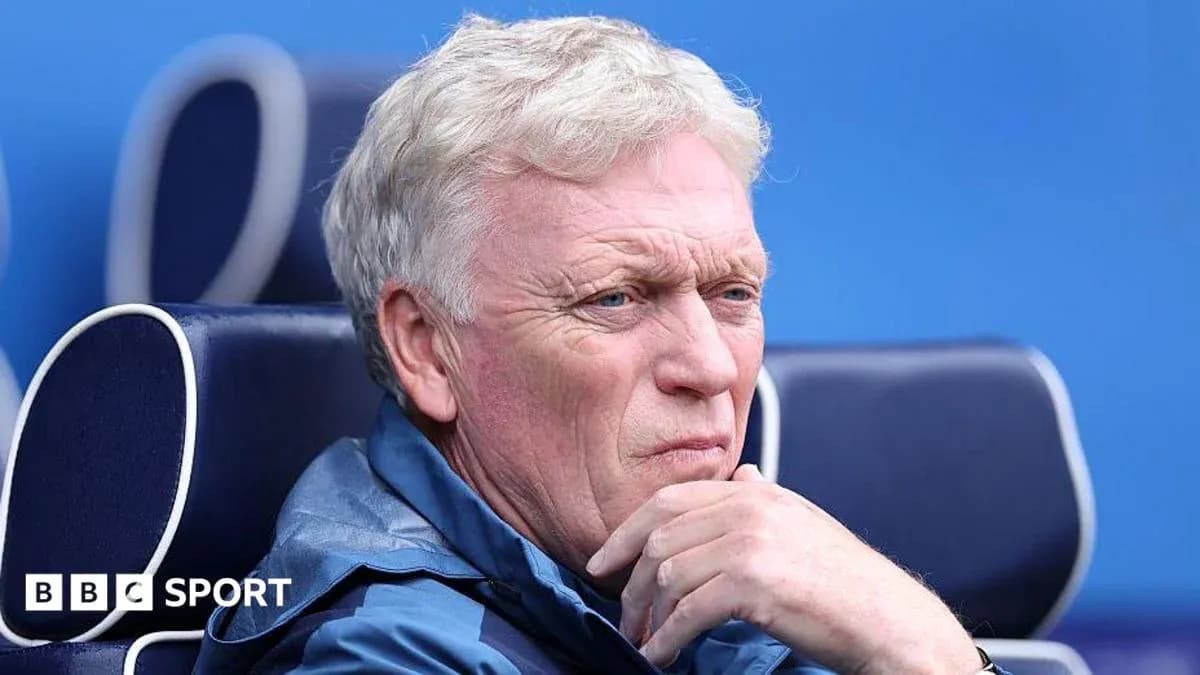
For Moyes, the irony is brutal. Two seasons back at Goodison – now transplanted to the gleaming Hill Dickinson Stadium – and two 13th-place finishes. Identical in position, wildly different in tone.
When he walked back through the door 18 months ago, Everton were one point above the relegation zone and drowning in anxiety after years of financial breaches, points deductions and survival scraps. He hauled them 23 points clear of the bottom three by the end of that campaign. Stability, long absent, finally returned.
Last summer, with the Friedkin Group in charge and optimism rising, Everton pushed harder. A club-record net spend of £97m signalled intent. The outcome? Thirteenth again, with a single extra point to show for it.
To some, that reads as stagnation. To others, it looks like the next step on a long road back.
Leon Osman, who knows Moyes and Everton as well as anyone, sits firmly in the latter camp. The former midfielder watched the team “fly out the blocks” when Moyes returned, then maintain that level for more than a year before the collapse at the end of last season. For him, the broader arc still bends upward: two mid-table finishes instead of flirting with the trapdoor, a calmer club in the wake of chaos.
Moyes, 63, has not hidden from the financial reality. Everton rank only 15th among current Premier League clubs for net spend across the past five years. The arms race at the top has left them trying to punch above their weight.
Yet the league table offers an uncomfortable counter-argument. Bournemouth, who actually made an £81m profit in last summer’s window, finished sixth. Brighton, £41m in the black, took eighth. Both clubs have built reputations on smart recruitment and clear football identities. Both are now where Everton want to be.
The move to the state-of-the-art Hill Dickinson Stadium was supposed to narrow that gap. Instead, it exposed another fault line. Everton’s home return of 1.2 points per game was the worst of any side beginning life in a new Premier League ground. Their away form, by contrast, sat in the division’s top seven. The new home, for now, feels more like a showroom than a fortress.
Osman argues that Bournemouth and Brighton are “further along in their development”, while Everton are still adjusting after years of turbulence and a stadium move that has changed everything from routine to atmosphere. He also points to one moment that altered the course of the season: Grealish’s injury in January.
The numbers back him up. With Grealish, Everton won 45% of their matches and averaged 1.6 points per game. Without him, their win rate was sliced in half to 22%, and their return dropped to a single point per game. One player, one fracture, and the whole structure shook.
Moyes’ intensity, usually a strength, became another factor. With a small squad, that relentless drive proved hard to sustain. By the run-in, legs and minds looked heavy.
No one at Everton, though, is talking about relegation any more. That alone marks a shift from the panic of the recent past. Moyes has 12 months left on his contract, and the expectation is that he will see it out. The next year will define whether this is a plateau or a launch.
The recruitment question still hangs over everything. Under Farhad Moshiri, eight players signed for £20m or more walked away for nothing. It was a damning symbol of waste and drift. The Friedkin Group tried to reset the approach last summer, bringing in nine players with an eye on youth and upside. So far, the return has been mixed.
Grealish and Dewsbury-Hall delivered immediately. Others are still stuck in the waiting room. Tyler Dibling, a £35m winger from Southampton, started only six league games. Left-back Adam Aznou, signed from Bayern Munich, is still waiting for his Premier League debut. Barry, 23, dominated in the air – no player won more aerial duels in their first Premier League season – but his finishing veered from ruthless to erratic. Merlin Rohl barely featured until May, then impressed across four late starts that hinted at more to come.
There are more decisions to come in this window. BBC Radio Merseyside’s Giulia Bould reports that Grealish is expected to re-sign on loan later in the summer as he continues his recovery from a stress fracture in his foot. His wages, around £200,000 per week, would remain a significant commitment for a club still repairing its finances.
Iliman Ndiaye, another key attacking piece, has been linked with a move to Saudi Arabia. Osman would welcome Grealish back – at the right price – and dreads losing Ndiaye. The calculation is brutal but familiar: at what point does a fee become too big to refuse, and can it genuinely be turned into two or three players who raise the collective level?
Experience is draining away as well. Seamus Coleman and Idrissa Gueye have gone, taking more than 600 Premier League appearances with them. That loss of know-how explains Everton’s interest in adding someone like Christian Nørgaard, while the news that James Garner will miss the start of the season after groin surgery only deepens the need for midfield reinforcements.
For now, Moyes stands in a curious position. His instinct is to lean on players he trusts. The squad he has may force him to do the opposite.
Younger talents such as Dibling and Youssef Chermiti George sit on the edge of the side, waiting for a run that has never quite arrived. Osman’s challenge to them is blunt: prove you deserve to play. A year under Moyes, a year understanding what he demands, should strip away excuses. If they step up, Everton’s squad suddenly looks deeper, fresher, more reliable.
If they don’t, the club risks another season marooned in the middle – too good to panic, not sharp enough to dream.
Everton have escaped the chaos. The next step is harder. Can they escape the comfort of 13th?