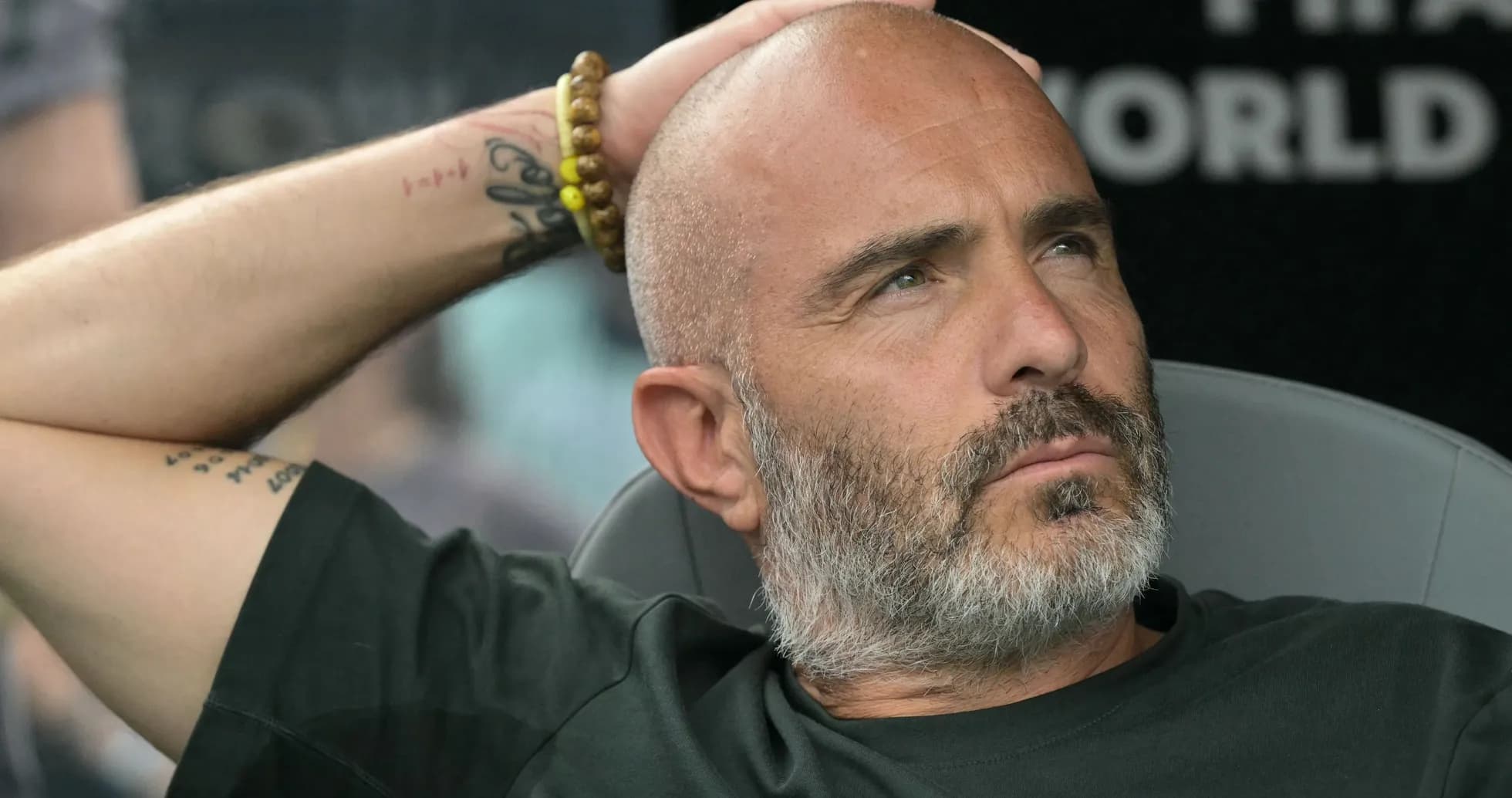
Enzo Maresca Returns to Manchester City as Head Coach
Enzo Maresca leans into the microphone, offers condolences to the family of Kevin Keegan, and only then talks about himself. Before a ball has been kicked, the new Manchester City head coach makes one thing clear: he understands the room he has just walked into.
“I feel as though I have returned home,” he says. And in many ways, he has.
A familiar face, a very different job
This is Maresca’s third spell at City, but the first with his name on the door. He once coached the club’s elite development squad, then served as Pep Guardiola’s assistant during the 2022-23 season. Now he inherits the entire project, the most finely tuned machine in English football.
He knows exactly why he said yes.
“I know the institution well, and I have known the people inside the club for years,” he explains. The word “institution” is doing heavy lifting here. City have had only three coaches across roughly 17 years – Roberto Mancini, Manuel Pellegrini, Pep Guardiola. That level of continuity is almost unheard of in the modern game, and Maresca knows he is stepping into a structure that does not panic.
“The club's stability… reflects the strength of the administrative structure and its belief in giving projects time,” he says. “From the moment Manchester City contacted me, I had no doubt about accepting this challenge.”
Challenge is the right word. The shadow of Guardiola stretches across everything.
Living with Pep’s shadow
Following Guardiola is football’s equivalent of stepping on stage after a generational headliner. Maresca does not pretend otherwise.
“First of all, it is a great privilege that this club has chosen me,” he says. “Pep is perhaps the best coach in the world over the past twenty or twenty-five years. At the same time, it represents a wonderful challenge.”
He reaches for the only sensible comparisons: Sir Alex Ferguson at Manchester United, Arsène Wenger at Arsenal. Long dynasties, heavy legacies, impossible standards.
“If we look at the history of coaches who stayed for many years at their clubs… we will find that they faced great challenges,” he says. “My goal now is to do the right things from the very beginning for the sake of the club and the fans.”
The “institution”, he repeats, is what gives him confidence. The same boardroom that backed Mancini, Pellegrini and Guardiola has now put its faith in him. The message is obvious: this is not a short-term hire.
Transfers, tweaks and a restless market
The summer window, for Maresca, is not a line in the sand but a moving target.
“I think there is always something that can be done,” he says. City are “aiming to achieve certain objectives”, but he points out that everything depends on the “dynamics of the transfer market”. Deals still need to be completed. Work is ongoing.
On the pitch, he is not planning a revolution. His identity at Leicester City and Chelsea helped earn him this job, and he intends to carry those principles into the Etihad.
“I had a clear identity at Leicester and Chelsea, and perhaps that was one of the reasons Manchester City signed me,” he says. Some of his ideas, he notes, are similar to what Guardiola put in place.
Press hard when the ball is lost. Control the match. Impose your style. Win.
Those are the pillars. The details, though, will keep evolving. “Everything changes over time, and you have to adapt to that,” he says. Set pieces, man-to-man defending, the way teams press – all of it shifts, and coaches must find new answers.
Rodri, rumours and recovery
One of the key answers in recent years has been Rodri. So any whisper about his future immediately sets alarm bells ringing around City.
Maresca brushes off the noise.
“Big players are always surrounded by rumours,” he says. That is especially true after a World Cup win and a string of dominant seasons. “Any coach in the world would want to sign Rodri,” he admits, but the priority now is surgery, rest and recovery. The plan is simple: Rodri goes under the knife on Monday, then returns to City once he is ready.
No drama. Just a timeline.
The same calm tone appears when Chelsea enter the conversation. The London club released a pointed statement after his departure. Maresca refuses to bite.
“I feel fortunate that I worked at Leicester and Chelsea,” he says. Successes, a clear identity, gratitude. Then the door closes. “My focus now is entirely on Manchester City, and there is nothing I have to add.”
Grealish, Trafford and the human side of the squad
If the transfer market is fluid, Maresca’s stance on his current players is straightforward: if they wear City colours, they are his responsibility.
“Jack is here, and he is a Manchester City player,” he says of Jack Grealish. “As long as the player belongs to the club, it is my duty to work with him.” He speaks warmly of Grealish’s “big heart” and “wonderful personality” and leaves the future open-ended: “We will see what happens later.”
James Trafford, the young goalkeeper he once coached in the under-23s, gets a similar treatment.
“I know James well, as he was my goalkeeper when I was coaching the under-23 team,” Maresca says. The window is open, “anything is possible”, but for now Trafford is “one of our goalkeepers”. No promises, no public nudges toward the exit. Just a clear statement of the present.
While the senior stars filter back at different speeds after a long season and international duty, Maresca has thrown himself into work with the club’s youngsters.
“The last group of players will join three or four days before the Community Shield match,” he explains. Only then will he have the full squad. Until that moment, the kids are getting their chance.
He likes what he sees. “They have great energy, and some of them are delivering very impressive levels,” he says. There is genuine enthusiasm in his assessment. For a coach who came through City’s youth structure, that matters.
Long balls at the Etihad?
The tactical question that cuts through the room is a simple one: what will change?
Maresca insists his core principles will stay close to what supporters have grown used to. Possession, pressure, control. But he is not dogmatic. The idea of City going long, especially with a goalkeeper like Gianluigi Donnarumma and a striker like Erling Haaland, is on the table.
“That could be one of the solutions,” he says. Sometimes you play short, sometimes you go long. It depends on the opponent. With Donnarumma’s range and Haaland’s power, City have a direct route if they want it.
“This will not be the only solution,” he stresses. The job is to “find varied solutions that suit different matches.”
That line may define his tenure. The Guardiola era built a footballing language that dominated England and Europe. Maresca’s task is not to translate it word for word, but to write the next chapter without tearing up the book.
He calls it home. Soon enough, the Etihad will decide whether it feels the same.