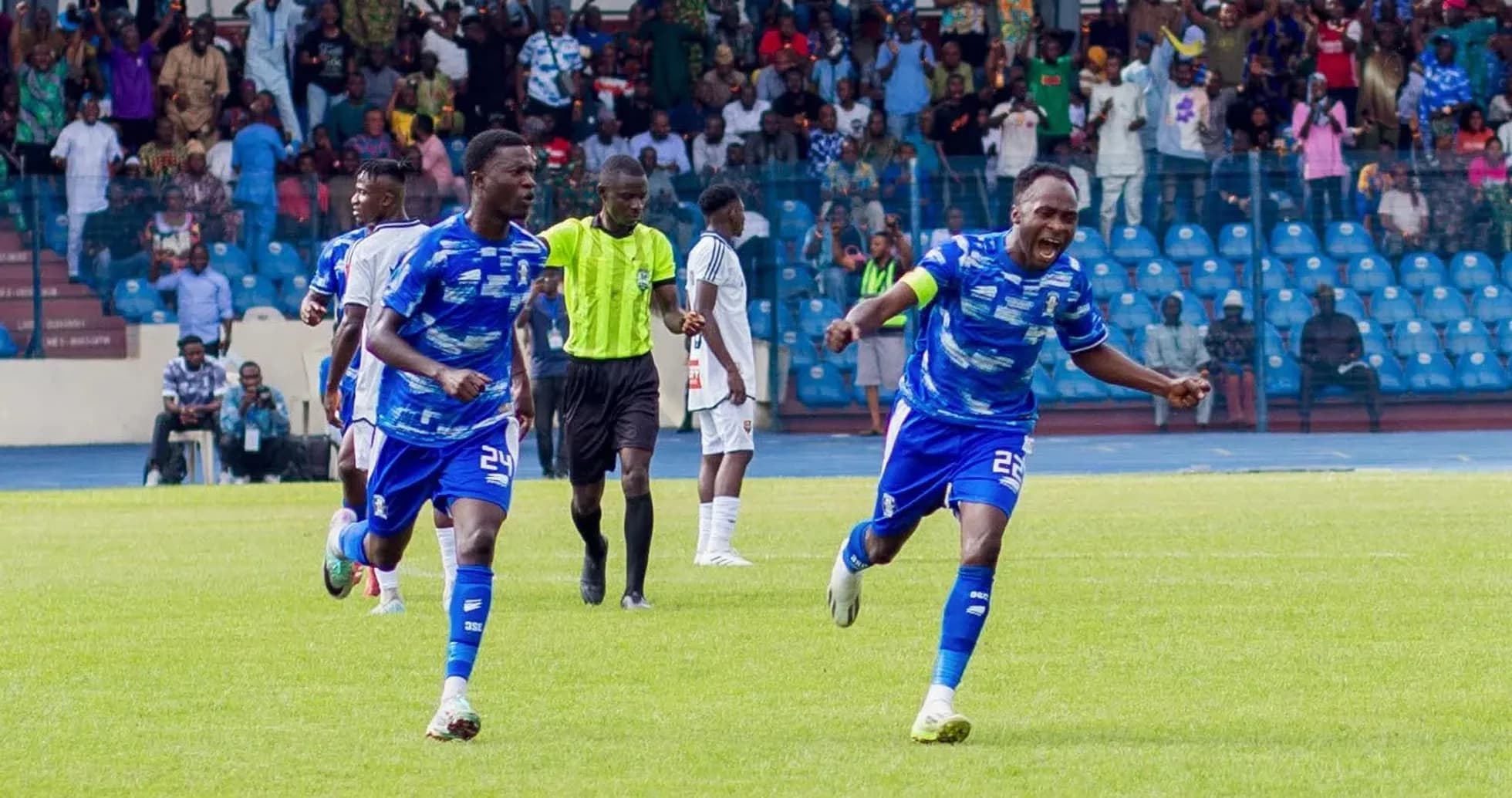
Enyimba vs Inter Lagos: Tactical Analysis of NPFL Clash
Under the late-afternoon haze at Enyimba International Stadium in Aba, this Regular Season - 4 clash in the NPFL closed with a stark, simple scoreline: Enyimba 0–1 Inter Lagos. Following this result, the table tells a harsh story for both: Enyimba rooted in 20th with 0 points and a goal difference of -4, Inter Lagos only marginally better in 18th, on 3 points and the same -4 goal difference. Yet within that narrow away win lies a broader tactical tale about a side trying to rediscover its aura at home and a newcomer learning how to suffer and steal points on their travels.
I. The Big Picture – two teams in survival mode
Heading into this game, Enyimba’s seasonal DNA was already troubling. Overall they had played 3 matches, lost all 3, with just 1 goal scored and 5 conceded. At home, the numbers were even more unforgiving: 1 match, 0 goals scored, 1 conceded, and an average of 0.0 goals for versus 1.0 against. Their form line – LLL – hinted at a side searching for structure more than swagger.
Inter Lagos arrived as a team with scars but also a faint sense of direction. Overall they had played 4 matches, with 1 win and 3 defeats, scoring 2 and conceding 6. At home they had been poor (2 matches, 0 goals for, 4 against), but on their travels there was a different identity emerging: 2 away games, 1 win, 1 defeat, 2 goals scored and 2 conceded, with an away average of 1.0 goals for and 1.0 against. That balance suggested a team more comfortable in a compact, counter-attacking shell.
The 1–0 away victory in Aba fits that away persona perfectly: disciplined, low-margin football, leaning on defensive cohesion and opportunism rather than volume of chances.
II. Tactical Voids and discipline – a nervous, card-prone Enyimba
Enyimba’s season-long disciplinary profile hints at a team that spends long stretches chasing the game. Their yellow cards are spread evenly across early, mid, and late first-half and late second-half windows: 33.33% between 16–30 minutes, 33.33% between 31–45, and another 33.33% between 76–90. That late-game spike reflects a side that grows increasingly desperate as time ebbs away, pressing higher, fouling more, and losing structure just when clarity is needed.
Inter Lagos, by contrast, carry a different kind of volatility. Their yellow card distribution is broad, but the heat is clearly in the second half: 28.57% between 61–75 minutes and another 28.57% from 76–90, with additional bookings scattered early and in stoppage time. This suggests a team that defends deep, absorbs pressure, and increasingly resorts to tactical fouls as they protect narrow leads or cling to parity.
From an absences perspective, there is no formal list of missing players, so we read voids more in terms of roles than names. Enyimba’s inability to find a settled attacking structure is glaring: they have failed to score in 2 of their 3 matches overall, and at home they are yet to find the net. Inter Lagos, meanwhile, are haunted by their own attacking limitations – 2 goals in 4 games overall and 2 matches without scoring at home – but their away pattern is more encouraging.
Crucially, Inter Lagos have already missed a penalty this season: 1 penalty taken, 0 scored, 1 missed, a 0% conversion rate. That detail matters in tight games like this; they cannot rely on spot-kicks to tilt margins in their favour.
III. Key Matchups – hunters, shields, and the engine rooms
Without explicit positional data, the squads tell their own stories through shirt numbers and balance.
For Enyimba, the spine built by coach Stanley Eguma leans on experience and physicality. In defence, figures like K. Ogunga and H. Salisu hint at a back line tasked with holding a relatively high line at home, while C. Ezinwa and M. Okoh form the core of the central corridor. Wide or advanced roles likely fall to W. Williams and S. Dimgba, with J. Ekebuike and P. Anyanwu expected to provide the thrust in the final third.
The problem is that Enyimba’s overall average of 0.3 goals for per match, and 0.0 at home, suggests that this front unit is not yet functioning as a coherent “hunter” unit. Their nominal forwards are isolated, the midfield not supplying enough penetration, and the team often forced to shoot from poor zones or rely on hopeful crosses.
Inter Lagos, by contrast, have quietly assembled a rugged defensive “shield”. The back line built around I. Quadri, A. Azeez, K. Agabi, and K. Salami, in front of goalkeeper S. Atabi, has conceded only 2 goals on their travels this campaign. With a total away average of 1.0 goals against, they are comfortable in games like this: deep block, narrow shape, and aggressive duels in the channels.
Ahead of them, the engine room of A. Quyum, T. Oshomo, and H. Hadi provides both steel and transitional threat. They do not create a high volume of chances, but when Inter Lagos do score away, it tends to be through quick breaks and direct running rather than elaborate combinations. Y. Bilyaminu and M. Ezekiel offer the running lanes, while J. Emmanuel anchors the central spaces.
In this match, the key duel was essentially Enyimba’s frustrated, blunt attack against Inter Lagos’s compact shield. The away side’s defenders were content to defend their box, force Enyimba wide, and rely on first contact and second-ball dominance. Without a clear playmaker to unpick the block, Enyimba’s possession became sterile.
IV. Statistical prognosis – where these squads go from here
Following this result, the numbers crystallise the tactical realities.
Enyimba now sit on 0 points from 4 matches overall (3 before this game, plus this defeat), with their goal difference stuck at -4 and their attacking averages still anaemic. At home, they have yet to score, and their total average of 0.3 goals for against 1.7 against overall speaks of a team that is outgunned in both boxes. Their late yellow-card surge underlines the mental strain: as matches drag into the final quarter-hour, they lose composure rather than find solutions.
Inter Lagos, meanwhile, lean heavily on their away identity. On their travels they average 1.0 goals for and 1.0 against, and now have 2 away goals and just 2 conceded. Their overall figures – 0.5 goals for and 1.5 against per match – still place them in relegation danger, but the away template is clear: keep the game tight, trust the back line, and look to edge contests by a single goal.
From an xG-style perspective, even without explicit expected goals values, the patterns are clear. Enyimba’s low scoring rate and repeated failures to score indicate they are not generating many high-quality chances. Inter Lagos, despite their own modest numbers, are at least aligned with their defensive solidity away from home.
For Enyimba, the path forward demands structural change: a clearer attacking focal point, more support from midfield runners like W. Williams and S. Dimgba, and a calmer approach in the final 15 minutes where their discipline currently frays. For Inter Lagos, the challenge is to bottle this away formula and pour some of its resilience into their home performances, while urgently addressing their penalty woes.
In Aba, the story was of a fallen giant still searching for its voice, and a newcomer learning how to whisper just loudly enough to be heard: one chance, one goal, one away win that could prove vital in a long relegation fight.