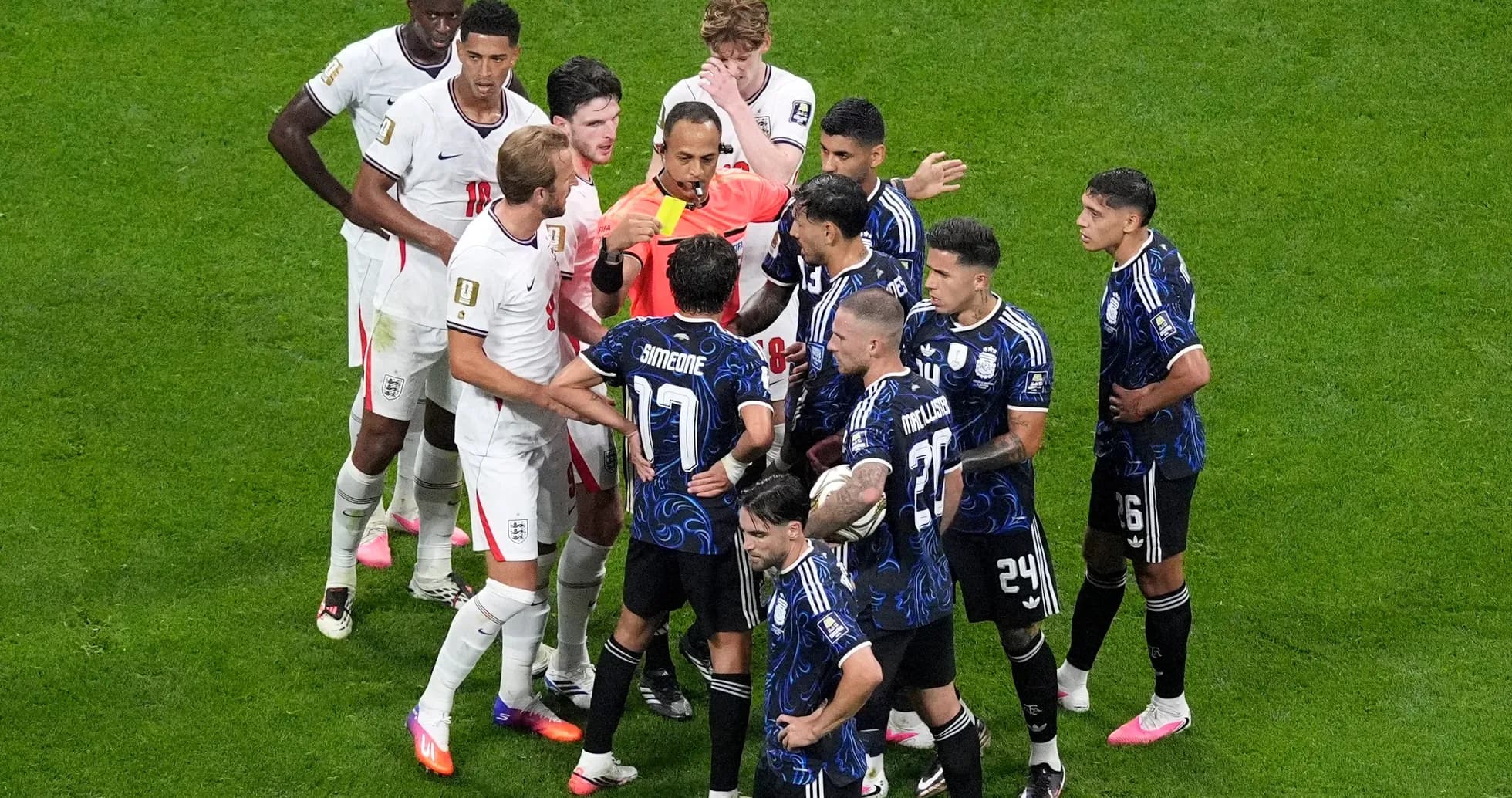
England's World Cup Dream Ends: Semi-Final Analysis Against Argentina
The lights have gone out on England’s World Cup dream in Atlanta, but the semi-final against Argentina was the culmination of two sharply defined identities colliding: Tuchel’s structured, possession-heavy England against Scaloni’s ruthless, Messi-led Argentina. At Mercedes-Benz Stadium, a 2–1 defeat after 90 tense minutes laid bare both the strengths and the limits of this England squad.
I. The Big Picture: Two Perfect Arcs Converge
Heading into this game, both sides arrived as group winners and form teams of the tournament. England had taken 7 points in Group L with a goal difference of 4, built on 6 goals scored and 2 conceded across 3 group matches. Argentina were even more emphatic: 9 points in Group J, a goal difference of 7, with 8 goals scored and just 1 conceded.
Over the whole campaign, England’s record had been impressive but not flawless. Across all venues they had played 7 fixtures, winning 5, drawing 1 and losing 1. They averaged 2.0 goals for and 1.1 against overall, a profile of a side that tends to outscore rather than suffocate opponents. At home they had scored 7 and conceded 5; on their travels they had also scored 7 but conceded only 3, suggesting a slightly more controlled defensive posture away from familiar surroundings.
Argentina, by contrast, came into the semi-final perfect: 7 wins from 7 matches in total, with 19 goals scored and 7 conceded overall. At home they had 14 goals for and 5 against; on their travels 5 for and 2 against. Their total goal difference of 12 (19 scored minus 7 conceded) underpinned an aura of inevitability.
In that context, a narrow 2–1 defeat for England is less a collapse than the logical outcome of meeting a side operating at maximum efficiency, led by the tournament’s standout figure.
II. Tactical Voids and Discipline: England’s Margin for Error Narrows
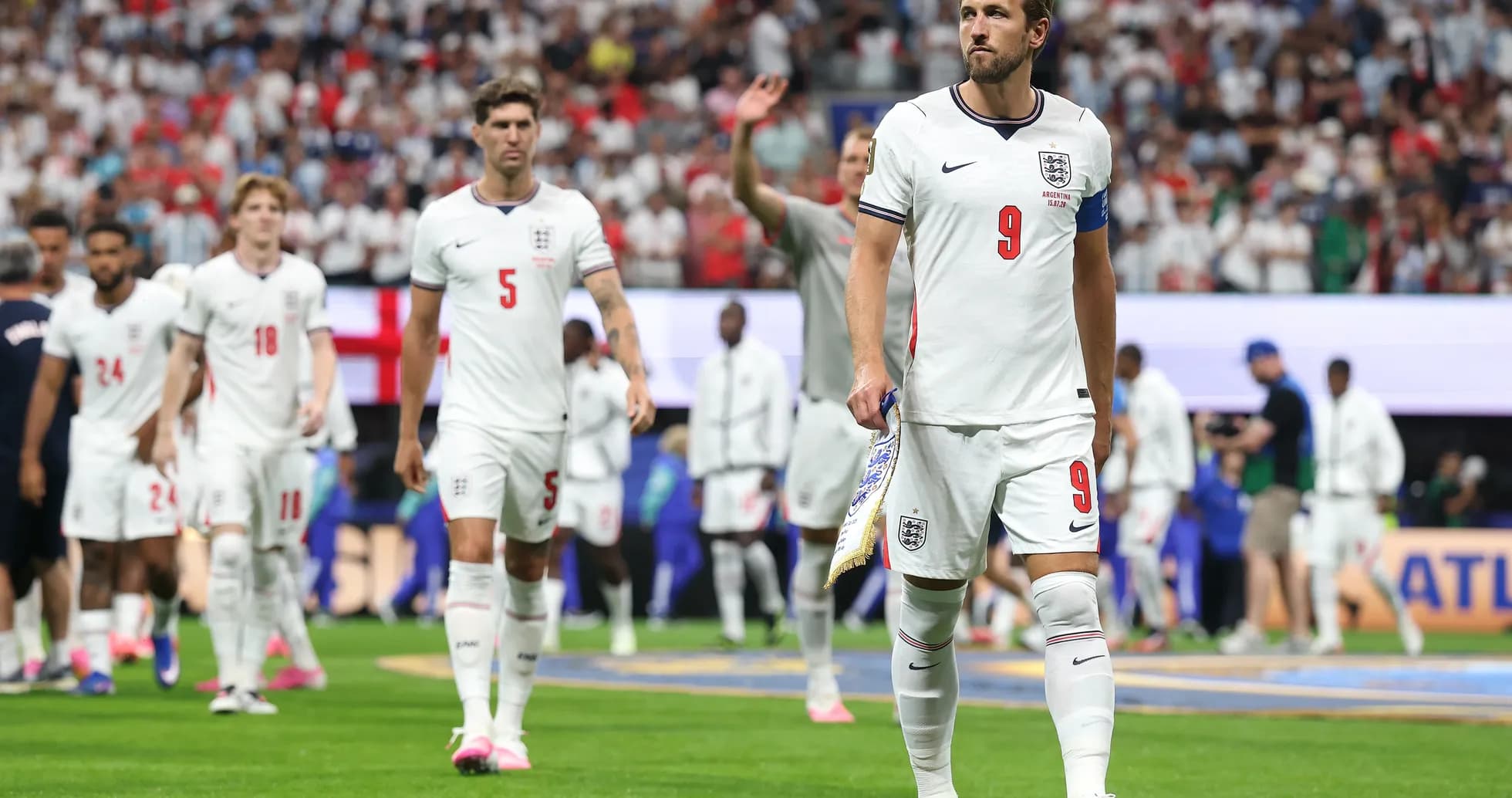
Tuchel’s England lined up in a familiar 4-2-3-1, with J. Pickford behind a back four of R. James, J. Stones, M. Guehi and D. Spence. D. Rice and E. Anderson anchored midfield, with a fluid band of three – M. Rogers, J. Bellingham and A. Gordon – supporting H. Kane.
One absence shaped the defensive narrative: J. Quansah, suspended through a sports court decision, was unavailable. His campaign had been turbulent – 2 appearances, 117 minutes, and a red card alongside a yellow – but his physical profile and 10 duels won from 13 showed he could have offered a different kind of aerial and athletic presence against Argentina’s direct surges and set-piece threat. Without him, Tuchel leaned fully into the ball-playing security of Stones and Guehi.
Disciplinary trends also framed England’s risk profile. Across the tournament they had spread yellow cards fairly evenly, with peaks of 25.00% in the 31–45 and 61–75 minute windows. Red cards had been rare but significant, with their single dismissal arriving between 46–60 minutes. That pattern hinted at a side that can become stretched just after half-time – precisely when knockout matches often tilt.
Argentina, meanwhile, had played on the edge without crossing it. Their yellow cards were heavily back-loaded: 44.44% between 91–105 minutes and 22.22% from 106–120, with smaller spikes in the final quarter of normal time. They had no red cards at all. In a semi-final decided in regulation, that late-game aggression never tipped into self-destruction.
III. Key Matchups: Hunter vs Shield, Engine Room vs Enforcer
This semi-final was always going to revolve around Lionel Messi. As the competition’s top scorer and creator, he arrived with 8 goals and 4 assists, having played 620 minutes and taken 28 shots, 18 of them on target. His 26 key passes and 24 successful dribbles from 35 attempts marked him as not just Argentina’s finisher but their primary progressor and chance architect.
Tuchel’s “shield” against that was multi-layered. At the base, D. Rice – England’s leading figure in both yellow and red card tallies across the wider competition – had been a quiet metronome and disruptor: 240 passes at 91% accuracy, 4 tackles, 2 blocks, 2 interceptions, and 15 key passes. His disciplinary line (2 yellows overall, no reds in this specific top-red list entry) underlined the fine balance he must strike: aggressive enough to disturb Messi’s rhythms, controlled enough not to leave England a man down.
Behind Rice, J. Stones and M. Guehi formed a pairing built for anticipation more than pure physicality. Stones’ calm distribution, combined with Guehi’s recovery speed, was tasked with tracking the vertical runs of J. Alvarez and the late arrivals of A. Mac Allister and E. Fernandez from Argentina’s 4-1-4-1.
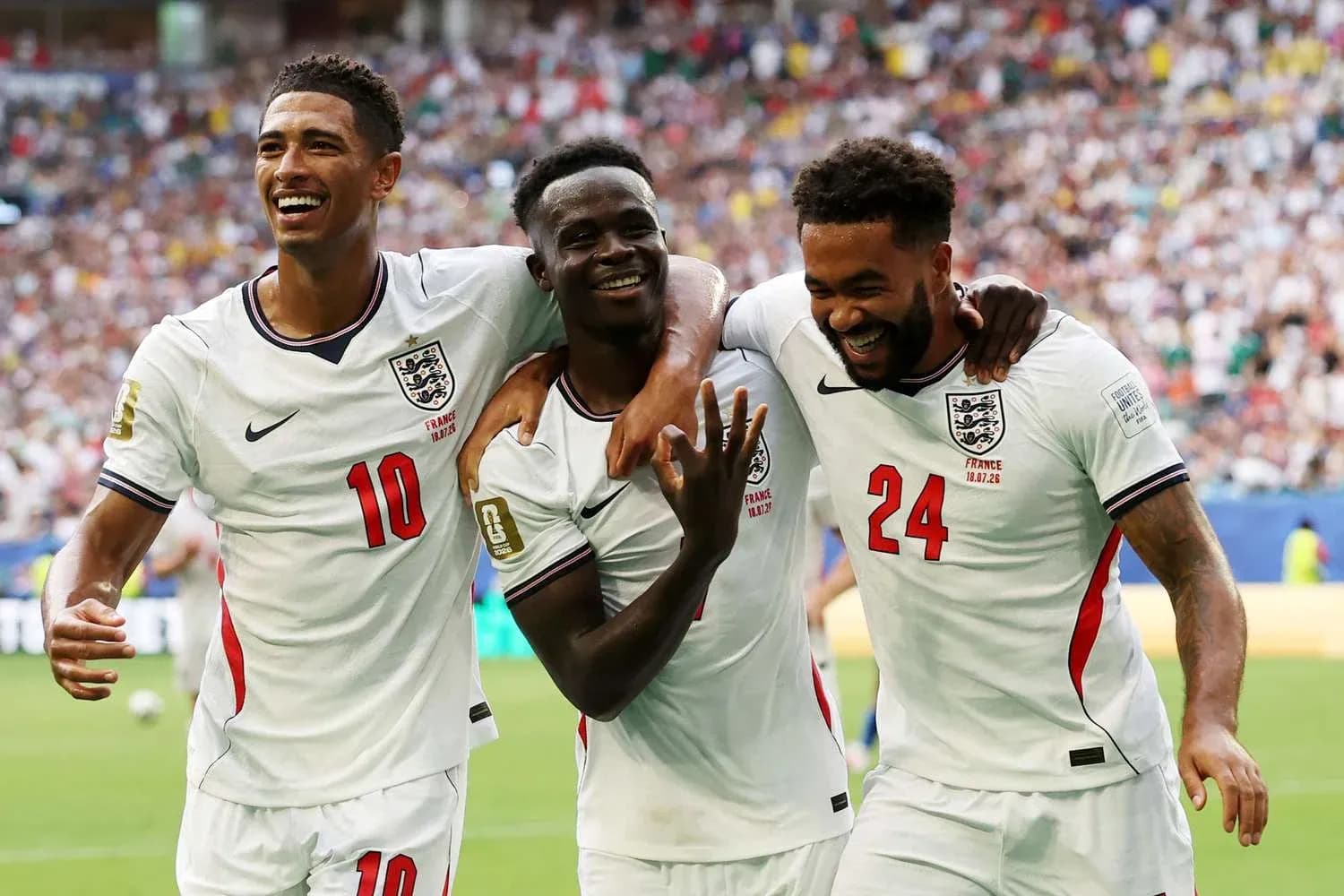
Higher up, England’s “hunters” were H. Kane and J. Bellingham. Both had 6 goals each heading into the latter stages of the tournament. Kane, with 18 shots and 12 on target, plus 2 penalties scored from 2 taken, is England’s penalty-box reference and set-piece specialist. His 3 blocks underline a work rate that extends into his own defensive third. Bellingham, with 6 goals from 15 shots (11 on target), had been England’s late-arriving threat from midfield, combining 8 key passes with 13 successful dribbles from 21 attempts.
On the flanks, A. Gordon’s emergence as a creative hub was one of England’s stories of the tournament: 1 goal, 3 assists, 6 key passes and 25 dribble attempts, even if only 8 succeeded. His job against Argentina was twofold – stretch N. Tagliafico and L. Martinez on the left side of their defence, and offer a transition outlet when England broke the first line of pressure.
For Argentina, the supporting cast around Messi was tailored to amplify his influence. L. Paredes sat as the single pivot in front of the back four, while G. Simeone, E. Fernandez, A. Mac Allister and J. Alvarez formed a four-man band behind Messi. That 4-1-4-1 shape, used less frequently than their 4-4-2 and 4-1-3-2 over the tournament, suggested a deliberate attempt to crowd the central lanes where Bellingham thrives, while still giving Messi the freedom to drift between lines.
IV. Statistical Prognosis and What the Semi-Final Revealed
From a pure numbers perspective, Argentina entered the semi-final with a slightly sharper attacking edge. Their overall average of 2.7 goals for per match, compared to England’s 2.0, combined with a marginally tighter defensive record (1.0 goals against on average versus England’s 1.1), painted the picture of a side more efficient in both boxes.
Penalty data underscored a fascinating quirk: England were perfect from the spot in this campaign, scoring 2 out of 2 penalties with no misses. Argentina, remarkably, had struggled – 3 penalties taken, just 1 scored and 2 missed, a 33.33% conversion rate. Messi himself had missed 2 penalties in this World Cup. Yet that weakness from 12 yards never came into play in this semi-final; Argentina settled it in open play.
The disciplinary trends suggested that if the match had drifted into extra time, Argentina’s propensity for late yellow cards might have opened a door for England. But within 90 minutes, Scaloni’s side managed their aggression, kept eleven on the pitch, and leaned on their attacking structure.
In narrative terms, this 2–1 defeat will be framed as another near-miss for an England generation rich in talent. But the underlying data hints at a more nuanced truth. England’s campaign showed a team that can impose itself – 5 wins from 7, a positive goal balance, multiple high-end individual performers – yet still falls just short when faced with a side that marries star power to relentless consistency.
Argentina, with Messi at the peak of his international influence, simply had the higher ceiling. Their perfect record, their superior scoring rate, and their capacity to bend tactical structures around their number 10 made them the more likely finalists. In Atlanta, that probability became reality – not through chaos or controversy, but through the cold logic of a squad built, statistically and tactically, to win this kind of match.