
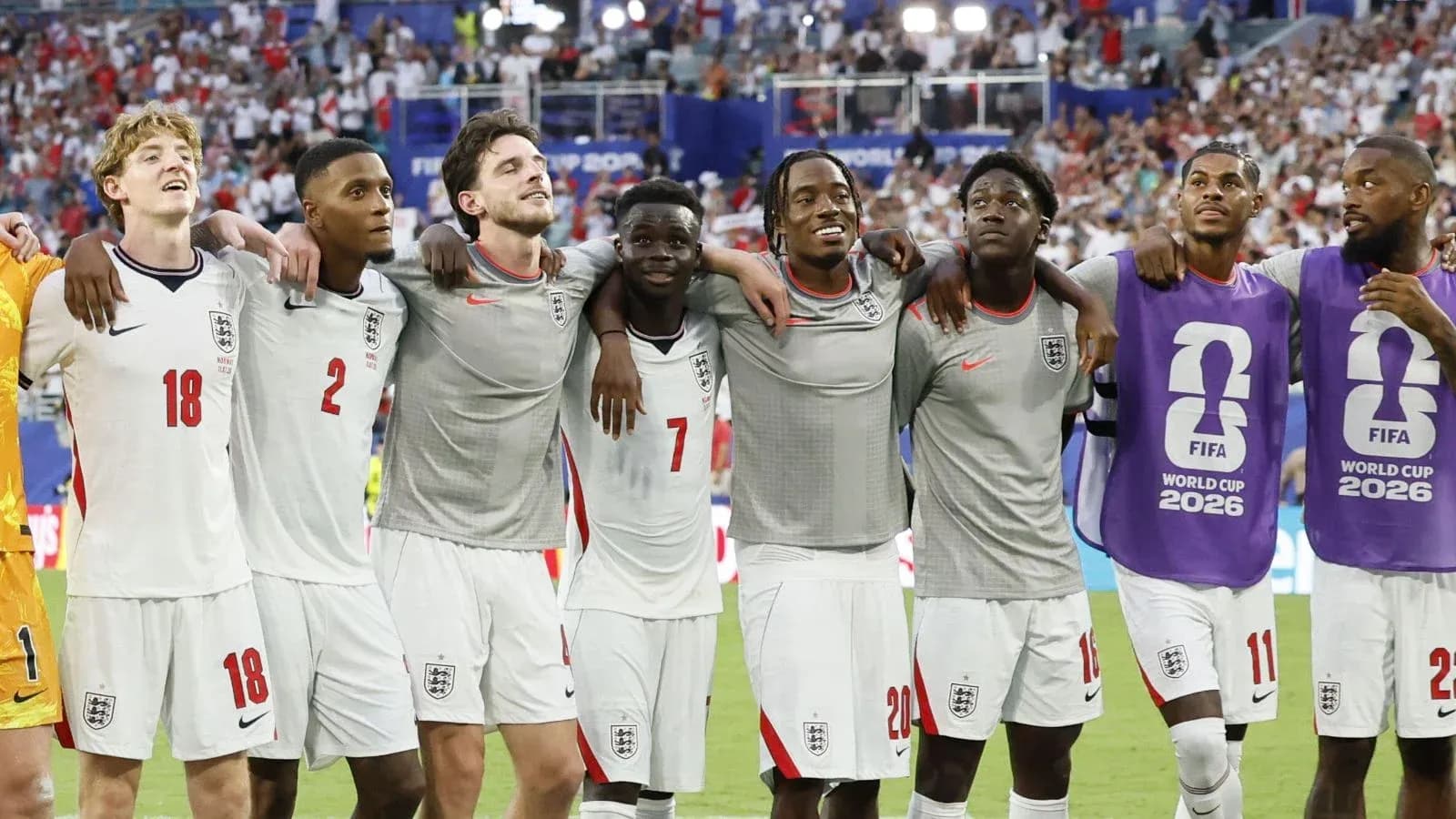
England's World Cup Journey: Second-Best Performance Amid Challenges
It still probably isn’t coming home. That’s the hard edge of it for England, stripped of romance and nostalgia. The numbers, the history, the weight of the draw all say the same thing: it is more likely this ends with defeats to Argentina and France and a fourth-place finish than with Argentina and Spain conquered and a trophy finally lifted.
And yet, almost regardless of what happens in Atlanta against Lionel Messi and company, this is already England’s second-best men’s World Cup. That line hasn’t quite landed, has it? It should.
For a team that carried into this tournament the familiar scent of the “default” England campaign – play well enough, fall short in the quarters, find a national scapegoat and spend the summer arguing about him – they have already broken the pattern. They have stepped beyond what most expected, even if the football has not always matched the hype.
There have been flat spells. Whole games where they looked tight, cautious, occasionally uninspired. But that’s not uniquely English. Every major contender has had a night to forget. You just feel England’s more sharply because you live inside the noise: English in England, Scottish in Scotland, or, for the truly cursed, Scottish in England. The scrutiny is relentless, the missteps replayed on a loop.
Look around the field. Spain were dreadful against Cape Verde. France were abject for an hour against Senegal and for the entire semi-final. England, for all the grumbling, have not sunk to those depths for that long.
Argentina’s route has been smoother, too. The reigning champions have navigated a more forgiving knockout path to reach this point than England have had to endure. That matters in tournaments like this, where legs grow heavy and nerves fray.
Only one thing can really tarnish what England have built here: a true humiliation at the hands of Messi and the rest. A collapse, a hiding, the sort of defeat that leaves a scar. History says that is not how England tend to lose at major tournaments, and nothing about this group suggests they are about to start now.
They do embarrassing, occasionally. They do shock exits to teams they should beat. What they almost never do is get taken apart.
Strip away the third-place play-off – that strange, hollow exhibition that doesn’t feel like it belongs to the same competition – and the record is stark. Since 1988, England have lost one major tournament match by more than a single goal.
One.
Even that infamous afternoon against Germany in the last 16, when they were clearly second best, carried an asterisk. But for an astonishing officiating error, it would have been 2-2 at half-time. That moment helped push football towards the technology-heavy era it now inhabits, for better or worse.
Look at the span of it. Since the start of the 1990s, England have only missed two major tournaments. They haven’t won any of the 17 they have reached, a drought that has become a defining national ache. Yet only once in all that time have they been genuinely thrashed, the result beyond doubt long before the final whistle offered mercy.
That resilience sits awkwardly next to the prevailing mood. Because it doesn’t quite feel like England’s second-best World Cup, does it? There is no shared sense of wonder, no universal chorus celebrating the achievement. The fact remains, though: by any rational measure, that’s exactly what this is.
Objectively, reaching a semi-final outside your own confederation is a heavier lift than doing it on familiar continental soil. This is already the deepest England have gone in a World Cup staged beyond Europe. That should carry weight.
Noise from north of the border has cut through, too. A fresh wave of Scottish frustration, sharpened by the pain of being knocked out of the same tournament four times, has fed into the debate. The argument is familiar: England had it easy, Scotland did not.
There is sympathy to be had there. Drawing both Brazil and Morocco in the group was brutal for Scotland. That’s the reality of starting in the lower pots. You are more likely to land in a group with multiple heavyweights. The margins are cruel.
But that’s the point of seeding. The real hard-luck story in a group stage is a top seed having to face another top-10 side, as Brazil did. The far more common outcome is what England experienced: a group without another official top-10 nation.
And those rankings, now suddenly treated as gospel by anyone keen to diminish England’s run, tell their own tale. Croatia were ranked 10th at the time of the draw. Panama, by the same measure, were the strongest side England could have faced from pot three, second only to Norway, who couldn’t have been drawn with both England and Croatia anyway.
So yes, England have not faced a team officially inside FIFA’s top 10. But that’s a quirk, not a conspiracy. Croatia live permanently in that “there or thereabouts” bracket. Mexico at the Azteca is a top-10 test in everything but paperwork. And nobody, with a straight face, can claim there are definitely 10 better international teams than Norway at this moment.
Try as anyone might, there isn’t much room to sneer at England’s route. This is almost exactly the journey the draw predicted. No freak collapses on the other side of the bracket, no sudden clearing of giants to smooth their passage.
They won their group and earned a third-placed opponent in the last 32. They met Mexico, as forecast, in the last 16. In a knockout tree that has delivered the top four seeds to the semi-finals, the biggest “shock” was Norway beating Brazil by the simple method of being a better-drilled, more coherent side right now. That was the jolt in an otherwise orderly bracket.
The endgame is brutal. Argentina, with their tournament-hardened stubbornness and the enduring presence of Messi. Spain, with the rhythm and structure of an elite club side translated to international football. Beating one of them is a monumental task. Beating both, back to back, would be the greatest achievement in England’s modern history.
It is unlikely. That’s not defeatism, just the reality of the field.
But if it does end in defeat, it will be a different kind of failure. Not the familiar, self-inflicted implosion. Not the early flight home with a villain of the week. This would be a fall at the highest level, against the game’s most ruthless operators, deep in a tournament where England have already gone further, in harsher conditions, than almost any of their predecessors.
Sixty years of hurt has always been about the absence of the trophy. This World Cup will not erase that. What it can do, what it is already doing, is reshape what English failure looks like.
If this is doomed, it is doomed to be glorious. And for once, that might be enough to change the conversation about what England are – and what they might yet become.




