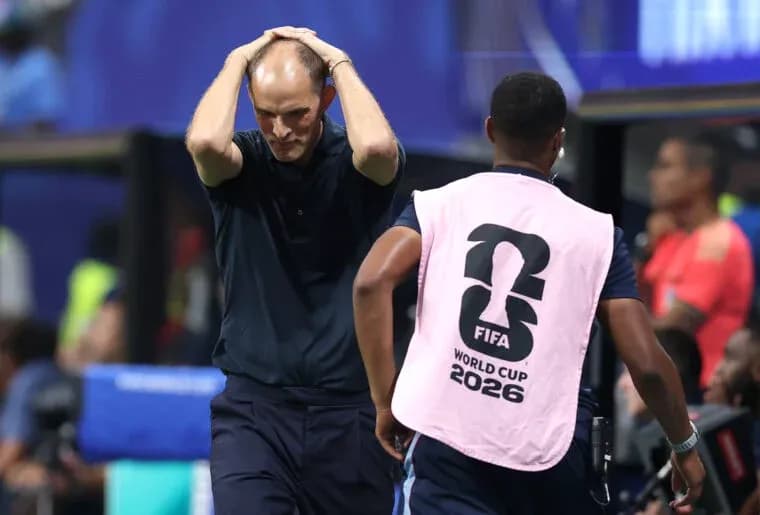
England's World Cup Dream Ends: Tuchel Under Fire but Backed
England’s World Cup dream died in Atlanta on Wednesday night, but Thomas Tuchel’s job survived the fallout.
A 2-1 defeat to Argentina at the Atlanta Stadium ended hopes of a place in the final and triggered a wave of anger from fans and pundits, many of whom turned their fire on Tuchel’s game plan. The focus of the criticism was simple: after Anthony Gordon’s 55th-minute opener, England retreated.
They had Argentina where they wanted them. Then they let them off the hook.
Tuchel under fire, but still backed
Tuchel, appointed in January 2025, came into this tournament as the architect of a bold new England, but he walked out of Atlanta accused of betraying his own blueprint. The decision to adopt a more defensive posture after Gordon’s breakthrough infuriated supporters who had watched this team sweep aside opponents earlier in the competition.
The pressure built quickly after the final whistle. Talk shows and social media feeds filled with demands for change. Yet inside the corridors of power, the mood was far calmer.
According to BBC Sport, the Football Association continues to back Tuchel and expects him to lead England into Euro 2028. The 52-year-old had originally signed a deal through this World Cup, then committed to a two-year extension in February that ties him to the job until the end of that tournament.
So the inquest will be fierce, but it will be held with the same man still in the dugout.
From heavyweights to heartbreak
England arrived at this World Cup carrying the weight of expectation and the label of one of the top favourites. They did not shrink from it early on. A wild, breathless 4-2 win over Croatia in their opening match suggested a side ready to embrace the chaos and ride it all the way to the latter stages.
The group stage, though, was not all swagger. Performances against Ghana and Panama never fully convinced. England got the results they needed, but the fluency dipped, the rhythm stuttered, and doubts crept in about whether this team could sustain its attacking promise when the stakes rose.
Those doubts were pushed aside in the knockouts. Against DR Congo, England found a harder edge, managing the tension and doing enough to move through. Then came the statement performance: a masterclass at the Estadio Azteca to dismantle Mexico and reignite belief that this group might be on the verge of something special.
Norway posed another awkward hurdle, a tricky, disciplined opponent capable of dragging any side into a dogfight. England handled it with authority, coming through with the kind of composure that usually signals a team peaking at just the right time.
By the time they walked out to face Argentina, the narrative felt familiar: England, hardened by the journey, ready to take the final step.
The turning point in Atlanta
For 55 minutes, that story held. When Gordon struck to give England the lead, the path to the World Cup final suddenly looked clear. The goal seemed to validate Tuchel’s methods and the evolution of this squad over the past year and a half.
Then the mood changed.
Rather than pressing home the advantage, England dropped deeper. The front-foot aggression that had shredded Croatia and silenced Mexico gave way to caution. Argentina, rattled and on the ropes, were invited back into the contest.
The pressure built. The tackles flew in. The noise inside the Atlanta Stadium shifted from nervous to hopeful for the South Americans. England clung on, but the sense of inevitability grew with every attack they repelled.
When the equaliser arrived, it felt like the consequence of a choice as much as a moment. When the winner followed, England’s World Cup run was over, undone not by a lack of talent but by a change of intent at the very moment they seemed to be in control.
Euro 2028 on the horizon
The exit will sting for a long time. This was a campaign that began with a demolition of Croatia, survived uneven group displays against Ghana and Panama, then soared in the knockout stages with victories over DR Congo, Mexico and Norway. It ended one step short of the final, with questions swirling around the man entrusted with the project.
Yet Tuchel remains in place, armed with the FA’s backing and a contract that runs to Euro 2028. The message from the top is clear: this is not the end of a cycle, but a painful chapter within it.
England will not get this World Cup back. The chance slipped away in Atlanta the moment they stopped playing like the favourites they were supposed to be. The only question now is whether Tuchel can turn that regret into the edge that finally carries this team over the line in four years’ time.