
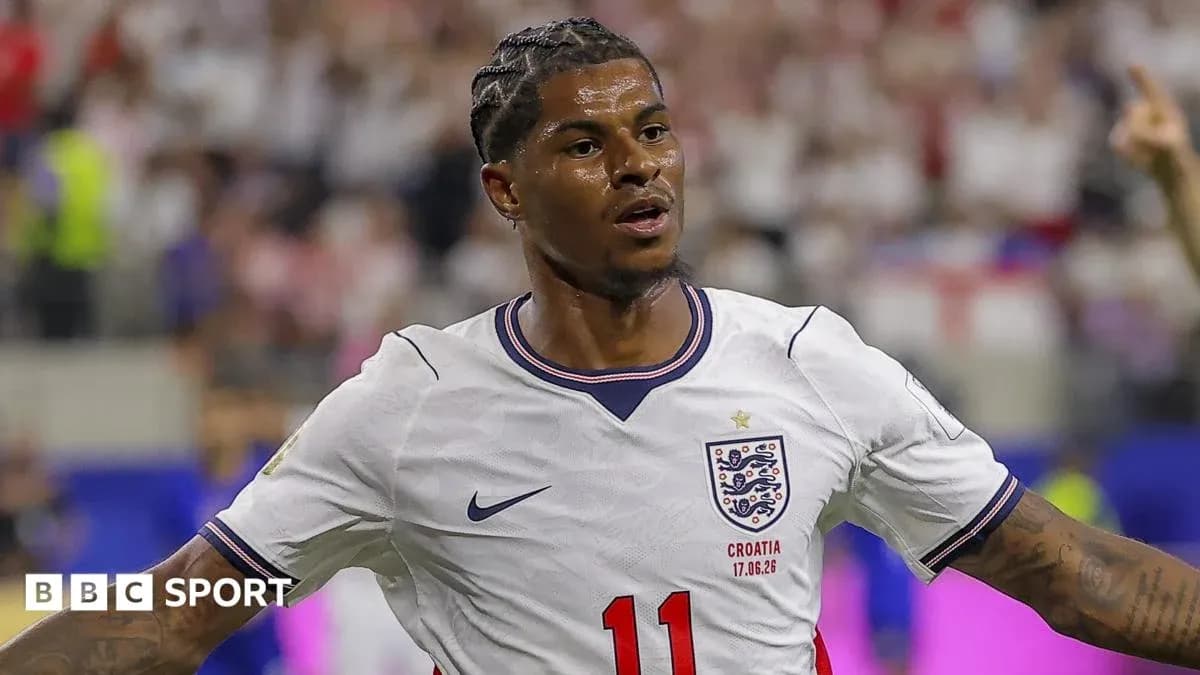
England's 4-2 Victory Over Croatia: Highlights and Concerns
England’s four-goal flourish against Croatia will dominate the highlights reels. The rewind button in the dressing room, though, will be stuck on the two they gave away.
This was a 4-2 win that both excites and alarms.
Defensive cracks beneath the scoreline
Wayne Rooney didn’t bother sugar-coating England’s part in Croatia’s first goal. The move ended with a slick cut-back and a tidy finish, but his focus was on what happened before the shot.
“We could do so much better with the first goal,” he said, picking apart the sequence. Jude Bellingham, usually so sharp, was “a bit flat-footed” as the defender stepped in to win the ball. John Stones, Rooney felt, didn’t need to go to ground. There was “no real danger” with Jordan Pickford well placed, yet Stones dived in, lost the duel, and forced Nico O’Reilly to cover across.
One pass, one cut-back, one clean strike. England opened up.
Rooney then turned to Pickford. The goalkeeper got a strong hand on the shot but couldn’t keep it out. “Could Jordan Pickford do a bit better? I don’t know,” he admitted, before adding the line that will sting most: if a keeper gets that much on it, “then he’ll be disappointed.” The goal, he stressed, looked good from a Croatia perspective, but England had multiple chances to kill it at source.
Micah Richards went even broader in his assessment. For him, both Croatian goals were preventable and, worse, invited.
“What England did was played into their hands,” he argued. By dropping too deep and allowing Croatia’s technical players time to operate, England created the exact game Croatia wanted. The energy was there – “England were all over Croatia” in that sense – but the starting positions were not. Push “ten or fifteen yards further forward,” Richards said, and those situations don’t develop.
The message from two former England internationals was blunt: the scoreline flatters the defending.
Stones, Konsa and a looming decision
All of which leaves Thomas Tuchel with an early World Cup dilemma at centre-back.
He backed John Stones and Ezri Konsa at the heart of his defence. On paper, it looked assured. On grass, it was anything but settled in that first half.
Stones, short of minutes at Manchester City last season, saw plenty of the ball. He took responsibility in the build-up, stepping into midfield, dictating from the back. That bravery with possession, though, carried obvious risk. When Croatia broke England’s structure, the recovery didn’t always match the ambition.
Konsa, a mainstay under Tuchel since the manager took charge, showed flashes of his usual calm. Yet alongside Stones, he never quite found a rhythm. The partnership looked new, which it is, and it looked like it – which England can’t afford for long in a tournament.
So the question hangs over the next game against Ghana: does Tuchel stick with Stones and Konsa, betting on understanding to grow, or does he turn to Marc Guéhi to steady the picture? The goals conceded against Croatia have dragged that selection call into the spotlight far earlier than he would have liked.
Gordon’s grounding and England’s response
Amid the defensive scrutiny, Anthony Gordon’s night told a different story – one of personal milestones and collective focus.
Making his World Cup debut, Gordon admitted it had been “a crazy couple of weeks” and called the occasion “special”, the fulfilment of a childhood dream. Yet he was quick to push the attention away from himself.
“Self-centredness is a disease and I don’t want to be a part of that,” he said. For Gordon, it was “about the team,” and he was keen to highlight the impact of Marcus Rashford, Bukayo Saka and Morgan Rogers from the bench. “It is a collective.”
His reading of the match itself was honest. A “difficult first half”, a Croatian goal that “came from nowhere and stunned us a little bit”, and then a powerful response after the break. England “came out really strong in the second half and got what we wanted,” he said, but he underlined Croatia’s level: “They were really good and that can't be underestimated.”
That balance – acknowledging flaws, recognising the opponent, still backing the group – is exactly the mentality England will need as the stakes rise.
Rashford’s reminder, United’s problem
Rashford’s contribution in this game stretched beyond the World Cup narrative. It also fed straight into a simmering club saga.
He came off the bench, scored, and “made a pretty positive impact,” as BBC Sport’s Simon Stone put it. On this stage, that matters. On July 1, Rashford officially reverts to being a Manchester United player after Barcelona declined to trigger a £26m option to buy the 28-year-old.
United’s stance is clear. They want £40m. They will not consider another loan to Barcelona, which is what the Spanish club are pushing for. Rashford’s wage – £325,000 a week, with two years left on his deal – narrows the field of possible buyers to a tiny elite.
United cannot force him out, and they know it. As things stand, they expect him back after his three-week post-World Cup break, in time for a training camp in the Republic of Ireland. That may change if someone blinks in the market, but each sharp World Cup cameo nudges the conversation.
Performances like this one don’t just boost England. They reshape leverage, price, and pressure.
England leave this 4-2 with goals, momentum and questions. The attack looks lively, the bench dangerous, the mood positive. But in tournament football, defensive details decide everything. Will Tuchel’s back line grow into the competition – or give their next opponent the same encouragement Croatia enjoyed?




