Egypt's Historic Knockout Victory Led by Mohamed Salah
ARLINGTON, Texas — Mohamed Salah walked slowly toward midfield, the captain’s armband tight on his left arm, the weight of a nation somehow feeling lighter than it had in decades.
Egypt had finally done it.
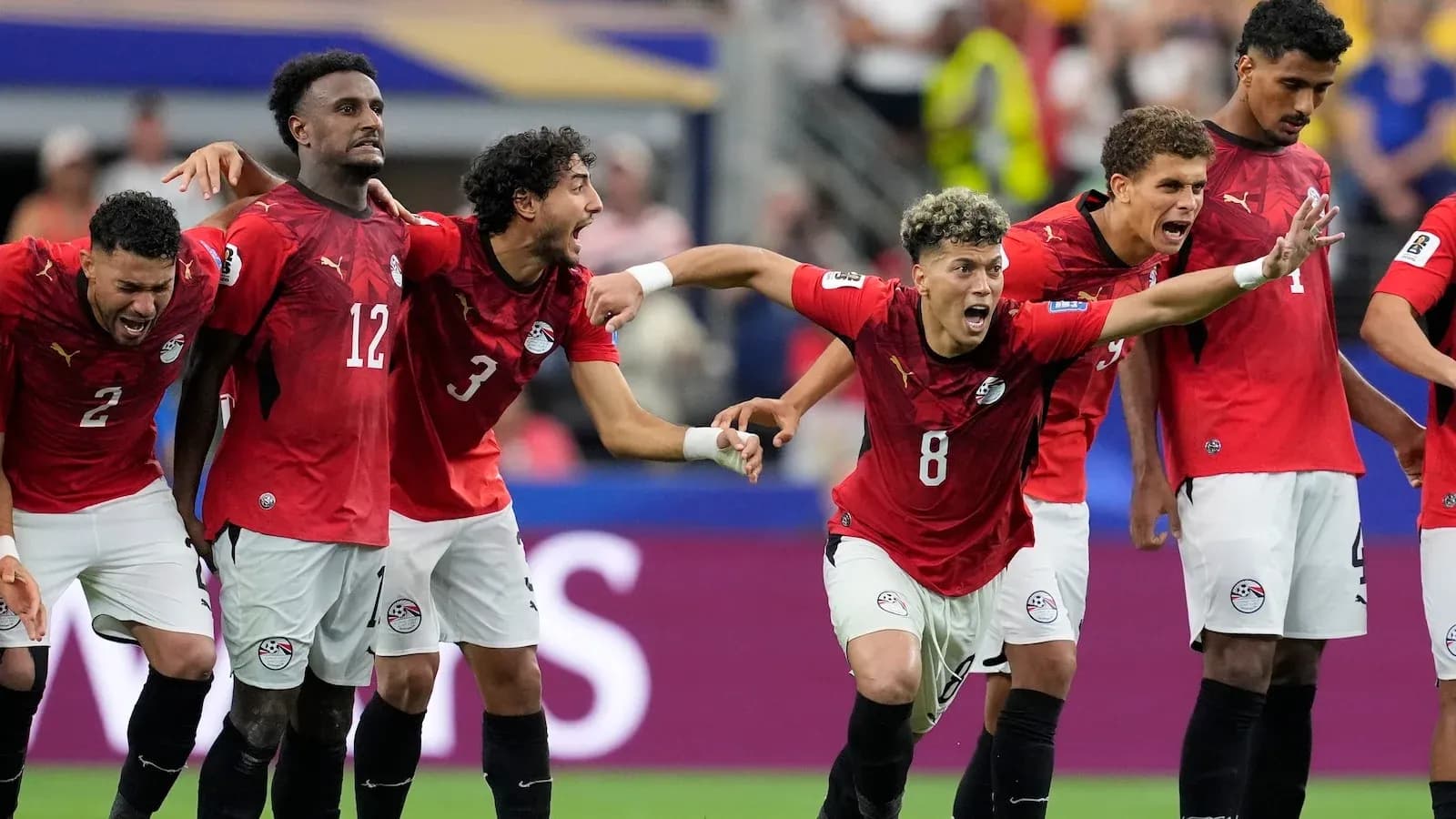
A first-ever World Cup knockout victory, sealed in a penalty shootout, 4-2 over Australia after a tense 1-1 draw, and written into history under the vast roof of the Dallas Cowboys’ stadium in front of 70,244 roaring fans dressed largely in red.
Salah’s night, Egypt’s moment
Whatever Salah decides about his international future — whether this is his last World Cup or just another chapter — he now owns a landmark no one can take away. He captained Egypt to their debut win in the elimination rounds, in their fourth appearance on this stage and in the first 48-team edition of the tournament.
At 34, the former Liverpool star played every minute of regulation and extra time despite a hamstring injury from the group finale. He stepped up in the shootout, converted his penalty, and then watched as a defender with no international goals to his name became the unlikely hero.
Hossam Abdelmaguid, 25 years old, 15 caps, still waiting for his first goal in open play for his country, took the decisive kick. He went low to the left. Mathew Ryan guessed wrong, diving to his right. The net rippled, and the Egyptian bench emptied.
Abdelmaguid disappeared under a pile of red shirts as the noise inside the stadium hit a new level. This was not just a win; it was a release.
Shootout drama and a cruel pattern for Australia
The shootout started badly for Australia and never quite recovered.
Harry Souttar, usually so reliable, stepped up first and lashed his effort over the bar. The tone changed immediately. Egypt sensed it. The crowd felt it.
Mahmoud Saber, Ramy Rabia and Salah all converted for Egypt, each strike adding pressure to the Socceroos. Jackson Irvine and Awer Mabil kept Australia alive with successful penalties, but the margin for error vanished.
When 18-year-old Lucas Herrington strode forward for Australia’s fourth attempt, the tension was brutal. His shot crashed off the crossbar. The ball flew away, and suddenly Abdelmaguid had the chance to end it.
He did not blink.
Ryan, brought on late in extra time for his 105th cap, never got close to any of Egypt’s four penalties. Patrick Beach, the 22-year-old he replaced, had been excellent in his sixth international appearance, yet was forced to watch the decisive kicks from the sideline.
For Australia, the World Cup knockout story remains painfully familiar. They are now 0-3 in the elimination rounds. Their only goals at this stage? Two own-goals — one against Italy in 2006, another against Argentina four years ago in Qatar.
This time, they were on the receiving end of misfortune, and then the wrong side of a shootout.
“It hurts when you get that close,” coach Tony Popovic said. “Unfortunately, we bow out in a penalty shootout, so it’s difficult to take right now.”
Hany’s nightmare, Ashour’s header
The night had begun so well for Egypt.
In the 13th minute, Emam Ashour rose to meet a cross and directed his header just inside the near post, beating Beach and sending the Egyptian fans into an early frenzy. It was a goal that settled Egypt and rattled Australia, a statement that they were not just here to make up the numbers in their first-ever knockout appearance.
The game might have been put beyond reach seconds into the second half. Omar Marmoush broke through with a golden chance to double the lead, but dragged his shot wide. It was a miss that lingered in the air.
The punishment arrived in the 55th minute, and it was brutal.
Aiden O’Neill whipped in a free kick from the left side of the area. Mohamed Hany, under pressure, rose to clear but only succeeded in glancing the ball past his own goalkeeper, Mostafa Shoubir. One moment of misjudgment, and Hany was suddenly the first player ever to score two own-goals in the same World Cup, after his earlier mishap in a 1-1 draw with Belgium in the group stage.
Less than 10 minutes before that, Hany had been down in almost the same area of the pitch after colliding with Connor Metcalfe on a header attempt. Medical staff rushed on, stretcher at the ready. He eventually got up and stayed on after what appeared to be a concussion check. He fought on, only for the game to turn on his unfortunate touch.
For Australia, the equalizer felt like a lifeline. For Egypt, it was a test of nerve.
Shoubir’s composure, Beach’s resistance
As the match moved into its later stages, chances came and went.
Rabia forced Beach into a sprawling save with a powerful header near the end of regulation. Moments later, Salah tried to pounce, but Beach gathered his shot comfortably. Egypt kept pushing. Haissem Hassan saw a promising effort blocked by Souttar’s knee, the defender throwing himself into the path of the ball to keep Australia alive.
Shoubir, at the other end, showed composure and presence, marshalling his area and recovering from the chaos of the own-goal. The tension grew, the legs grew heavy, and the looming specter of penalties began to shape every decision.
Hossam Hassan, the Egypt coach and national team legend whose scoring record Salah is now one goal away from equaling, focused on the mental battle.
“I was only thinking about the Egyptian fans,” he said through a translator. “During the entire time and during the penalty shootout, I was just praying, ‘God, please make the Egyptian people happy.’ Even before the penalty shootout, to be honest.”
When the moment came, he tried to strip everything back for his players.
“Do not look at the pressure,” he told them. “Just let everything out, don’t think about anything. Think about your penalty kick. Don’t even think about the goalkeeper. Just think about your kick.”
They listened. They delivered.
A nation steps into new territory
Egypt arrived at this World Cup without a single win in the tournament’s history. That changed less than two weeks ago with a 3-1 victory over New Zealand in the group stage. Now they have something even bigger: a knockout triumph, and a ticket to the round of 16.
Next comes a formidable test in Atlanta on Tuesday — either defending champions Argentina or tournament debutants Cape Verde. The scale of the challenge is obvious. The fear is not.
Salah summed up the emotion in simple terms.
“Me feeling today is that it's incredible,” he said. “I always like seeing the boys happy and enjoying the moment. Nothing can match that. So today was one of the best days of my life.”
From here, the path only gets steeper. But Egypt no longer walk it as hopeful outsiders chasing their first win. They move on as knockout survivors, with their captain still chasing records and their belief suddenly grounded in history, not just dreams.