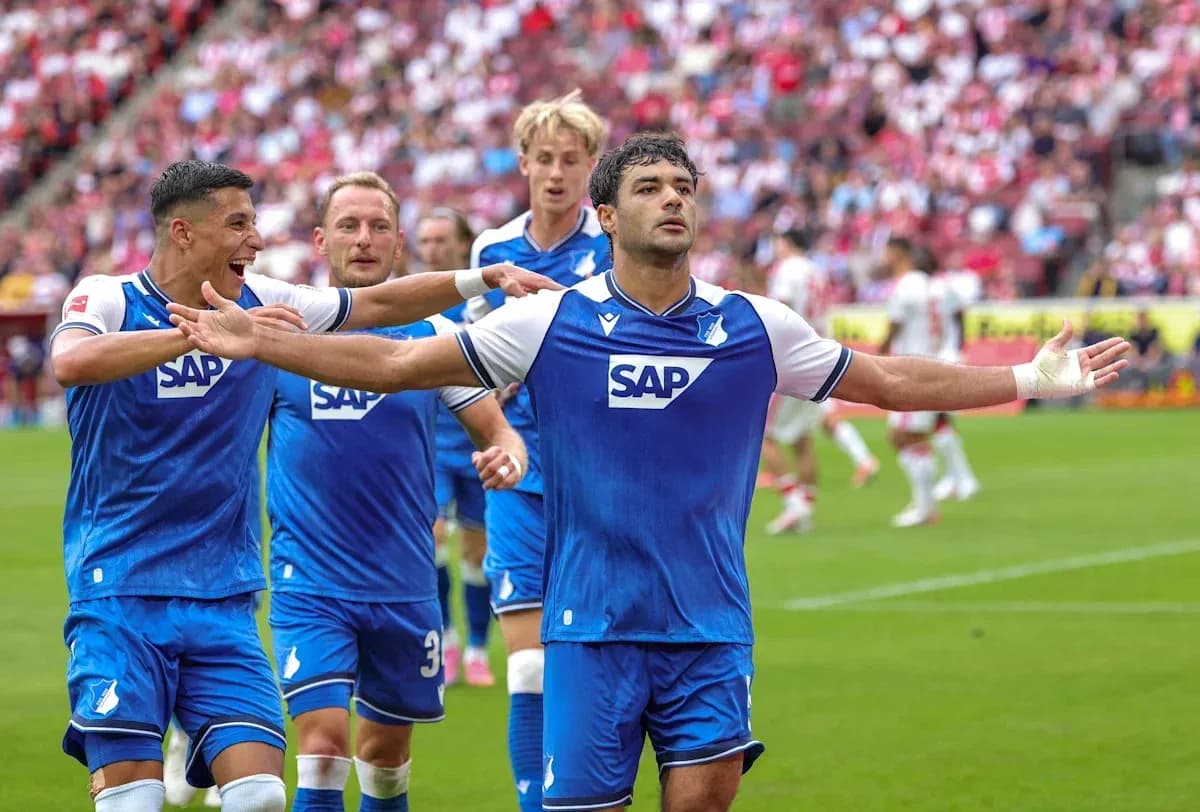
Dortmund Faces Hoffenheim: A Crucial Test in Sinsheim
The transfer window is shut. The rumours have gone quiet. For Borussia Dortmund, one thing is left on the agenda: play football and prove what this revamped side actually is.
Six points from six competitions so far – three in the league against Hamburg, safe passage in the cup at HEBC – have given Niko Kovac a clean, confident start. Now comes the first real stress test of the season: Hoffenheim away.
This is where the tone of Dortmund’s campaign can change.
Hoffenheim Rebooted, But Still Dangerous
Hoffenheim arrive bruised but far from broken. Last season they finished just a single point off the Champions League places, one of the Bundesliga’s sharpest outfits after a remarkable turnaround under Christian Ilzer.
Ilzer took over with the club staring at relegation in 2024/25. He dragged them to safety, then doubled their points tally the following year. That kind of leap doesn’t happen by accident.
The summer, though, has reshaped his attack. Bazoumana Toure, the electric winger who stretched defences, has gone. A move for Fisnik Asllani to RB Leipzig collapsed at the medical table, and Asllani remains injured anyway. To fill the Toure void, Hoffenheim turned to Wolfsburg’s Patrick Wimmer, a direct, aggressive wide player built for Ilzer’s front-foot style.
They didn’t stop there. Two of the most eye-catching names in the league arrived: Mats Rots and Nathan De Cat. De Cat, in particular, stands out – a dynamic, two-way midfielder expected to slot in alongside Wouter Burger in the centre. It’s a pairing that screams energy and bite.
Only Wimmer made it onto the pitch in the 2–3 opening-day defeat to Köln, but it would be a surprise if the XI doesn’t look different against Dortmund. Ilzer knows he cannot afford to be predictable in a game like this.
The Possession Battle: Who Owns the Ball?
Dortmund’s early-season pattern is clear: control the ball, control the game. Across their first two matches, they out-shot their opponents 35–9, with a staggering 20 efforts coming in the Bundesliga opener alone. They’ve dictated tempo, pinned teams back, and allowed their forwards to live in the final third.
Hoffenheim won’t accept that script.
Last season, the Sinsheim club ranked fourth in the league for possession; Dortmund were sixth. Against Köln, Hoffenheim saw 59% of the ball despite losing. Ilzer wants his team to have it, to circulate, to probe. Kovac does too.
One of them will have to bend.
For Dortmund, this is the first time this season they face a side that genuinely wants to wrest the ball away from them and keep it. Either they win the midfield fight outright, or they learn to live with less of the ball and become ruthless in transition. There’s no middle ground at this level.
Kovac’s Selection Puzzle
Kovac’s first big headache comes not from tactics, but from absences.
Konstantelias is out with an ACL injury. Samuele Inacio is suspended. That rips a hole in the band of creators behind Serhou Guirassy and forces a rethink over who partners Karetsas in those pockets of space.
Three names sit on the manager’s desk: Marcel Sabitzer, Carney Chukwuemeka, and new signing Ethan Nwaneri. Each offers a different flavour. Chukwuemeka can drive with the ball, Nwaneri brings raw talent and unpredictability, but the smart money is on Sabitzer – experience, structure, and a reliable link between midfield and attack.
The shape should be familiar. After experimenting with a 4-3-3 against HEBC in midweek, Kovac is expected to revert to his preferred 3-4-2-1. Gregor Kobel returns in goal after Alexander Meyer’s cup outing. Gadou, Anton, and Ryerson form the back three, with Svensson and Beier providing width as wing-backs.
In the middle, Nmecha and Bellingham remain the engine room, the trusted double pivot. Ahead of them, Sabitzer and Karetsas operate as dual playmakers behind Guirassy, who leads the line again after scoring last weekend.
It’s a side built to press high, break quickly, and still keep enough bodies in midfield to survive Hoffenheim’s passing triangles.
The Kramaric Problem
And then there’s Andrej Kramaric.
On paper, calling a 35-year-old super-sub the “Player to Watch” looks odd. On grass, it makes perfect sense.
Kramaric loves playing Dortmund. Statistically, he’s a menace: in the club’s entire history, only five players have scored more goals against die Schwarzgelben. Four of those names sit in the Bundesliga’s all-time top ten scorers. The fifth is 15th. That’s the company he keeps.
Against Dortmund alone, Kramaric has 11 goals in 18 matches. He hit two in this very fixture last season. He doesn’t need 90 minutes. He needs one chance, one loose ball, one moment of hesitation.
Expect Ilzer to hold him back, then unleash him when legs tire and space opens between Dortmund’s lines. A late Kramaric cameo with the game in the balance is exactly the scenario Kovac will want to avoid – and exactly the one Hoffenheim will be waiting for.
A Tight Margin Game
Dortmund walk into Sinsheim with momentum, but not comfort. They know this is their sternest test so far, a match that will reveal whether their early control was a product of weaker opposition or a genuine step forward.
Win the midfield, and they can stamp their authority. Lose it, and they must prove they can be deadly without the ball.
The feeling around the club? This has the look of a tight, nervy contest decided by a single goal. A narrow 2–1 Dortmund win sits on the table.
Now they have to go and take it.