Curaçao’s Joshua Brenet: From Misfit to World Cup Hopeful
On Sunday night in Germany, a small Caribbean island will stare down one of world football’s giants. And on Curaçao’s right flank, a familiar face will be running straight at his past.
Joshua Brenet, once a promising full-back in the Dutch system and a costly misfit at Hoffenheim, now arrives at a World Cup as the embodiment of Curaçao’s tangled footballing story: Dutch academies, German detours, personal implosions, and a late, unlikely redemption.
An island’s team, built in Europe
Curaçao remains part of the Kingdom of the Netherlands, but in footballing terms it has long been a distant outpost. Thousands of Curaçaoans and their descendants built lives in the Netherlands; now they form the spine of a national team that FIFA only recognised in 2010.
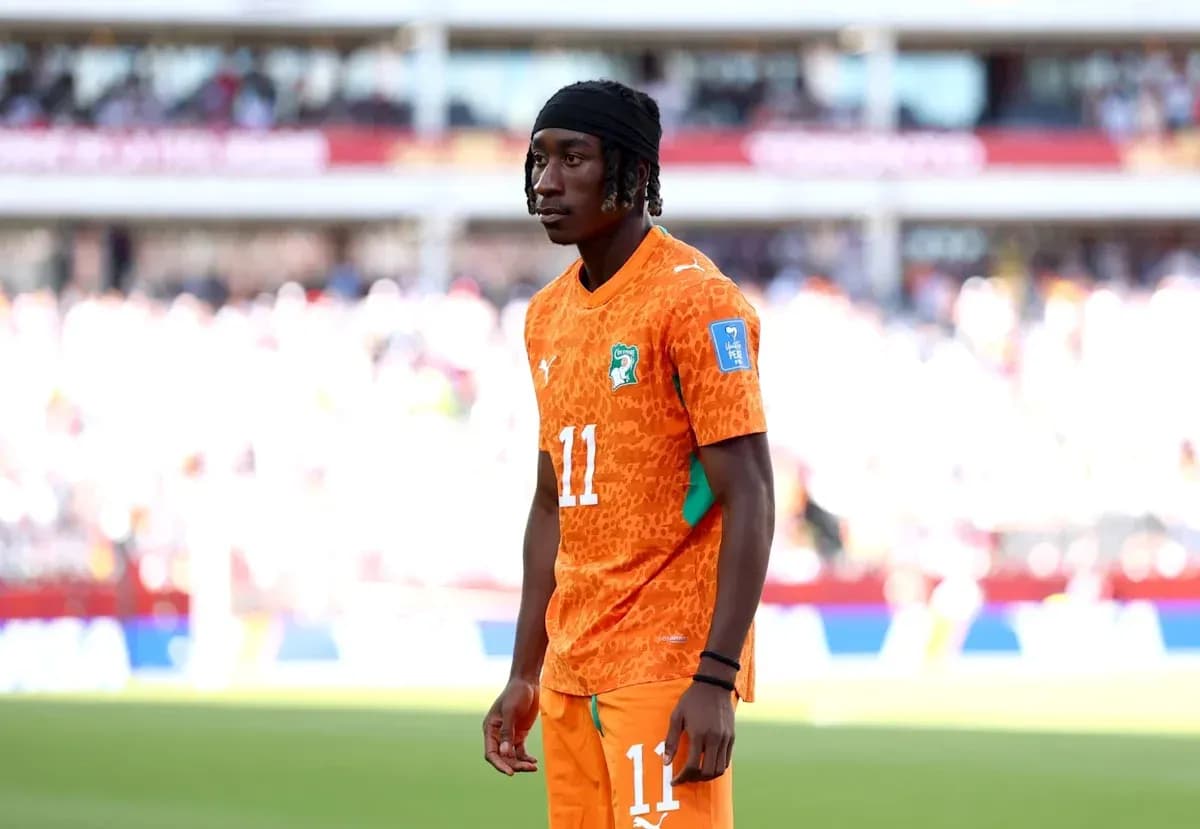
The numbers tell the tale. Of the 26 players in the current World Cup squad, just one was actually born on the island. That lone native is Tahith Chong, once a bright hope at Manchester United, who squeezed 16 competitive appearances out of Old Trafford before a flat six‑month loan at Werder Bremen in 2021. He is now at Sheffield United and, symbolically, the most recognisable Curaçaoan export in this squad.
Chong is not alone in knowing German football. Curaçao’s World Cup group contains six players with Bundesliga or lower-league experience: Gervane Kastaneer (1. FC Kaiserslautern), Riechedly Bazoer (VfL Wolfsburg), Roshon van Eijma (Preußen Münster), and the attacking pair Jürgen Locadia and Brenet, both once on the books of TSG Hoffenheim.
For Curaçao, the road to the World Cup has run through Europe’s academies and dressing rooms. On Sunday, that road leads straight back to Germany.
The Nagelsmann gamble that blew up
Brenet’s story is the most combustible of the lot.
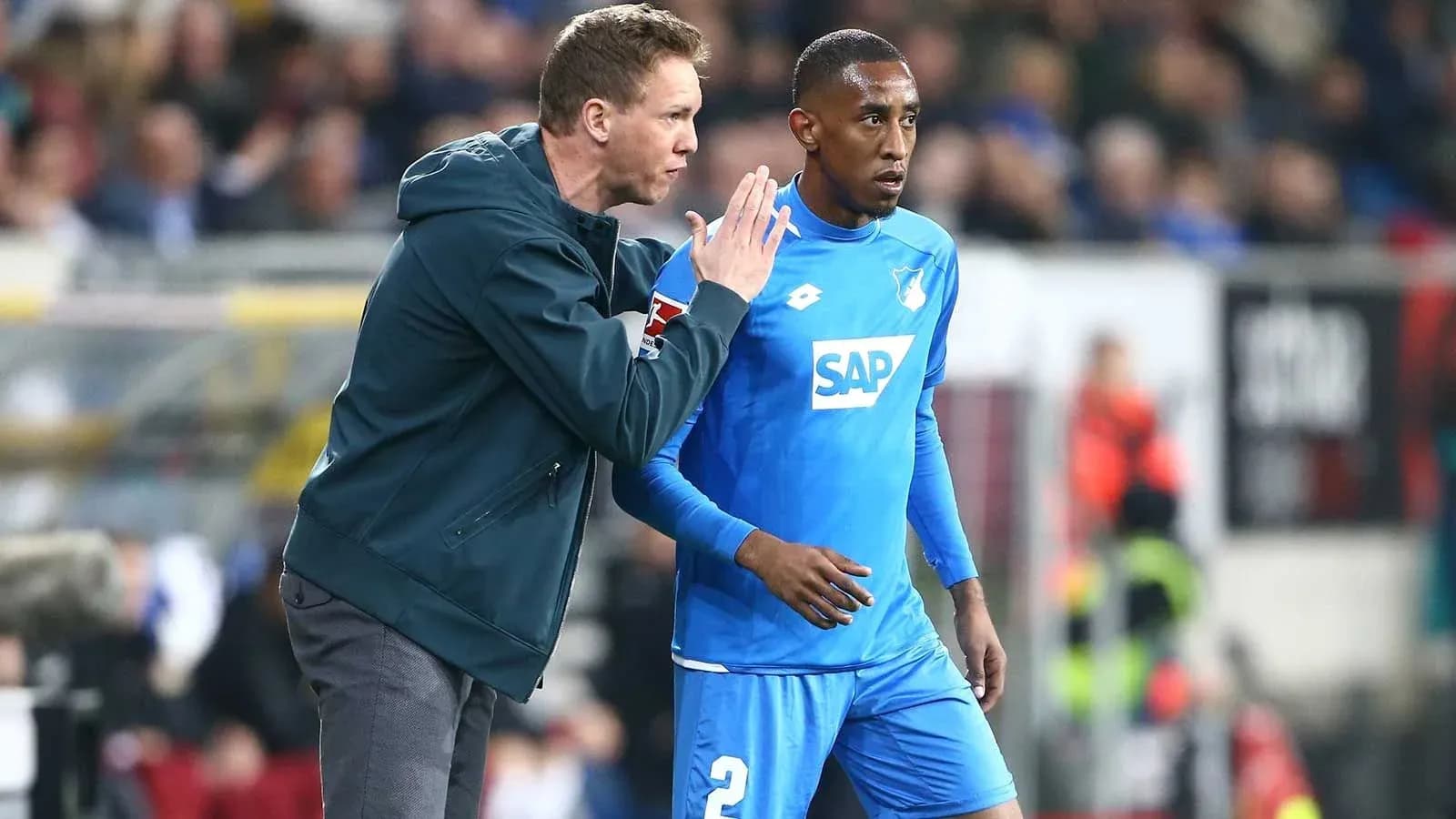
Back in 2018, he was a three-time Eredivisie champion with PSV Eindhoven, capped twice by the Netherlands, and considered a modern, aggressive full-back with upside. Hoffenheim paid €3.5 million to bring him in, a move pushed in part by their then-coach Julian Nagelsmann, who now leads Germany.
It looked like a clever piece of business. It wasn’t.
Brenet began life in the Bundesliga on the bench. Then came the moment that set the tone. Ahead of Hoffenheim’s first-ever Champions League match, against Shakhtar Donetsk, he skipped a video session. Nagelsmann reacted immediately, dropping him from the squad for a historic night in the club’s history.
The relationship never really recovered. Nagelsmann later brought him back into the fold, but the trust had gone. Brenet’s appearances were sporadic, his influence minimal. When Nagelsmann left, Alfred Schreuder arrived. He used Brenet even less. Sebastian Hoeneß went further still, banishing him to the reserves in the fourth-tier Regionalliga Südwest.
By then, the file on Brenet at Hoffenheim made grim reading. Repeated disciplinary issues, chronic lateness, a reputation sliding from “talented but raw” to “problem nobody wants to touch.” The club struggled to find a buyer. Only in 2022, with his contract running out and his value evaporated, did he finally leave on a free transfer to Twente Enschede.
Off the pitch, a career in freefall
In Enschede, the football came back. On the pitch, Brenet started to look like a player again. Strong performances, renewed purpose, the suggestion that he might yet salvage a top-level career.
Then he drove straight through the stop sign.
In January 2023, he was caught driving without a licence. Twice. In two weeks. He had already lost that licence in 2020 after a drink‑driving offence. The pattern was impossible to ignore.
The courts took a hard line. In 2024, a presiding judge delivered a damning verdict as he handed down a one-month prison sentence.
“He clearly has no regard for authority. It seems to me as though he is continuing to play football after receiving a red card,” the judge said.
It was not Brenet’s first conviction. Back in 2021, he had received a suspended sentence that included a fine and community service for domestic violence. On appeal, the prison term for driving without a licence was later converted to community service, but the damage was done. Twente terminated his contract.
Whatever goodwill he had rebuilt on the field vanished. A player once groomed for Oranje suddenly looked like a footballing nomad.
From Qatar to Scotland to Turkey – and back to the spotlight
Brenet’s next moves carried the feel of a career in survival mode.
He joined Al-Rayyan in Qatar, but made only six appearances in the 2024/25 season. Then came a short spell at Livingston FC in Scotland, followed by a switch to Kayserispor in Turkey for the second half of the campaign. None of these stops restored the aura he once had in Eindhoven.
Yet at international level, a door opened.
Despite playing for Dutch youth teams and making his senior debut for the Netherlands in the 2016 World Cup qualifiers, Brenet received FIFA approval to switch allegiance to Curaçao, the homeland of his parents. It was a late pivot, but a decisive one.
Since his debut for Curaçao in 2024, he has scored six goals in 17 appearances – a remarkable return for a right-back. In the final warm-up game against Aruba, he started on the right of defence and found the net again, a reminder of the attacking edge that once drew Nagelsmann to him.
Now, at 32, he stands on the brink of the biggest game of his life: Curaçao’s World Cup opener against Germany, scheduled for Sunday at 7 pm.
Facing the past, carrying an island
This is not just another group match. For Brenet, it is a collision of timelines.
On one side, the Germany dugout: Nagelsmann, the coach who pushed to sign him for Hoffenheim, and Alfred Schreuder, who later froze him out and now serves as Nagelsmann’s assistant with the DFB. On the other, a Curaçao team built from Dutch suburbs and European academies, carrying the flag of an island that has produced only one player in this squad by birth.
Chong, the Manchester United alumnus turned Sheffield United midfielder. Locadia, once a PSV and Brighton forward. Bazoer, the former Wolfsburg prodigy. A group of nearly men and second chances, now thrown together in a World Cup jersey few of them ever imagined wearing.
Curaçao will not intimidate Germany on paper. But football is rarely played on paper, and Brenet’s presence on that right flank offers something the spreadsheets cannot measure: a player with nothing left to protect, and everything left to prove.
He has burned bridges in the Netherlands, stumbled across Europe, and spent more time in courtrooms than any international footballer would care to admit. Yet here he is, lining up for a World Cup, about to stare down the coaches who once decided he was surplus to requirements.
For Germany, it is a routine opener they are expected to control. For Curaçao, it is a stage they had to fight history to reach. For Joshua Brenet, it is a reckoning.
How often does a footballer get the chance to run at his own past, with a nation at his back?