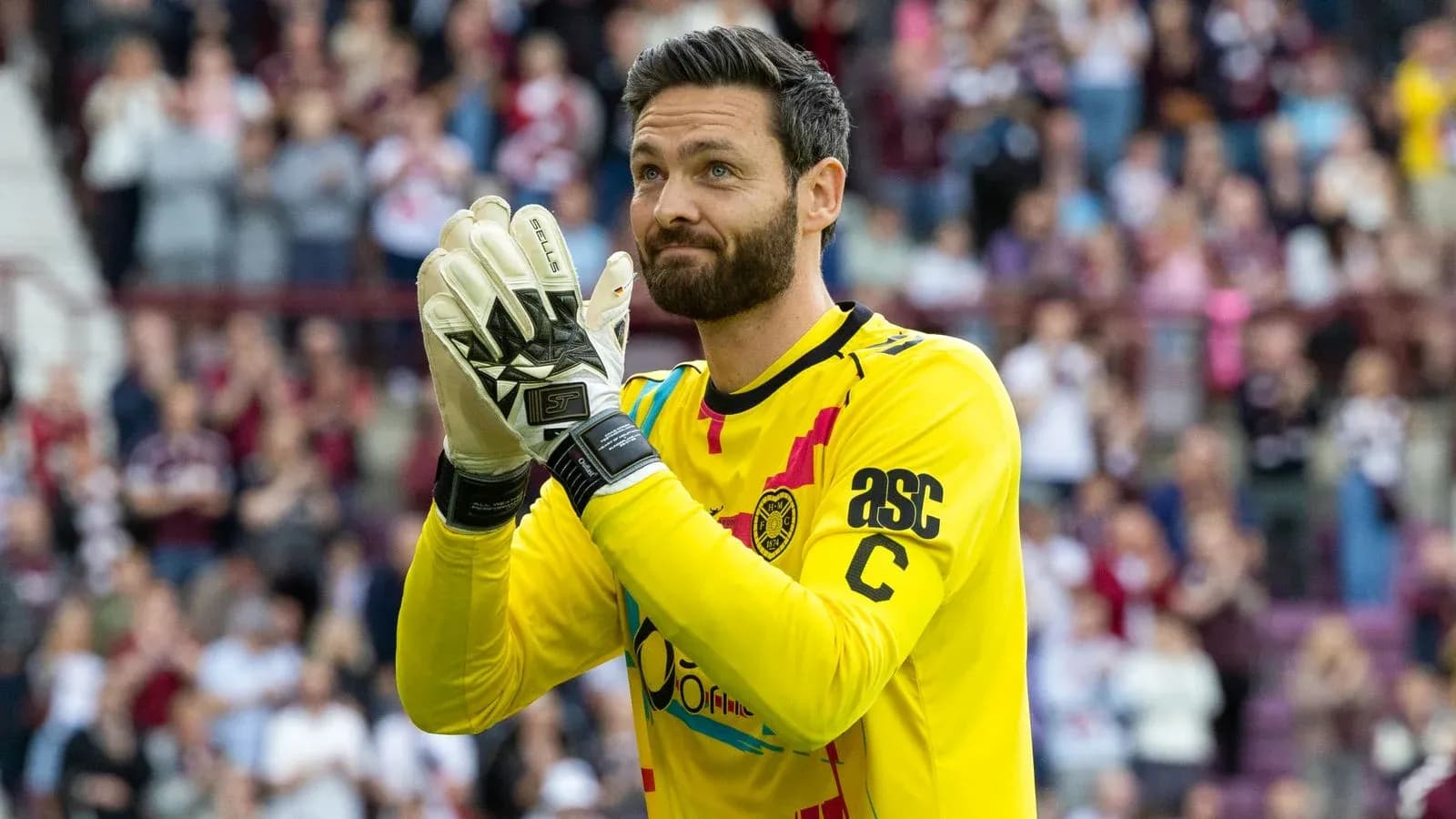
Craig Gordon: The Relentless Keeper Who Defied Odds
Craig Gordon has spent a quarter of a century defying logic, surgeons and, at times, gravity. At 43, one of Scotland’s great modern goalkeepers has finally called time on a career that stretched from Tynecastle to the Premier League and back again, via operating tables and rehab rooms that might have broken lesser players.
He walks away with more than 760 senior appearances to his name. Hearts, Celtic, Sunderland, Cowdenbeath, Scotland. Fifteen major honours. Eighty-four caps. A place in the Scottish FA’s international roll of honour. A Hall of Fame induction at Hearts at just 24. And a save still spoken about in England as the finest the Premier League has ever seen.
Not bad for a boy who just wanted to play for his club and his country.
From Gorgie to the World Stage
Gordon’s story began in 2001, when he made his professional debut for Hearts. Tall, lean, commanding, he grew quickly from promising youngster to cornerstone of a side that would lift the Scottish Cup in 2005/06, his first major trophy and the launchpad for everything that followed.
By 2004 he had pulled on the Scotland shirt for the first time. The anthem became a ritual. He would go on to sing it 84 times, anchoring his country through eras of change, disappointment and revival, often as the one constant presence behind a rotating cast of defenders.
In 2007, Hearts made it official: Gordon was already a club great. At 24 he entered the Hearts Hall of Fame, the youngest ever to do so. That same year, English football came calling.
His £9m transfer to Sunderland set a British record fee for a goalkeeper at the time. It was a statement signing. In the Premier League he produced the kind of moments that justify such numbers. None more so than in 2010, when he flung himself across goal to deny Bolton in a stop that would later be crowned the best save in Premier League history. One snapshot, frozen in time, that summed up his agility, courage and timing.
Broken Bones, Broken Dreams – But Never Broken Will
The narrative could have been simple: top-level keeper, record fee, long Premier League career. Gordon’s path was anything but simple.
Injuries stalked him. Ankles, arms, knee surgery. Sunderland eventually became less a platform and more a battleground, his body repeatedly dragged back into treatment rooms. When his time there ended, it felt less like a transfer and more like an uncertain pause.
Then came the darkest spell. Around two years out of the game. A career-threatening condition. He struggled to walk without pain, never mind dive, spring, or launch himself at the feet of onrushing forwards. Coaching entered the picture as he tried to stay close to the sport while his future as a player hung in the balance.
Many would have stopped. Gordon didn’t.
Step by step, he rebuilt himself. The goalkeeper who couldn’t train without pain became the one clubs wanted again. The comeback needed a stage. Celtic provided it.
Celtic Resurrection
When he signed for Celtic, it felt like a gamble on both sides. It turned into a modern redemption tale.
At Celtic Park, Gordon didn’t just return. He dominated. Over the next years he stacked medals at a relentless pace: six Premiership titles, five League Cups, three Scottish Cups. Twelve trophies, each one a small victory over the doubts that had once surrounded his career.
He guarded the goal in domestic clean sweeps and European nights, a reassuring presence behind some of the most successful Celtic sides of the era. The narrative had flipped. From the keeper whose body might not hold up, to the man lifting silverware season after season.
When his Celtic contract expired, the circle drew back to where it had started. Hearts again.
Homecoming and One Last Fight
Back at Tynecastle, Gordon didn’t arrive as a sentimental signing. He arrived as a leader. He played with the sharpness of a man who knew time was precious and every game mattered. His performances matched the emotion of the homecoming.
Then, another cruel twist.
On Christmas Eve 2022, he suffered a double leg break. At his age, with his history, it looked brutal. A festive fixture turned into a scene of concern and quiet dread. Once more, questions surfaced about whether this was the end.
Once more, Gordon refused to accept them.
More surgery. More rehab. Another long climb. And again he made it back, pulling on the gloves for Hearts and Scotland, refusing to let his story end on a stretcher.
He contributed to Hearts’ title push last season, helping drive a campaign that went to the final day of the Premiership. He even made the Scotland squad for the World Cup at 43, a remarkable feat of longevity and professionalism in a position that punishes the body with every collision and dive.
“Now the Gloves Are Finally Off”
When the announcement came, it arrived in Gordon’s own words, in a video released by Hearts. There was no drama, just clarity from a man who knows what the game has given him and what he has given back.
“I’ve never wanted it to end, but end it must,” he said. “I have lived my dreams and for that, I’m so thankful.”
The dreams were simple, he explained: play for Heart of Midlothian and for Scotland. From the stands at Tynecastle to the pitch, from boyhood fan to Hall of Famer, from hopeful youngster to national stalwart.
He spoke of hard work, sacrifices, setbacks. Of trying to do himself, his family, and the fans proud. Of 84 renditions of the national anthem, sung a little better each time. Of the biggest names, the biggest stadiums, the biggest stages – and how he savoured every one of them.
He thanked team-mates and coaches for pushing him. Opponents for driving him on. Medical staff for piecing him back together. Loved ones for standing by him.
Then came the line that closed the chapter.
“Now the gloves are finally off and I bid farewell to my playing career. You, the fans, have given me everything, and it has been a privilege to represent you. I hope you’ve enjoyed it as much as I have. From the bottom of my heart, thank you.”
A 25-year career built on talent, resilience and an almost stubborn refusal to bow to misfortune ends not with a whimper, but with a man choosing his moment.
The saves will live on in clips and memories. The medals will sit in cabinets. The scars will always tell their own story. The question now is simple: after a lifetime spent stopping shots, where does Craig Gordon decide to aim next?