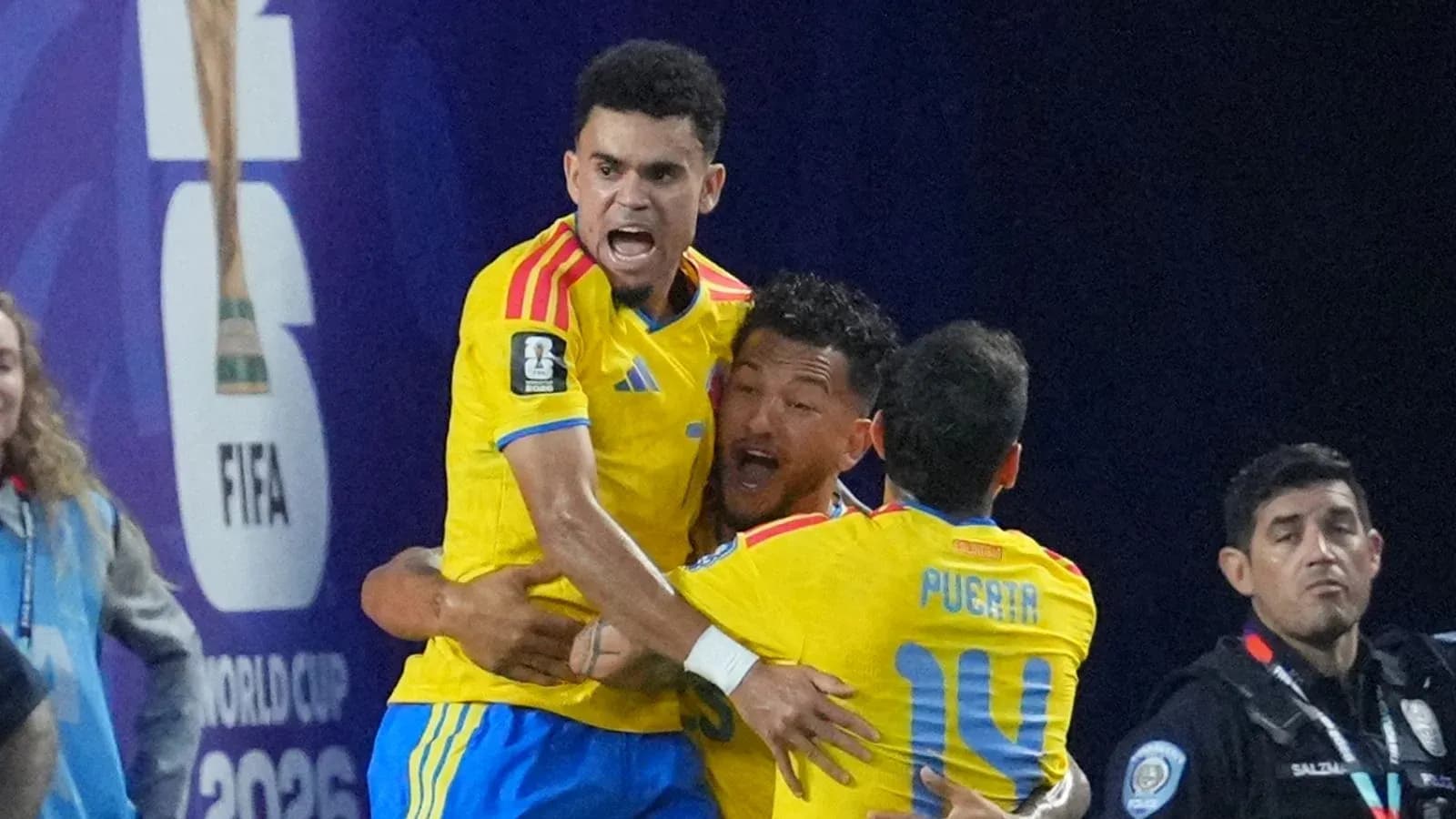
Colombia Advances to Last 16 with Win Over Ghana
Colombia do not just visit World Cups anymore. They move in and expect to stay a while.
A 1-0 win over Ghana in Kansas City carried Los Cafeteros into the last 16 for the third consecutive tournament, another quiet statement from a nation that has grown used to knockout football. Brazil 2014 brought a quarter-final. Russia 2018 ended in the last 16. This group looks intent on at least matching that.
On a hot, stop-start afternoon in Missouri, the game’s rhythm was shattered almost before it began. The history books took an early hit too.
Two injuries, two enforced substitutions, all inside 13 minutes. No World Cup match on record had ever seen both teams forced into changes before the 15-minute mark. Jhon Cordoba limped off first, Marvin Senaya followed him soon after. Plans ripped up, benches scrambled.
The disruption suited Colombia.
From chaos, they found clarity.
Luis Suarez, Cordoba’s replacement, needed barely a touch to settle. Drifting wide on the right, he shaped a teasing cross into the box. Ghana’s back line hesitated. Jhon Arias did not. Ghosting into space, the former Wolves forward guided his header beyond Lawrence Ati Zigi and into the far corner on 14 minutes.
One change, one cross, one goal. Ruthless.
Ghana, who had built their group-stage success on a compact low block and counter-punching, suddenly had to chase. They almost struck first, mind you. Inside the opening minute Thomas Partey stepped onto a loose ball and whipped a 25-yard effort just wide, a warning Colombia heeded.
Once Arias struck, the contest tilted.
Colombia began to purr. Nestor Lorenzo’s side pinned Ghana back, working angles, drawing the back four out of shape. Luis Diaz, electric on the break, nearly doubled the lead before the interval when he raced clear on a rapid counter and curled just wide of the far post.
The pressure kept building. Suarez rose to meet a cross and glanced his header beyond the opposite upright. Then, in first-half stoppage time, Johan Mojica thought he had buried the tie with a powerful header, only for Ati Zigi to spring to his right and claw the ball away with a superb one-handed save. It was the kind of stop that keeps a team alive.
For a while, it looked as though it might change the story of the night.
Colombia came out after the break with the same intent. They thought they had their cushion just before the hour when Diaz slid in at the near post to turn home a low ball from Crystal Palace midfielder Jefferson Lerma. The celebrations were brief. The assistant’s flag went up, and the second goal vanished in a moment.
The pattern did not. Ghana stayed penned in, Colombia stayed on the front foot.
Diaz, Davinson Sanchez and Juan Fernando Quintero all had sights of goal as the minutes ticked by. The longer it stayed 1-0, the more you expected tension to creep in. It never really did. Ghana’s attack simply lacked bite. They carried almost no threat in the final third, and that single-goal lead felt far more secure than the scoreline suggested.
If there was a concern for Lorenzo, it came not from the result but from the margin.
Colombia generated 2.19 expected goals, carved out enough chances to win this tie twice over, yet still walked a tightrope on paper. Against stronger opposition in the latter rounds, that kind of wastefulness can be fatal.
One man looked like an answer.
Quintero, introduced after 72 minutes in place of Arias, immediately changed the temperature of the game. At 33, now with River Plate in Argentina, he no longer sprints past people. He does not have to. His brain moves quicker than everyone else’s.
In just over 20 minutes he had 24 touches, completed all 19 of his passes and created five chances – more than any other player on the pitch across the full 90. He threaded balls into spaces Ghana had been able to protect for most of the match, turned safe possession into sudden danger and almost stole the show with a thunderous effort that screamed just wide of Ati Zigi’s right-hand post.
If that had flown in, it would have joined the early contenders for goal of the tournament.
Lorenzo will have noticed. In Vancouver on July 7, with Switzerland standing between Colombia and another quarter-final, the temptation to unleash Quintero from the start will be hard to resist.
Colombia are through again. The platform is built. The question now is not whether they belong in the knockout rounds.
It is how far this generation is willing to push the ceiling.