
Chelsea's Barco Gamble: A New Era with Xabi Alonso
Chelsea finally announced on Sunday what had been an open secret for months: Valentín Barco is in the building. The 22-year-old arrives from Strasbourg, the latest piece in a puzzle that still looks half-finished and partly drawn by different hands.
He is Xabi Alonso’s player now. He is not Xabi Alonso’s signing.
That distinction matters at Stamford Bridge, where the fault lines between the recruitment department and the new head coach are still fresh and visible.
A Transfer From the Old Regime
The Barco deal has been in motion since early April, when Liam Rosenior was still in charge. Reports then suggested Chelsea and the player had already shaken hands on a summer move. By the time Alonso was appointed in May, the train was too far down the track to stop.
Two days after Alonso’s arrival, Barco was already saying his public goodbyes to Strasbourg, even though Chelsea had not yet made anything official. The message was clear: this was happening, whatever the new manager thought.
Alonso has not hidden his priorities. He wanted midfield steel and leadership, pressing hard for Sunderland’s Granit Xhaka before the club ultimately landed Brentford veteran Jordan Henderson. He also pushed for a specialist left back, with Chelsea closing in on Rayo Vallecano’s Pep Chavarría at his specific request.
Those are Alonso signings. Barco belongs to another group entirely.
This is a move stamped by co-sporting directors Paul Winstanley and Laurence Stewart, along with recruitment figures Joe Shields and Sam Jewell. Their influence at Chelsea has shrunk after a chaotic, high-spend era that delivered more churn than cohesion, and Alonso’s arrival only accelerated that shift. Barco may prove to be one of the last big calls made primarily in their image.
Why Barco? Because He Can Play
Strip away the politics and one thing stands: Barco is a good footballer.
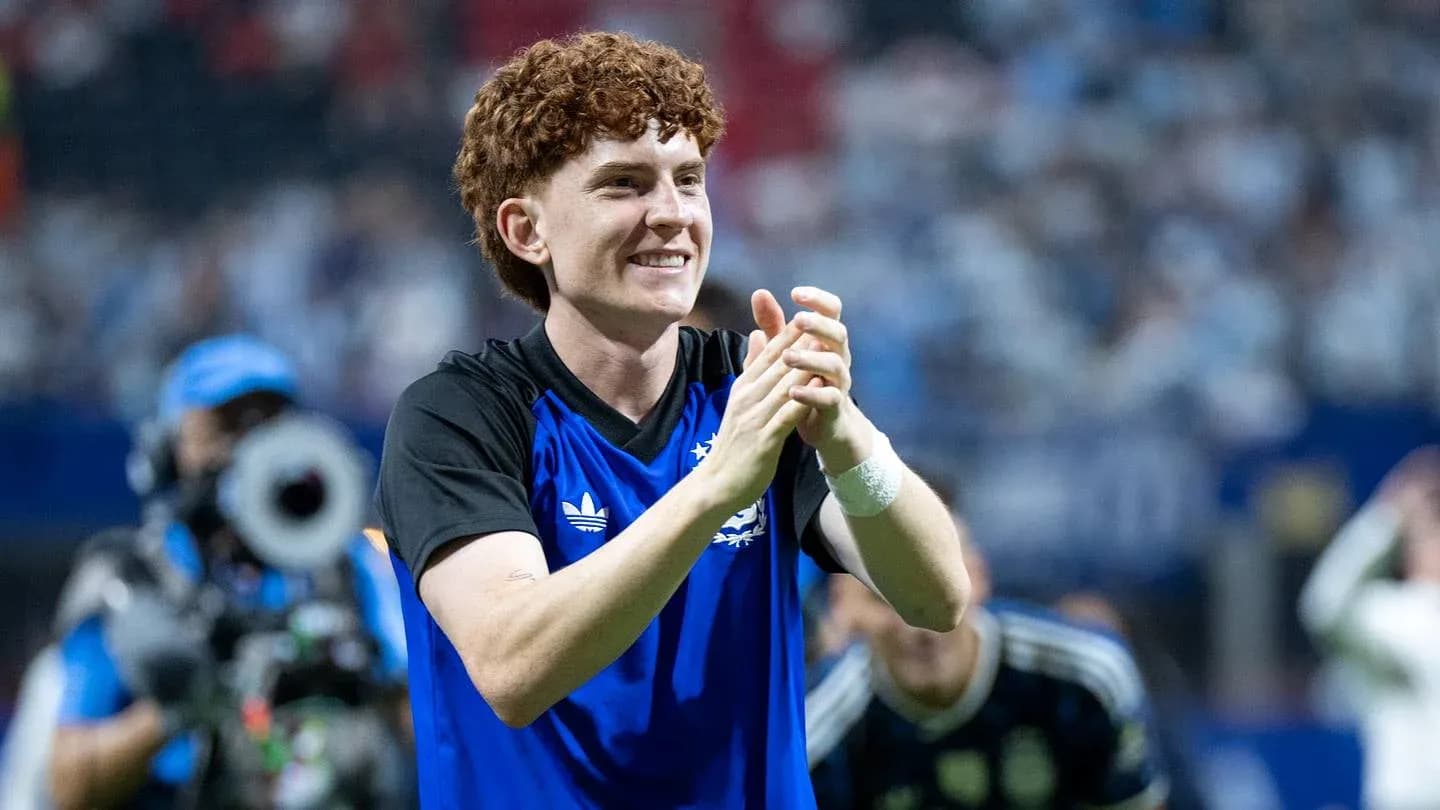
Premier League fans who remember him as the raw, red-haired left back struggling through seven appearances for Brighton & Hove Albion in 2023–24 might raise an eyebrow. That version of Barco, pinned to the flank and exposed, is not the one Chelsea have just bought.
His move to Strasbourg in early 2025 changed the picture. There, he stepped inside and grew into a do-it-all midfielder, tasked with knitting play together and screening the back line in equal measure. He ran, he tackled, he passed forward. He became the hub. Week after week, his influence grew, and with it the feeling that a bigger move was inevitable.
Some will argue Chelsea’s real motive is financial: keep a promising asset inside the BlueCo network, inflate his value, and keep their options open. That suspicion will follow any transfer along the Strasbourg–Chelsea pipeline for as long as the ownership structure remains.
But it does not erase what Barco has done on the pitch. At 22, he has earned another crack at the elite level.
His biggest selling point is versatility. As a teenager he was framed as the ideal modern full-back: a left-sided defender comfortable drifting into midfield, an inverted option who could overload central areas. Now the emphasis has flipped. He looks more like a natural midfielder who can slide across to left back when required, not the other way around.
For a squad that wants to compete on multiple fronts, that flexibility is gold. Chelsea do not have European football this season, so minutes will be tight in some areas. But the club’s ambitions are obvious: they expect to be back in a Thursday-Sunday or Tuesday-Saturday rhythm by 2027–28. That is when a player like Barco, capable of covering at least two roles without the level dropping, becomes invaluable.
Alonso’s Puzzle
The question is simple, and awkward: where does Alonso put him?
Chelsea’s new manager has already targeted the very zones where Barco looks strongest. Henderson has arrived to anchor or support the midfield. Chavarría is being lined up to own the left flank. Those moves suggest Alonso already has a clear idea of what he wants from his build-up patterns and his defensive structure.
Barco walks into that environment as a hybrid. Not the first name on the teamsheet in either position, but too talented to be dismissed as depth alone. Alonso will need to decide whether he sees Barco as a rotation midfielder, an auxiliary left back, or something more bespoke—a tactical wild card who can tilt games from the bench or step in when injuries bite.
The tension is obvious: a coach trying to stamp his identity on the squad, and a player arriving as a legacy of the old transfer model. How Alonso resolves that will say as much about Chelsea’s internal power balance as it will about Barco’s future.
A Troubled Path from Strasbourg
Barco is not breaking new ground. He is the third player to walk the Strasbourg-to-Chelsea path, and the early returns on that route have not been convincing.
Mamadou Sarr was the first to make the jump. Signed in the summer of 2025, the centre-back got a taste of the Club World Cup before heading straight back to Strasbourg on loan. There, he flourished—captain’s armband on his arm, minutes piling up, a leader in a young side.
Then came the twist. In January, with Rosenior newly installed at Stamford Bridge and asking for a centre-back, Chelsea cut Sarr’s loan short and brought him back to London. It sounded logical on paper. On grass, it never really happened.
Across the next five months, Sarr played fewer than 300 minutes. He drifted to the fringes of the matchday squads, his early promise swallowed by the churn.
Emmanuel Emegha followed. His move to Chelsea was agreed as early as September 2025, and he finally joined up with Alonso’s squad this summer. Before he could even settle, the rumour mill started turning. Reports now suggest Chelsea are already open to offers for the striker.
Emegha finds himself in a crowded room. João Pedro, Nicolas Jackson and Liam Delap are already fighting for the central role, while 17-year-old Dastan Satpayev has caught the eye in preseason and will join permanently once he turns 18 later this month. It is not an easy landscape for a new arrival to conquer.
Into that uncertainty steps Barco, the latest export from Strasbourg, the latest test of a recruitment strategy that has yet to fully convince supporters.
A Player Caught Between Two Visions
Barco arrives with talent, energy and a profile that fits the modern game. He also arrives with baggage he did not create: questions about ownership structures, recruitment power, and a pathway that has so far looked more theoretical than real.
For Chelsea’s hierarchy, he is a bet that their broader network can still unearth and polish high-level players. For Alonso, he is a resource to be shaped—or an awkward reminder of a system he is trying to refine.
For Barco himself, it is simpler. He has a second chance in England, a bigger stage, and a manager who prizes intelligence and tactical discipline in midfield.
Whether he becomes a cornerstone of Alonso’s Chelsea or just another name in a long list of nearly-men will depend on what happens next, not what has gone before.




