Cape Verde's Historic World Cup Journey: Pico Lopes Chases Glory
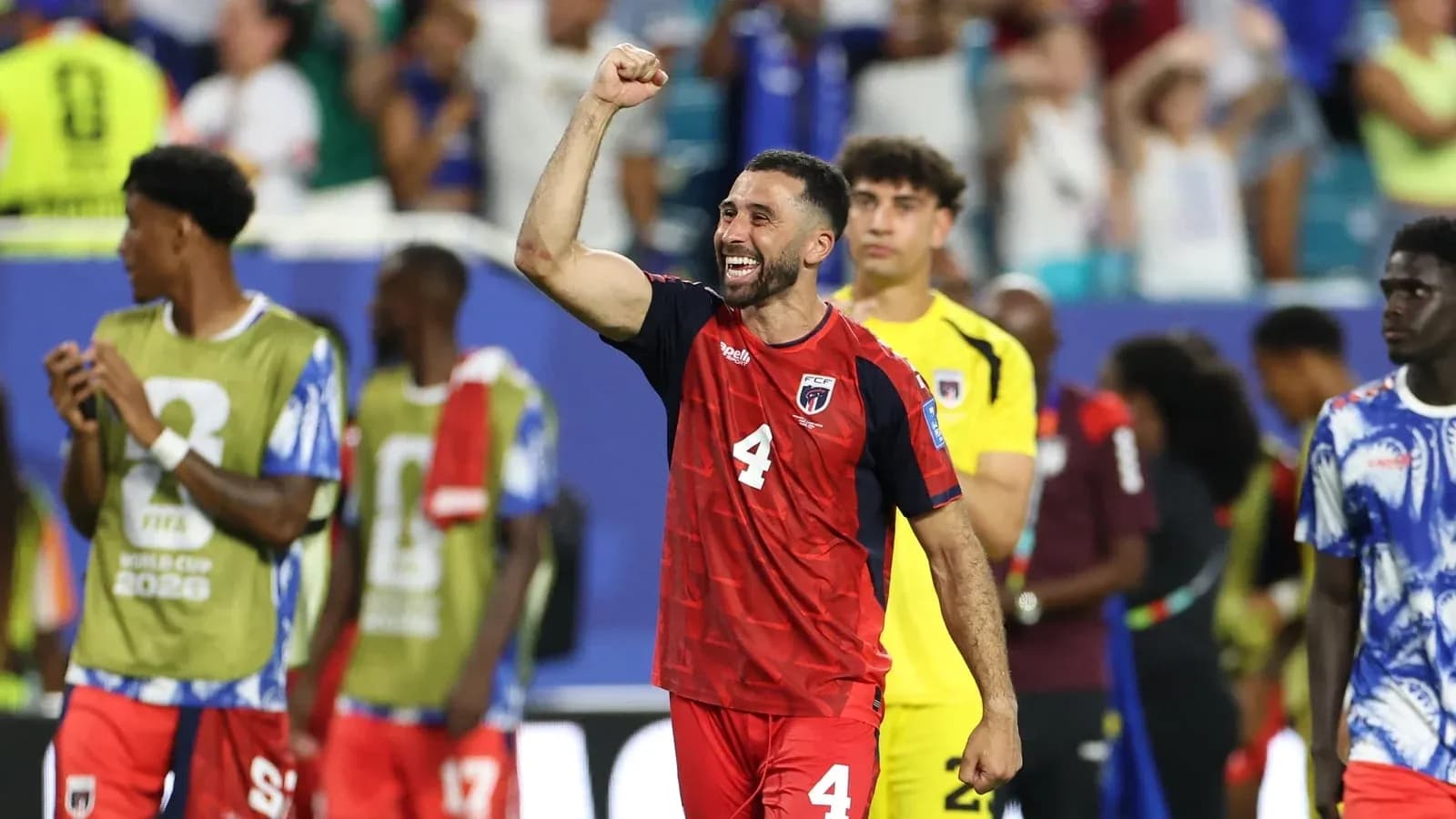
In Houston tonight, as the heat clings to the air and the noise swirls around the stadium, a captain from Tallaght will walk out chasing a World Cup dream for an island thousands of kilometres away.
Pico Lopes and Cape Verde are 90 minutes from history.
On the archipelago off the coast of Senegal, it will be 11pm when they kick off against Saudi Arabia. Shops will close early, streets will thin, living rooms will fill. In Ireland, where Lopes grew up and built his career, it will be 1am. The diehards will stay up, alarms set for the small hours, RTÉ2 flickering in darkened front rooms as Shamrock Rovers’ captain plays the biggest game of his life.
This is Cape Verde’s first World Cup. It has already turned into one of the tournament’s most compelling stories. A nation of roughly half a million people, standing toe-to-toe with the giants.
They arrived as outsiders. They now stand on the brink.
From classroom TV to centre stage
To reach the knockout stages, Cape Verde need only a draw, a point against Saudi Arabia after a magnificent 0-0 with Spain and a 1-1 draw against Uruguay. A win would top it off, but a stalemate is enough. The equation is simple. The occasion is anything but.
For Lopes, the symmetry is impossible to ignore. In the build-up, he recalled a TV being wheeled into his Dublin classroom in 2002 so the kids could watch Ireland face Saudi Arabia in Yokohama. That day, goals from Robbie Keane, Gary Breen and Damien Duff sent the Republic through to the last 16.
Now it is his turn to face the Saudis with everything on the line.
“Wouldn't it be amazing now if history repeated itself and that was the sort of win that took us to the next phase,” Lopes said, allowing himself a brief glimpse of what might be before snapping back to the job at hand.
He knows the danger of treating this as a formality.
“It's a great opportunity for us and we can't get drawn in thinking that's going to be an easy game or a foregone conclusion. I think Saudi Arabia are a really good team. They have some real quality in the side that can hurt you. We won't be getting carried away yet. Just focus on the game at hand and hopefully we can get it done.”
The message is clear: enjoy the moment, respect the opponent, finish the job.
Bubista’s belief
On the touchline, coach Bubista has become the calm centre of this whirlwind. His team have not come to make up the numbers. They have come to belong.
“We are very happy to be able to participate in the World Cup,” he said. “Football belongs to everyone. It does not belong only to wealthier countries.”
There is steel behind that sentiment. Cape Verde have already shown they can frustrate elite sides. Against Spain, they conceded just one free-kick in the entire game, a staggering statistic at this level and a testament to their discipline and organisation.
Saudi Arabia, Bubista knows, pose a different challenge.
“Saudi Arabia are a very organised team. They have great transitions, it is a difficult opponent, but we will rely on our organisation. We have confidence in our plan.”
Organisation. Belief. Those words have carried Cape Verde this far. They will need both again tonight.
A first goal, a growing roar
If the Spain game announced Cape Verde to the world, Uruguay heard them loud and clear. In their second match, they went one better, taking the lead and scoring their first ever World Cup goal.
It came from a Kevin Pina free-kick, a clean strike that bent past the wall and into history. For a few glorious seconds, time seemed to stop. Then the celebrations exploded, on the pitch and across the islands.
Lopes feels the momentum.
“The mood is good,” he said. “It's a final group game, but we're going into it with everything to play for.
“It's all in our hands, so we know what a win will do for progress to the next round, so we're really looking forward to just attacking the game from the start.”
There is no sense of surprise in his voice, only satisfaction.
“I wouldn't say expected but it's a position that we wanted to be in. We knew it would be difficult but we knew we could achieve it if we believed it.
“We knew the first two games would be very difficult. To pick up two points out of them was huge and it probably gives us that little bit of a lift going into the final game as well given the format of the competition.”
Two points that feel like much more. Two performances that have shifted how the world talks about Cape Verde.
Ireland’s adopted team
Back in Dublin, in Tallaght, in small pockets across the country, another fanbase has quietly attached itself to this story.
With the Republic of Ireland having fallen in the play-offs to Czechia – who are already out of the tournament – many Irish supporters have gone looking for a team to follow. They did not have to look far.
Lopes, the Shamrock Rovers captain who has lifted trophies and led by example in the League of Ireland, has become a bridge between two nations. His journey with Cape Verde has captured the Irish imagination in a way no one quite expected.
“I'm very aware,” he admitted. “A lot of my friends, a lot of my family, send me stuff every day and it's incredible. I'm really overwhelmed with the support of Irish people.
“To really get behind it and back it and adopting nearly Cape Verde as a second country. I think someone mentioned the 33rd county. It's brilliant. I'm looking forward to thanking everyone when I am home.”
The phrase will stick. The 33rd county, painted in blue.
A night that can change everything
So it comes down to this: Cape Verde against Saudi Arabia, a draw enough to push a debutant into the knockouts, a win to etch their name even deeper into World Cup folklore.
In Houston, the players will feel the weight of it in the tunnel. On the islands, families will huddle around televisions. In Ireland, bleary-eyed fans will lean forward on couches, watching one of their own try to bend fate in Cape Verde’s favour.
For Pico Lopes, the boy who once watched Ireland beat Saudi Arabia on a classroom TV, tonight offers something far greater.
This time, he is not in the crowd. He is in the story.