Canada’s Unforgettable World Cup Journey
For weeks they were called the “forgotten host.” They will leave this World Cup anything but forgotten.
Canada’s men’s national team, driven hard and loud by American coach Jesse Marsch, ripped up their own history book and started again. First World Cup point. First World Cup win. First knockout-stage victory. Then a round-of-16 exit to Morocco that felt less like a full stop and more like a comma in a story that suddenly has a future.
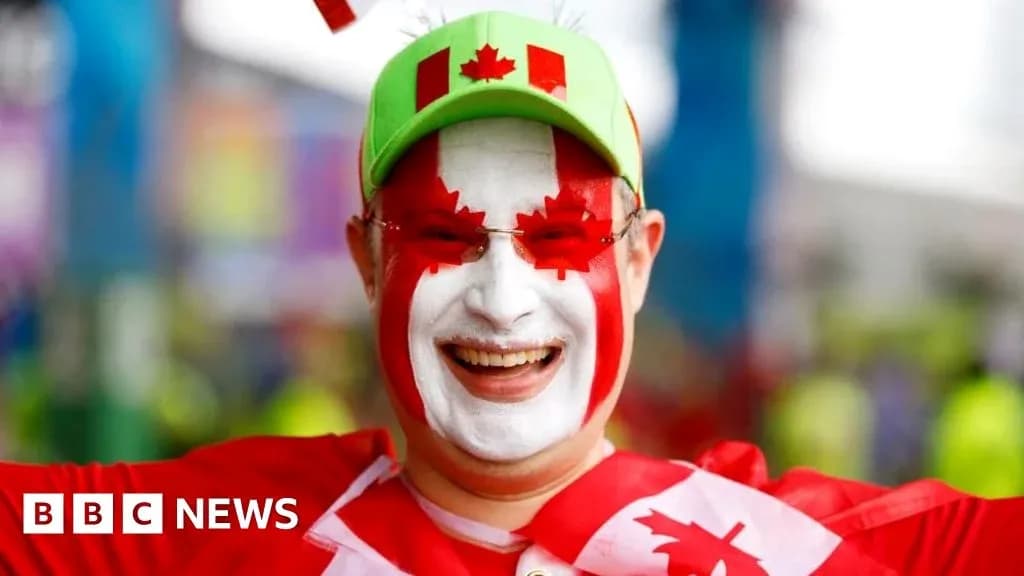
“They shocked everyone,” fan Matt Lorincz said in Calgary, and he wasn’t overstating it.
In a country where football has always been played but rarely prioritised, Les Rouges finally demanded attention. Hockey still rules the national psyche, while Major League Baseball and NBA franchises soak up the big-market energy. Soccer, despite being the most-played sport, has often lived in the shadows.
This tournament dragged it into the light.
“Most people you talk to watch, like, hockey or other sports,” Lorincz said. “There’s not a lot of – or as many – soccer fans in Canada. So hopefully there may be a few more of those.”
For a few weeks in June and July, that hope felt real.
A Host Nation Steps Out of the Background
Canada shared this World Cup with the US and Mexico, yet often felt like the quiet partner in a noisy trio. The US had the bulk of the fixtures and the political spotlight. Mexico brought its traditional football fervour. Canada had to fight to be seen.
On Tuesday in Vancouver, that shared hosting stint ended with Switzerland beating Colombia in the round of 16. A tidy, entertaining match, but for Canadian fans it also marked the end of their own whirlwind as hosts.
Toronto had already lived its moments. Sound spilled out of bars into the streets, matches echoing between downtown towers as fans marched in colour and noise toward Toronto Stadium. On the west coast, Vancouver had its own catharsis when Canada crushed Qatar 6-0, a scoreline that sounded like a statement.
Only one thing muted the celebrations that night: Ismaël Koné, the star midfielder at the heart of this new-look Canada, leaving the pitch on a stretcher with a broken leg after a heavy tackle. The win roared; the sight of Koné silenced. It was a reminder that progress always comes at a cost.
Still, the country leaned in. The so-called forgotten host found its voice.
Carney in the Dressing Room, a Nation in the Spotlight
Prime Minister Mark Carney has never hidden his love of sport, or his fondness for a jersey. In this World Cup, he became something else: the most visible political figure among the three host nations.
He was the only leader of the trio to show up in stadiums. After the 6-0 win over Qatar in Vancouver, he headed straight into the dressing room.
“You showed a level of character that some people never achieve in their life,” Carney told the players. “And you showed it when a good part of the country and the world is watching.”
The message was clear: this was about more than a scoreline.
Sports minister Adam van Koeverden framed it in broader terms, calling Canada “a middle power” that was “growing up a little bit” on the global stage. Hosting the world’s biggest sporting event, he said, had been “a sincere privilege that we have not taken lightly”.
The original bid, as John Kristick remembers it, carried a simple promise: one continent, three countries. Kristick, now with Playfly Sports Consulting and formerly the executive director of the United Bid Committee, feels that ideal has blurred.
He believes the US has inevitably stolen much of the limelight, helped by the political theatre of the Trump era and the sheer volume of matches on American soil. For Canada and Mexico, breaking through as co-hosts has been harder.
Yet inside Canada’s borders, the picture looks different.
“Every Canadian knows Canada is hosting it,” Kristick said, “and I think there’s been a great deal of national pride.”
Toronto and Vancouver staged 13 of the tournament’s 104 matches. Not the majority, but enough to leave an imprint.
Full Bars, Full Hotels – and a Big Bill
On the ground, the World Cup felt like an economic jolt.
Ian Tostenson, head of the British Columbia Restaurant and Foodservices Association, called being in a host city a crash course in “the enormity of the World Cup”. People poured into venues, stayed for multiple games, and kept ordering. Alcohol sales alone, he said, were up about 5% on last year.
“It raised the spirits of the entire province,” Tostenson said. “I think the whole conversation [for the] last four weeks had been about soccer.”
Canada’s wider economy may be in choppy waters, but the tournament offered a lesson.
“You learn that if you give people a real reason to spend their money and give them value, they’ll spend it,” he said.
That doesn’t erase the controversy over cost. Co-hosting came with a hefty price tag: an estimated C$1.1bn to get Canada World Cup-ready, with Toronto responsible for roughly C$380m of that.
City Councillor Josh Matlow has been blunt. With municipal finances already stretched, he simply doesn’t see the return.
“I don’t think that hosting the games made the city’s situation any better,” he said.
Van Koeverden pushed back, calling the spending “prudent” and arguing that the money cycled back into the economy. From his perspective, “full stadiums, full parks, full restaurants, and full hotels is a nice problem to have in 2026”.
The debate over value will linger long after the final whistle. But for visitors, the verdict on Canada as a host has been kinder.
A ‘Forgotten’ Host That Felt Like Home
Portugal manager Roberto Martinez, speaking after his team’s win over Croatia, offered an image that resonated with traditionalists. Toronto Stadium, the smallest of the World Cup venues and bolstered with temporary seating, reminded him of “old-fashioned Premier League grounds”.
He called the atmosphere “an incredible spectacle for football”.
Fans arriving from abroad found something similar. Gudmund Agotnes, in from Norway for three games in Toronto, described himself as “lucky with the draw”. The temporary stands gave him what he called a “bird’s eye view” of both the pitch and the city skyline. His verdict on the stadium experience was simple: “pretty cool”.
Canada might have been overshadowed in the global narrative, but inside those grounds and in the streets around them, the country felt anything but peripheral.
A Nation Watches – in Record Numbers
If there was any doubt about how deeply this World Cup cut through, the television numbers erased it.
Fifa said more than a million fans attended the first 16 games across the three host countries. By the end of the group stage, the tournament was on pace to surpass the all-time cumulative attendance record of 3.5 million set in 1994. With an expanded format, those figures were always likely, but they still underline the scale.
In Canada, the real shock came via the remote control.
The round-of-16 clash with Morocco on 4 July drew a peak of 11.7 million unique viewers, according to host broadcaster Bell Media. That made it the biggest non-final World Cup audience ever recorded in the country.
For context, 9.8 million Canadians tuned into the opening of the NHL season last October. Hockey, the immovable giant, suddenly had company.
Bell Media reported that round-of-32 matches averaged 1.9 million Canadian viewers. Hockey Night in Canada, a weekly institution, averages about 1.2 million. For once, the beautiful game outdrew the frozen one.
The numbers don’t mean hockey’s throne is under immediate threat. They do show that, when the stakes rise and the shirts are red, Canada will show up for football.
From Grassroots Passion to a Real Football Nation?
Canada’s football culture isn’t new. It’s just rarely been this visible.
The country has long had professional anchors in the game. Vancouver Whitecaps, founded in 1973, and Toronto FC, launched 32 years later, both compete in MLS. Recreational leagues are packed. Pitches are busy on summer evenings across the country.
The problem has always been the next step: converting that broad base into consistent elite performance, especially on the men’s side. While the women’s national team sits ninth in the Fifa rankings and has built a reputation for excellence, the men have spent decades chasing relevance.
This World Cup changed the tone of that chase.
Canada Soccer, the national governing body, moved quickly to capitalise on the surge. A fundraising drive launched before the tournament hit its C$25m target months ahead of schedule, a rare case of sporting optimism turning into hard cash at speed.
For the fans, though, the numbers and governance talk sit in the background. What mattered was the feeling.
Les Rouges went toe-to-toe with the world and stayed there longer than anyone expected. Bars in Calgary, Toronto, Vancouver and beyond filled with strangers who suddenly felt like a single crowd.
“It brought a lot of people together in a very kind of segregated world that we’re living in,” said Zeileen Reardon, watching the Morocco game in a Calgary bar. “So, I think it actually showed the world that we can come together, even for a game.”
The “forgotten host” label will fade now. The bill for hosting will be argued over. The stadiums will be reconfigured, the temporary stands dismantled, the visiting fans gone.
What remains is harder to measure but impossible to ignore: a men’s national team that finally looks like it belongs on this stage, and a country that, for a fleeting summer, chose football as its shared language.
The real question is whether Canada lets that feeling slip away—or builds a football nation around it.