Burnley vs Aston Villa: A Tactical Analysis of the 2-2 Draw
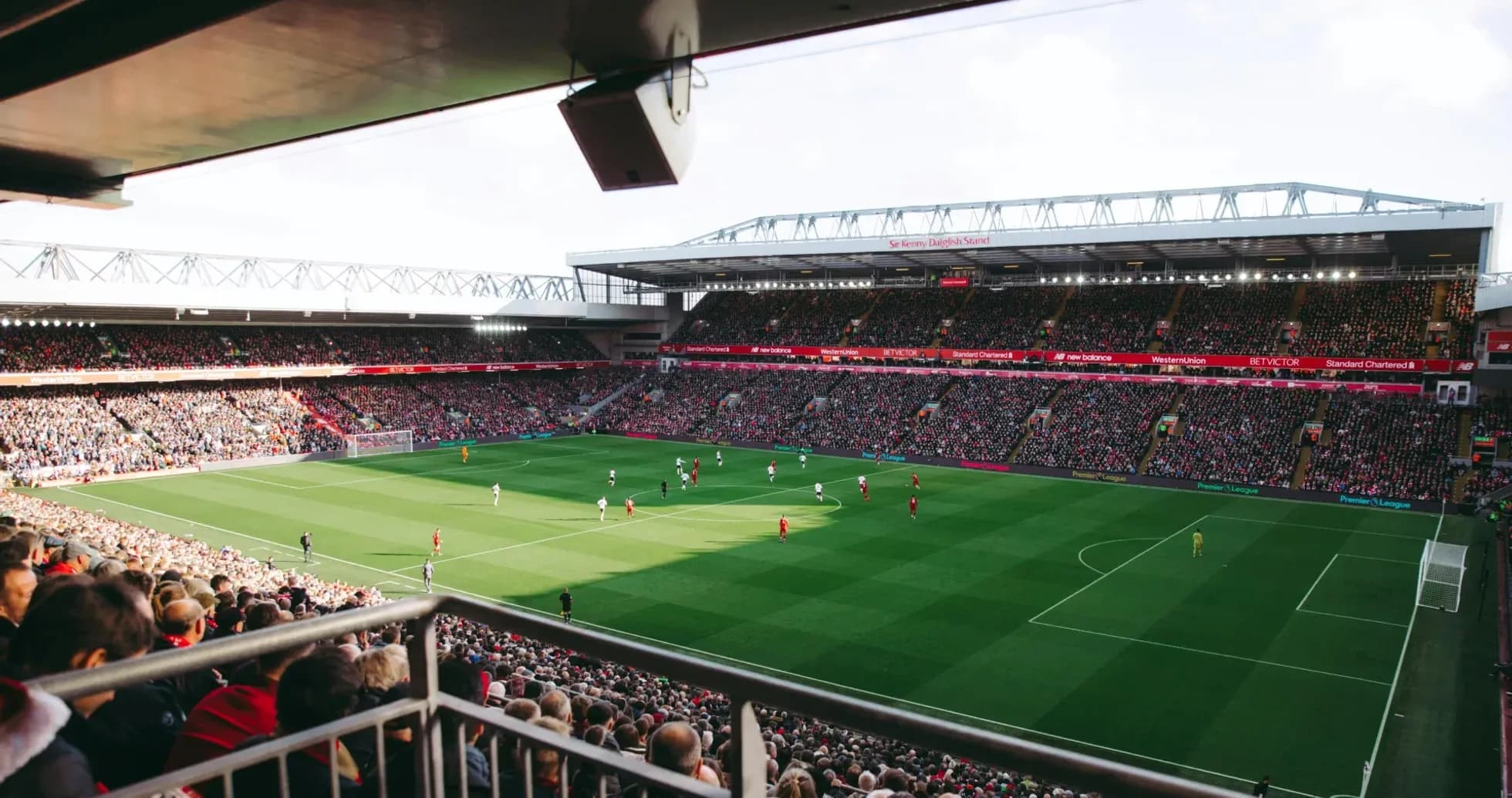
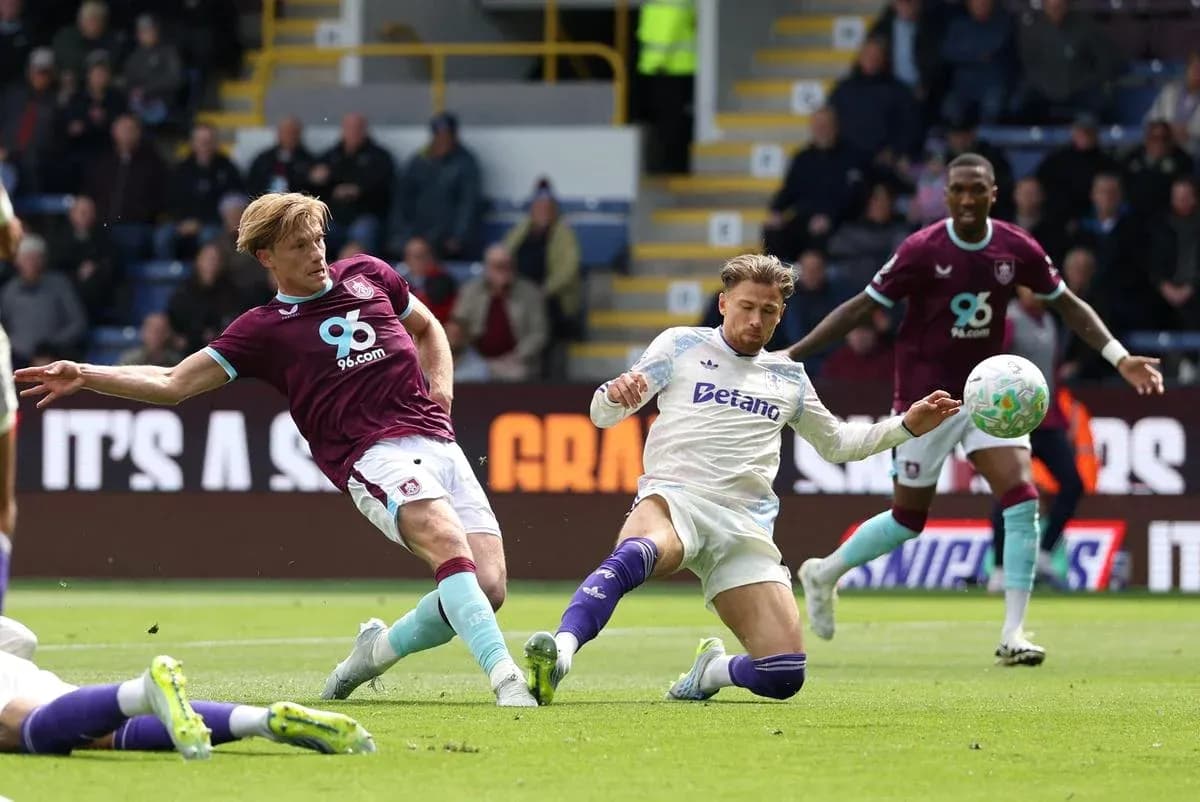
Turf Moor felt like a study in contrasts: a relegation-threatened Burnley clinging to Premier League life, and an Aston Villa side chasing Europe. Following this result, the table underlines that divide. Burnley remain 19th with 21 points from 36 matches, their overall goal difference at -36, built from 37 goals scored and 73 conceded. Aston Villa, by contrast, sit 5th on 59 points, with a far healthier overall goal difference of 4 from 50 goals for and 46 against.
Yet the 2-2 draw on the day told a more nuanced story. Both managers leaned into a shared structural language: 4-2-3-1 against 4-2-3-1, two mirrored shapes layered over very different seasonal identities.
Burnley’s Structure
Mike Jackson’s Burnley leaned into familiarity. The 4-2-3-1 has been his most-used structure this campaign, with the team deploying it 11 times overall, and it framed this performance too. M. Weiss anchored the side in goal, shielded by a back four of K. Walker, A. Tuanzebe, M. Esteve and Lucas Pires. Ahead of them, the double pivot of Florentino and L. Ugochukwu was built to compress the middle third and protect a defence that, overall, has shipped 2.0 goals per game and 1.6 at home.
Further forward, the trio of L. Tchaouna, H. Mejbri and J. Anthony operated behind Z. Flemming, Burnley’s key attacking reference. Flemming’s season has been one of individual defiance against collective struggle: 10 league goals overall from midfield, 37 shots with 20 on target, and a willingness to carry the fight in duels (251 contested, 102 won). His presence as a nominal “9” gave Burnley an attacking focal point who could drop into pockets, link play and threaten from range.
Aston Villa’s Response
Unai Emery’s Aston Villa answered with their own well-drilled 4-2-3-1, a shape they have used 32 times overall this season. E. Martinez started behind a back four of M. Cash, E. Konsa, T. Mings and I. Maatsen, a line that has underpinned an away record of 22 goals scored and 26 conceded on their travels, an average of 1.22 goals for and 1.44 against away from home.
In midfield, V. Lindelof and Y. Tielemans formed the double pivot, with J. McGinn, R. Barkley and M. Rogers supporting O. Watkins. That trio behind the striker is Villa’s creative engine, but Rogers is the standout. Across the season he has produced 9 goals and 5 assists overall, with 43 key passes and 117 dribble attempts (41 successful). He is both Villa’s top assister and one of their primary ball-carriers, the conduit between build-up and final third incision.
Tactical Constraints
The absentees added a layer of tactical constraint. Burnley were without J. Beyer, J. Cullen and C. Roberts, all listed as missing with muscle or knee issues. That stripped Jackson of a natural right-back alternative to Walker and a midfield metronome in Cullen. The result was a heavy load on Florentino and Ugochukwu to manage transitions and shield the centre-backs.
Villa’s missing list was equally significant in profile if not in volume: Alysson, B. Kamara and A. Onana all sidelined. Kamara’s absence in particular removed a natural ball-winning screen, nudging Emery towards a more technical double pivot in Lindelof and Tielemans. It made Villa smoother in possession but slightly more vulnerable to Burnley’s vertical surges through Mejbri and Tchaouna.
Discipline and Emotional Control
Discipline and emotional control have been subplots all season. Burnley’s yellow card profile shows a tendency to flare early and late: 19.67% of their yellows arrive between 16-30 minutes, and another 19.67% between 76-90, with a further 16.39% from 31-45. Red cards are scattered but telling: 33.33% between 31-45, 33.33% between 76-90 and 33.33% between 91-105. That volatility is personified by players like J. Laurent, who has 1 red and 7 yellows overall, and by K. Walker, whose 9 yellow cards overall make him one of the division’s more frequently booked defenders.
Villa’s bookings tell a different story. Their yellow card peak comes between 46-60 minutes, where 29.09% of their cautions land, with another 18.18% between 91-105. They often start controlled, then tighten the screw after half-time. There is just a single red card overall, arriving between 61-75 minutes, suggesting that while they can overstep in the game’s physical heart, they generally maintain numerical stability.
Individual Duels
Within this tactical canvas, the individual duels defined the narrative. The “Hunter vs Shield” battle centred on O. Watkins against Burnley’s fragile defensive record. Watkins has 12 league goals overall, built on 51 shots (31 on target) and a relentless work-rate: 271 duels contested, 108 won. Up against a Burnley back line that has conceded 73 goals overall, including 28 at home, he represented a constant vertical threat. His movement between Walker and Tuanzebe, and his capacity to drag centre-backs into wide areas, repeatedly tested Burnley’s compactness.
At the other end, Flemming carried Burnley’s punch into a Villa defence that, while solid in structure, still concedes 1.3 goals per game overall. His 5 blocked shots across the season underline his willingness to work backwards too, but here he was primarily the spearhead, exploiting any hesitation between Konsa and Mings.
Engine Room Duel
The “Engine Room” duel was equally compelling: Rogers and Tielemans against Florentino and Ugochukwu. Rogers, with his blend of dribbling and final ball, repeatedly tried to drag Burnley’s double pivot out of shape. Tielemans, with his passing range, looked to hit early diagonals towards McGinn and M. Cash. Florentino and Ugochukwu responded by narrowing the central lanes, forcing Villa wider and trying to funnel them into crossing zones that suited Tuanzebe and Esteve’s aerial strengths.
On the flanks, Walker’s duel with Rogers and Maatsen was a tactical hinge. Walker’s season numbers – 53 tackles, 10 blocked shots and 43 interceptions overall – speak to his defensive reading, but his 9 yellow cards also hint at the fine line he walks. Against a dribbler as aggressive as Rogers, every 1v1 carried both opportunity and jeopardy.
Statistical Prognosis
From a statistical prognosis standpoint, the 2-2 draw sits somewhere between Burnley’s desperation and Villa’s underlying superiority. Heading into this game, Burnley were averaging 1.0 goals scored and 2.0 conceded overall, while Villa were at 1.4 scored and 1.3 conceded. A balanced xG landscape would likely have reflected Villa’s greater territorial control and shot volume, against Burnley’s more sporadic but high-intensity surges.
Following this result, Burnley’s survival hopes remain faint, but the performance hinted at a side still emotionally alive. Villa, meanwhile, will view the dropped points through the prism of a European chase, but the structural solidity of their 4-2-3-1, the enduring threat of Watkins, and the creative influence of Rogers all suggest that, in xG terms and in tactical coherence, they remain a side more often on the right side of the margins than not.