Burnley 2–2 Aston Villa: Match Analysis and Tactical Insights
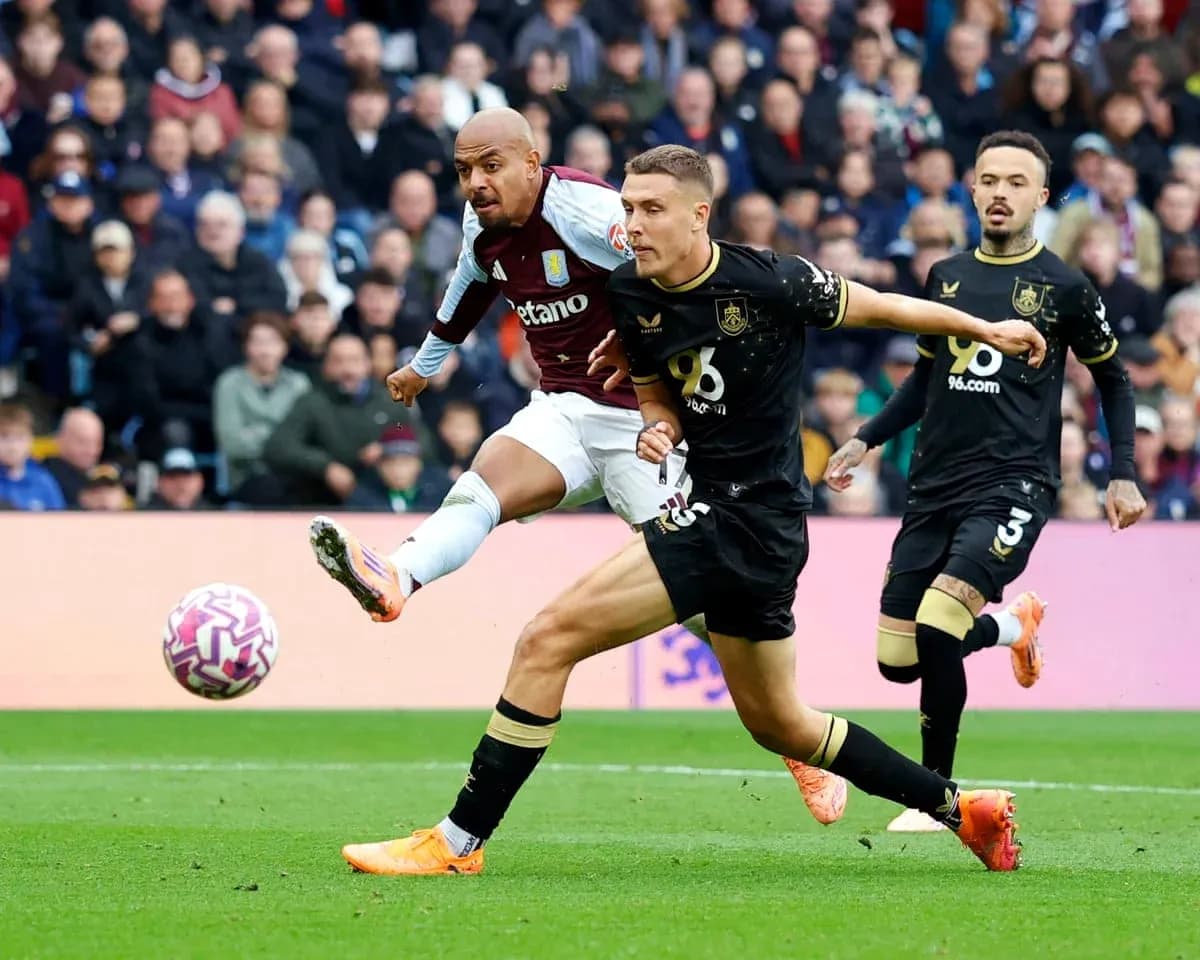
Burnley 2–2 Aston Villa at Turf Moor, a result that keeps Burnley marooned in the relegation places while slightly stalling Aston Villa’s push for the Champions League spots. Burnley’s fightback from 1–2 down earns them a point that marginally improves their survival chances but leaves them still deep in trouble, while Villa lose ground in the race for the top four by failing to turn territorial dominance into three points.
Burnley struck early on eight minutes when Jaidon Anthony produced a solo effort, finishing without an assist to give the hosts a 1–0 lead. Aston Villa thought they had levelled in the 39th minute, only for Ollie Watkins’ strike to be ruled out by VAR for offside, a first warning that Villa were beginning to stretch Burnley’s back line.
The pressure finally told on 42 minutes. John McGinn found space between the lines and slipped a pass into Ross Barkley, who finished clinically to make it 1–1, McGinn credited with the assist. Early in the second half, the game tilted further Villa’s way. In the 49th minute Tyrone Mings went into the book for roughing, but that did not disrupt Villa’s momentum.
On 56 minutes, Aston Villa completed the turnaround in unusual fashion: goalkeeper Emiliano Martínez launched a direct ball that released Ollie Watkins, who finished to put Villa 2–1 up, with Martínez officially registering the assist. Burnley responded almost immediately. Just two minutes later, in the 58th minute, Zian Flemming restored parity to 2–2, converting after being set up by Hannibal Mejbri.
Flemming’s evening took a sour turn on 60 minutes when he was booked for roughing, underlining the increasingly scrappy nature of the contest as Burnley tried to disrupt Villa’s rhythm.
Mike Jackson made his first change on 69 minutes, seeking more presence up front as Lyle Foster replaced Hannibal Mejbri. Unai Emery responded with a double substitution in the 74th minute: Lucas Digne replaced Ian Maatsen at left-back, while Emiliano Buendía came on for Victor Lindelöf to add creativity from midfield.
Burnley freshened their midfield and attack in the 79th minute. Josh Laurent replaced Lesley Ugochukwu, and Zeki Amdouni came on for the booked Zian Flemming, who had scored Burnley’s second. Villa then adjusted their own midfield balance on 80 minutes, with Douglas Luiz replacing Ross Barkley and Lamare Bogarde coming on for Matty Cash to add energy on the right side. Emery’s final attacking tweak arrived on 85 minutes, when Leon Bailey replaced John McGinn to inject pace in the closing stages.
Burnley’s last roll of the dice came on 87 minutes with a double change: Jacob Bruun Larsen replaced Jaidon Anthony on the flank, and James Ward-Prowse came on for Florentino Luís to provide set-piece quality and fresh legs in central midfield. Despite both managers’ late adjustments, neither side could find a decisive goal and the match finished level.
Fixture Statistics & Tactical Audit
- xG (Expected Goals): Burnley 1.77 vs Aston Villa 1.42
- Possession: Burnley 34% vs Aston Villa 66%
- Shots on Target: Burnley 6 vs Aston Villa 7
- Goalkeeper Saves: Burnley 5 vs Aston Villa 4
- Blocked Shots: Burnley 5 vs Aston Villa 5
Villa controlled territory and the ball, completing far more passes with greater accuracy (510 passes at 86% vs Burnley’s 255 at 73%) and enjoying two-thirds of possession, which reflects their dominance in the middle third. However, the xG tilt towards Burnley (1.77 vs 1.42) suggests the home side carved out slightly better-quality chances despite seeing far less of the ball, supporting the view that a draw was a fair outcome based on chance quality rather than possession. Burnley’s ability to turn limited territory into high-value opportunities contrasts with Villa’s more sterile control (high possession but lower xG), indicating that Villa’s attacking patterns lacked penetration relative to their dominance.
Standings Update & Seasonal Impact
Burnley started the day 19th on 21 points with a goal difference of -36, having scored 37 and conceded 73. The 2–2 draw adds one point and two goals for and against, moving them to 22 points with 39 goals scored and 75 conceded, a new goal difference of -36 maintained. They remain firmly in the relegation zone, still needing a sequence of wins and favours elsewhere to escape, with time and fixtures running out.
Aston Villa began in 5th place on 59 points, with 50 goals scored and 46 conceded (goal difference +4). The point at Turf Moor lifts them to 60 points, with their goals for rising to 52 and goals against to 48, keeping their goal difference at +4. While they consolidate a strong position in the European places, dropping two points against a relegation-threatened side slightly widens the gap to the teams above them in the title-adjacent and top-four race, increasing the pressure to win their remaining fixtures.
Lineups & Personnel
Burnley Actual XI
- GK: Max Weiss
- DF: Kyle Walker, Axel Tuanzebe, Maxime Estève, Lucas Pires
- MF: Florentino Luís, Lesley Ugochukwu, Loum Tchaouna, Hannibal Mejbri, Jaidon Anthony
- FW: Zian Flemming
Aston Villa Actual XI
- GK: Emiliano Martínez
- DF: Matty Cash, Ezri Konsa, Tyrone Mings, Ian Maatsen
- MF: Victor Lindelöf, Youri Tielemans, John McGinn, Ross Barkley, Morgan Rogers
- FW: Ollie Watkins
Expert's Post-Match Verdict
Mike Jackson’s Burnley executed a compact, counter-punching plan that prioritised shot quality over volume, reflected in their superior xG despite limited possession (1.77 xG from 34% of the ball). Their transitions were sharp, with Anthony and Flemming both capitalising when Burnley managed to break Villa’s first line of pressure, illustrating efficient chance creation relative to their time on the ball (6 shots on target from 15 total shots). Defensively, however, they still allowed Villa 18 shots and 7 on target, underlining why their goals-against column remains so high.
Unai Emery’s Villa controlled the game territorially and in possession (66% and 510 passes at 86%), but this was a case of sterile dominance (lower xG at 1.42 despite more shots). Their structure in a 4-2-3-1 gave them control in midfield, yet too much of their play was in front of Burnley’s block, and they were overly reliant on moments of individual quality from Barkley and Watkins. Conceding twice from relatively few Burnley attacks points to a defensive softness and lack of control in transition, a concern for a side chasing Champions League qualification. Overall, the draw reflects Villa’s inability to translate control into clear chances and Burnley’s resilience and efficiency in the key moments.