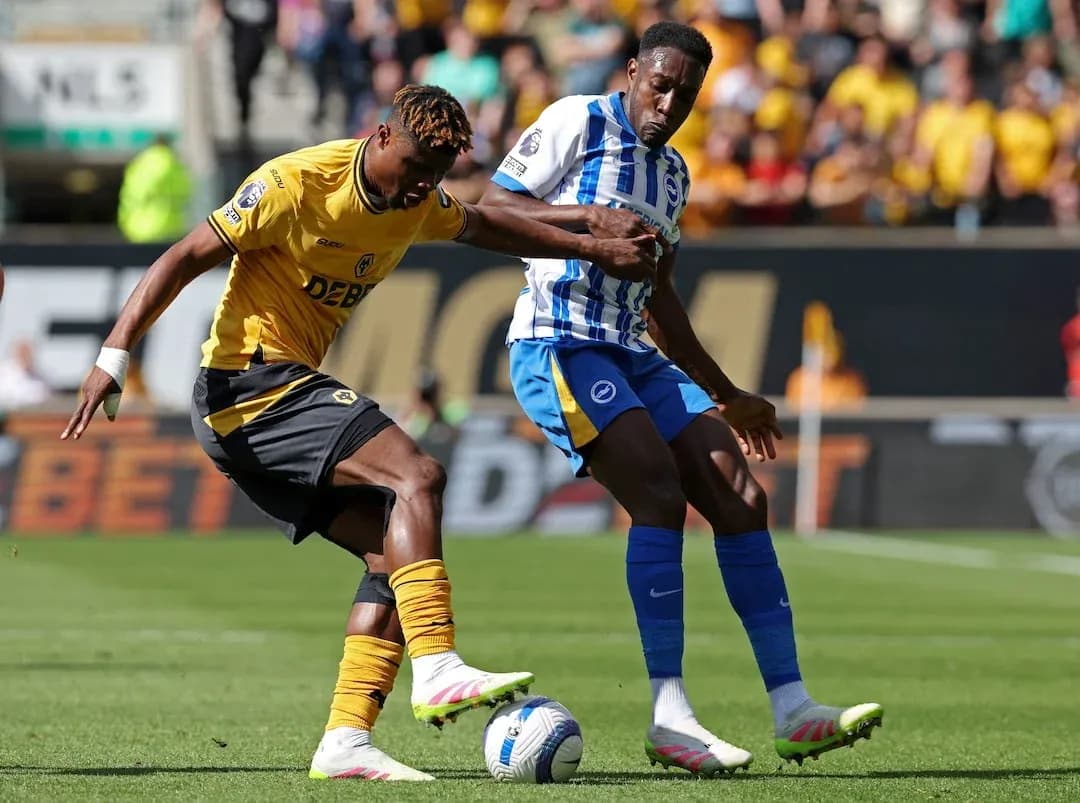
Brighton vs Wolves: Premier League Clash on 9 May 2026
Relegation fear meets European ambition on the south coast as Brighton host Wolves at Amex Stadium in Brighton on 9 May 2026, with the Premier League table stretching the stakes in opposite directions. Brighton, comfortably in the top half, are pushing to turn a solid campaign into something memorable, while bottom‑placed Wolves arrive knowing every point could be the difference between survival and a drop that their numbers currently make look inevitable.
Season Context
Brighton come into this match eighth in the Premier League with 50 points from 35 games, built on a positive goal difference (49 scored, 42 conceded). Their overall record is balanced (13 wins, 11 draws, 11 defeats), and the Amex has been a real asset: at home they have 8 wins, 6 draws and just 3 losses with 27 goals scored and 17 conceded. With three games left, they are playing for a strong top‑half finish and the outside chance of climbing higher if those above them slip.
Wolves sit 20th with 18 points from 35 matches, the numbers of a team in deep trouble (25 goals for, 63 against, a goal difference of -38). They have only 3 wins all year and none away from home, where their record reads 0 wins, 5 draws and 12 defeats with just 7 goals scored and 30 conceded. Officially marked in the table as in “Relegation - Championship”, they arrive on the south coast knowing that anything less than a result would push them even closer to the trapdoor.
Form & Momentum
Brighton’s recent league form line of LWDWW paints the picture of a side finishing strongly (10 points from their last 5, with 3 wins). That late push aligns with their broader statistical profile as a team that scores regularly (49 league goals) and has tightened up enough at home (only 17 conceded there) to turn performances into results.
Wolves’ form string of DLLLD underlines a side struggling badly (no wins and just 2 points from their last 5). The wider context is even bleaker: only 3 wins in 35 and 63 goals conceded speak to a team repeatedly exposed defensively and unable to respond at the other end (25 goals scored).
Head-to-Head Patterns
Recent meetings suggest Wolves rarely get blown away in this fixture, but Brighton have generally held the upper hand. At Molineux Stadium, the sides shared a 1-1 draw in the Premier League on 5 October 2025, a tight contest that reflected Wolves’ capacity to cling on at home. Earlier in the calendar, Brighton had travelled to the same ground and won 2-0 in the Premier League on 10 May 2025, showing their ability to control Wolves away from home. On the south coast, the most recent league meeting at American Express Stadium ended 2-2 in the Premier League on 26 October 2024, a reminder that Wolves can still trouble Brighton when the game opens up.
Tactical Preview
Brighton’s identity this year has been built on a flexible but possession‑minded structure, most commonly a 4-2-3-1 used in 30 league games, with occasional switches to 4-3-3 (4 games) and 3-4-2-1 (1 game). That main shape underpins a side that averages 1.4 goals per match overall and 1.6 at home, while keeping things relatively secure at the back with just 42 conceded. The numbers point to a team comfortable controlling territory and tempo: they have 9 clean sheets and have failed to score only 7 times, a strong base for a side expected to dominate a struggling opponent.
Personnel-wise, Brighton have a spine capable of dictating the game. In defence, L. Dunk has been a calm distributor and organiser (2,214 passes with 92% accuracy and 10 yellow cards showing how often he steps into challenges), while J. van Hecke adds both aggression and end‑product (3 goals, 3 assists, 51 tackles and 37 interceptions). In midfield, D. Gómez combines bite and thrust (5 goals, 1 assist, 77 tackles, 314 duels with 156 won), giving Brighton a box‑to‑box presence who can break up Wolves counters and arrive late around the box. Up front, D. Welbeck remains the reference point, with 13 league goals and 1 assist from 34 appearances, supported by 25 shots on target from 43 attempts; his movement between centre-backs could be decisive against a defence that has often been stretched.
Wolves, by contrast, have leaned heavily on back‑three systems in search of defensive stability, most often 3-4-2-1 (10 games) and 3-5-2 (9 games), with 3-4-3 (5 games) also used. When they have shifted, it has usually been to similarly conservative shapes like 5-3-2 (3 games) or more cautious three‑man midfields such as 3-5-1-1 (2 games). Yet despite that, they concede 1.8 goals per match on average and have only 4 clean sheets, indicating that their structural tweaks have not been enough to plug the gaps. Going forward, their 0.7 goals per game, and especially 0.4 away from home, show how little threat they have posed in transition or sustained possession.
Individually, Wolves do have combative midfielders who could disrupt Brighton’s rhythm. Joã o Gomes has racked up 100 tackles and 33 interceptions, alongside 417 duels with 213 won and 10 yellow cards, embodying their attempt to press and harry in the middle. Andr é offers a slightly more controlled presence (91% pass accuracy from 1,228 passes, plus 75 tackles and 27 interceptions), suggesting Wolves will try to crowd central zones and break Brighton’s build‑up there. At the back, Y. Mosquera has been aggressive in duels (140 won from 242) but also ill‑disciplined (11 yellow cards), while Toti Gomes brings physicality and aerial presence yet has one red card, underlining the risk of defensive indiscipline if Brighton’s attackers are constantly running at them.
Given Brighton’s comfort in a 4-2-3-1 and Wolves’ tendency towards a back three, the tactical battle is likely to hinge on how well Wolves’ wing‑backs can cope with Brighton’s wide players and overlapping full‑backs. Brighton’s ability to spread the pitch and create overloads, combined with their strong late‑game scoring profile in the league data, suggests they will try to move Wolves from side to side and wear them down. Wolves, with only 7 away goals all year, are likely to sit deep, compress central areas through Joã o Gomes and Andr é, and hope to steal something from set‑pieces or rare counters led by the likes of Hwang Hee-Chan or A. Armstrong from the attacking list.
Statistical Snapshot
- Competition: Premier League, season 2025 — 9 May 2026.
- Venue: Amex Stadium, Brighton.
- Prediction: Win or draw — Double chance : Brighton or draw.
- Win Probabilities: Home 45% / Draw 45% / Away 10%.
- Model: Brighton 71.5% — Wolves 28.5%.
Betting Verdict
The markets are firmly behind Brighton, with home win prices clustered around 1.25–1.31, draws around 5.5–6.2 and an away upset out at roughly 9.0–11.0. That aligns with both the prediction model, which heavily favours Brighton in the overall comparison (71.5% to 28.5%), and the form lines of LWDWW against DLLLD. Head‑to‑head meetings have been relatively competitive, but Brighton’s recent 2-0 win at Molineux in May 2025 and Wolves’ chronic away issues (0 wins, 12 losses on the road) make the “Double chance : Brighton or draw” recommendation a conservative but well‑supported angle. For those seeking value, the combination of Brighton’s strong home attack and Wolves’ fragile defence suggests any pro‑Brighton outcome is statistically justified, with the main risk factor being a late Wolves rearguard effort similar to the 1-1 draw in October 2025.