Brighton vs Wolves: Premier League Late-Season Showdown
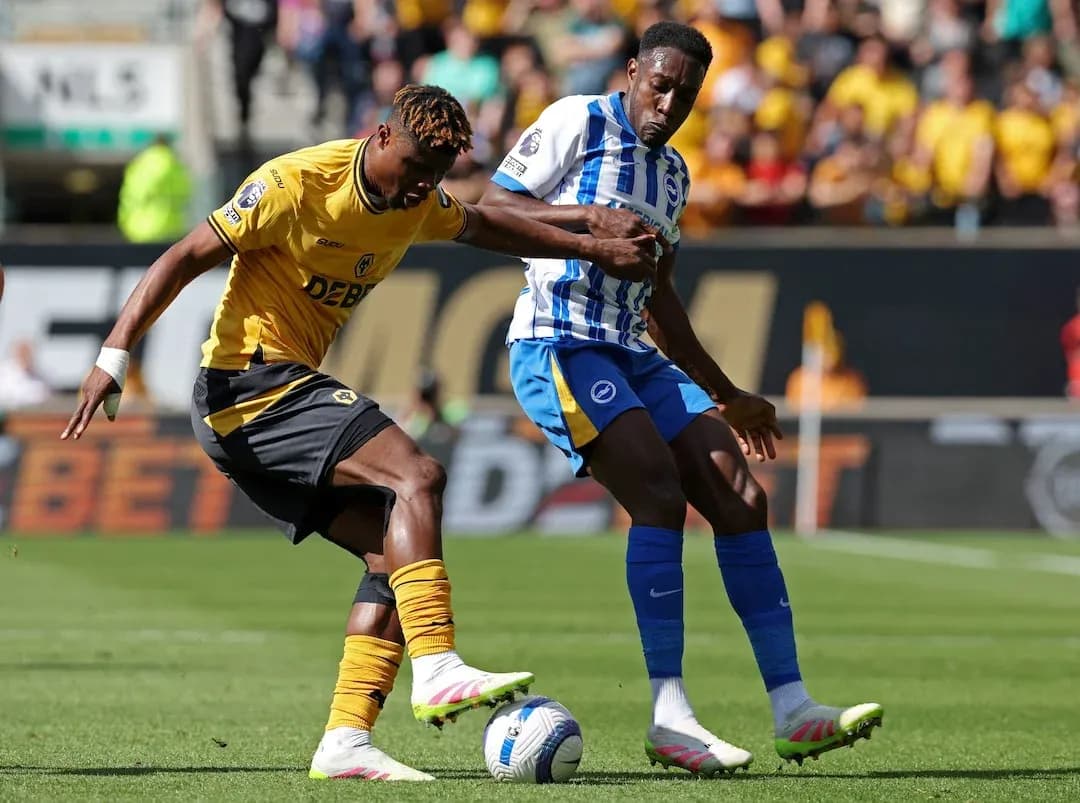
Brighton vs Wolves at the Amex Stadium in May 2026 is a late-season Premier League fixture in Regular Season - 36 with very different stakes: Brighton sit 8th with 50 points and a +7 goal difference in the league phase (49 scored, 42 conceded), pushing for a strong top-half finish and an outside European argument, while Wolves are 20th on 18 points with a -38 goal difference (25 for, 63 against) and officially in the relegation zone. For Wolves, this is essentially a must-win survival lifeline; for Brighton, it is a high-leverage opportunity to lock in a top-10 finish and keep upward pressure on the teams above.
Head-to-Head Tactical Summary
The recent head-to-head pattern between these sides has been tight and tactically varied across venues and competitions. On 5 October 2025 at Molineux Stadium in the Premier League, Wolves drew 1-1 at home with Brighton, having led 1-0 at half-time before being pegged back to a share of the points. On 10 May 2025, also at Molineux in the Premier League, Brighton recorded a 2-0 away win; they were 1-0 up at half-time and managed the game efficiently to close out a clean sheet. Going back to 26 October 2024 at the American Express Stadium in league action, Brighton and Wolves shared a 2-2 draw, with Brighton leading 1-0 at half-time before Wolves found a way back.
In cup competitions, Brighton have edged the margins at home while Wolves have nicked a key result at Molineux. On 18 September 2024 in the League Cup 3rd Round at the American Express Stadium, Brighton beat Wolves 3-2, having led 2-1 at half-time in a more open, transition-heavy contest. Earlier in the year, on 28 February 2024 in the FA Cup 5th Round at Molineux, Wolves won 1-0, leading 1-0 at half-time and then protecting that advantage. Overall, the recent head-to-head record shows Brighton slightly more productive in home fixtures and cup ties, while Wolves have shown they can frustrate Brighton in knockout and league matches at Molineux.
Global Season Picture
- League Phase Performance: In the league phase, Brighton’s profile is that of a balanced, upper-mid-table side: 8th place with 50 points from 35 matches, scoring 49 and conceding 42 (goal difference +7). Their home record is a key pillar: 8 wins, 6 draws, 3 losses at the Amex, with 27 goals for and 17 against. Wolves, by contrast, have been one of the league’s weakest sides: 20th with 18 points from 35 games, just 3 wins, 9 draws and 23 losses, scoring 25 and conceding 63 (goal difference -38). Away from home they have yet to win in the league phase, with 0 wins, 5 draws and 12 losses, scoring only 7 and conceding 30.
- All-Competition Metrics: Across all phases of the competition, Brighton’s numbers mirror their league-phase balance but confirm a relatively efficient attack and controlled defense: 49 goals scored and 42 conceded over 35 fixtures, averaging 1.4 goals for and 1.2 against per match. They have 9 clean sheets and have failed to score 7 times, with their most used formations being 4-2-3-1 (30 matches) and 4-3-3 (4 matches), underlining a consistent possession-based structure. Their card distribution shows a concentration of yellow cards in the 46-60 minute window (24 yellows, 28.24%), hinting at an aggressive press early in second halves. Wolves, across all phases, average only 0.7 goals scored and 1.8 conceded per match, with just 25 goals for and 63 against in 35 fixtures. They have 4 clean sheets but have failed to score in 18 matches, underlining a blunt attack and exposed defense. Their tactical setup has been unstable, rotating through multiple back-three and back-four systems (3-4-2-1, 3-5-2, 3-4-3, 4-3-3, 5-3-2 and others), a sign of searching for solutions rather than refining a settled model. Their yellow cards also spike between 46-60 minutes (21 yellows, 28.00%), suggesting a tendency to become stretched and reactive after the interval.
- Form Trajectory: In the league phase, Brighton’s recent form string “LWDWW” indicates an upward trajectory: 3 wins, 1 draw and 1 loss in their last 5, which is consistent with a side finishing the campaign strongly and maintaining attacking confidence. Wolves’ form “DLLLD” in the league phase reveals a continued slide: 0 wins in their last 5, with 3 losses and 2 draws, reinforcing a pattern of failing to convert performances into victories and struggling to find late-season momentum. This contrast in trajectories magnifies the pressure on Wolves and enhances Brighton’s status as clear favourites at home.
Tactical Efficiency
Across all phases of the competition, Brighton’s attacking efficiency is supported by their goal averages and structural consistency. Averaging 1.4 goals per match with a highest home win of 3-0 and a top away win of 1-3, they show a capable and reasonably clinical attack, especially when operating from their preferred 4-2-3-1. Defensively, conceding 1.2 goals per game with 9 clean sheets indicates a relatively solid back line and midfield screen, even if occasional high-scoring defeats (like 3-4 at home or 4-2 away) show vulnerability when games become stretched.
Wolves’ tactical efficiency is far lower. Averaging just 0.7 goals scored per match and conceding 1.8, they combine a low-output attack with a consistently breached defense. Their inability to score in 18 of 35 fixtures across all phases points to a chronic lack of cutting edge. Defensively, conceding 63 goals, including heavy defeats such as 4-0 away and 0-4 at home, underlines a fragile structure that has not been stabilised despite multiple formation changes. While the comparison block’s attack and defense indices are not explicitly listed in the data, the underlying season metrics clearly place Brighton on the stronger side of both indices and Wolves on the weaker side. Any modelled win/draw/loss probabilities or Poisson-based expectations would heavily favour Brighton’s attack to outperform Wolves’ across 90 minutes, particularly given Wolves’ winless away record in the league phase and low away scoring average (0.4 goals per match).
The Verdict: Seasonal Impact
This fixture’s seasonal impact is asymmetric but significant for both clubs. For Brighton, a home win would likely cement a top-half finish and keep them in contention to climb further, depending on results elsewhere, strengthening their platform heading into 2026 as an established upper-mid-table side with European aspirations. Dropped points, especially at home to the bottom club, would stall that narrative and could leave them vulnerable to being overtaken by rivals in the 8th–10th band.
For Wolves, the stakes are existential. With 18 points and a -38 goal difference in the league phase after 35 games, they are deep in relegation trouble. Failure to win at the Amex would all but confirm their drop to the Championship, either mathematically or practically, given their form and remaining fixtures. A rare away victory would not only provide a late-season lifeline but also potentially shift psychological momentum in the relegation battle, giving them a platform to target an improbable escape in the final two rounds. In strategic terms, this match is closer to a de facto relegation decider for Wolves and a consolidation test for Brighton’s status as a top-half, Europe-chasing club.