Brighton Dominates Wolves in 3–0 Victory at Amex Stadium
Brighton’s 3–0 win over Wolves at the Amex Stadium was a controlled, system-driven dismantling rather than a chaotic shootout. In a Premier League Round 36 fixture, Fabian Hurzeler’s side built a 2–0 lead inside five minutes and then used their 72% possession and 578 passes to suffocate any Wolves response. With an xG of 1.62 against Wolves’ 0.49, the scoreline slightly flattered Brighton in terms of finishing efficiency, but tactically it reflected their dominance: early vertical aggression, wide overloads, and a compact rest-defense that limited Wolves to a single shot on target.
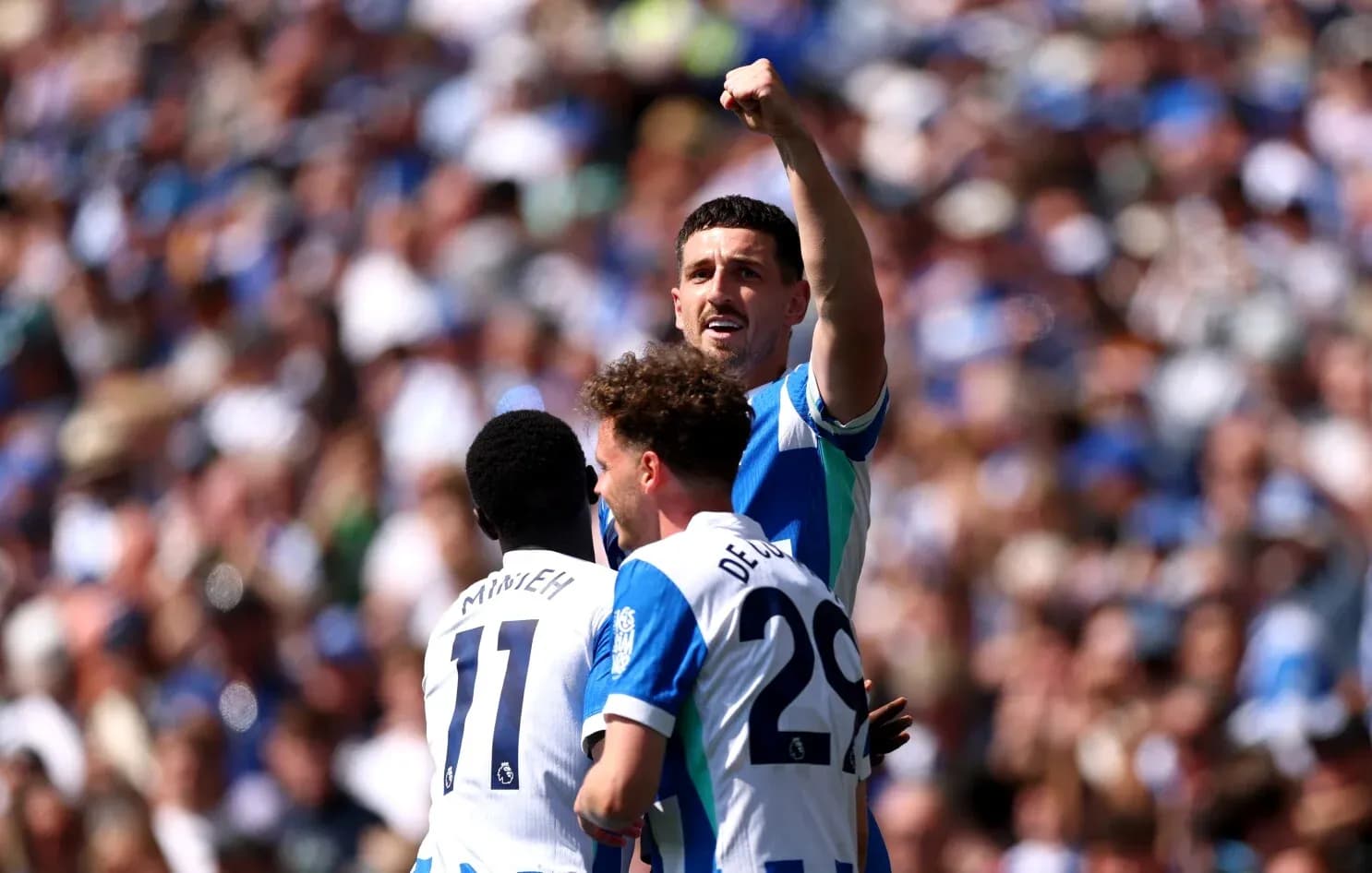
The scoring sequence underlined Brighton’s intent to attack aggressively from the first whistle. At 1', Jack Hinshelwood arrived from midfield to finish a move supplied by left-back Maxim De Cuyper, immediately exploiting Wolves’ unbalanced defensive line. Just four minutes later, at 5', Lewis Dunk doubled the lead, again assisted by De Cuyper, who repeatedly found space on the left to deliver quality service. That 2–0 cushion by the fifth minute allowed Brighton to dictate tempo and structure for the rest of the half.
Discipline
Discipline was relatively clean but important to the game’s rhythm. Card totals were: Brighton: 1, Wolves: 2, Total: 3.
Card log:
- 24' Kaoru Mitoma (Brighton) — Foul
- 49' Hwang Hee-chan (Wolves) — Foul
- 68' André (Wolves) — Foul
Mitoma’s yellow at 24' came as Wolves briefly tried to break in transition; it was one of the few moments Brighton’s rest-defense had to scramble. After the interval, Wolves’ increased physicality showed in Hwang Hee-chan’s caution at 49' and André’s at 68', both for “Foul” as they struggled to disrupt Brighton’s passing patterns.
Substitution Patterns
Substitution patterns reflected contrasting tactical problems. Rob Edwards’ first change came immediately after halftime: at 46', David Møller Wolfe (IN) came on for Hugo Bueno (OUT), a like-for-like defensive adjustment that hinted at dissatisfaction with Wolves’ left side, where De Cuyper and Mitoma had dominated. Later, at 67', he introduced Rodrigo Gomes (IN) for Pedro Lima (OUT) and Jean-Ricner Bellegarde (IN) for Mateus Mané (OUT), attempting to add more dynamism and ball-carrying from deeper positions. The final offensive reshuffle at 89' saw Angel Gomes (IN) for Hwang Hee-chan (OUT) and Tolu Arokodare (IN) for João Gomes (OUT), effectively committing to a more direct, late push that never materialised into chances.
Hurzeler’s substitutions were about energy management and structural preservation rather than problem-solving. At 58', Joël Veltman (IN) replaced the booked Kaoru Mitoma (OUT), a clear risk-management move that also slightly rebalanced the right flank defensively. At 76', Yasin Ayari (IN) came on for Carlos Baleba (OUT) and Georginio Rutter (IN) for Danny Welbeck (OUT), refreshing the midfield pivot and the central forward to maintain pressing intensity. The game was effectively killed at 86', when Yankuba Minteh scored Brighton’s third, finishing a late attack with no listed assist, capping his wide threat with end product. Finally, at 88', Charalampos Kostoulas (IN) replaced Jack Hinshelwood (OUT) and Solly March (IN) replaced Maxim De Cuyper (OUT), preserving key contributors and locking in the structure.
Tactical Analysis
Tactically, Brighton’s dominance began with their build-up and full-back usage. With 578 passes at 86% accuracy versus Wolves’ 225 at 68%, Brighton constructed long, stable possession phases. De Cuyper was central: his two early assists came from advanced left-back positions, exploiting Wolves’ narrow defensive three of Yerson Mosquera, Santiago Bueno, and Toti Gomes. By pushing De Cuyper high and keeping Pascal Groß and Carlos Baleba as stabilisers, Brighton created a 2-3 rest-defense behind their front five, allowing immediate counter-pressing when possession was lost.
On the right, Ferdi Kadıoğlu provided width while Hinshelwood and Minteh rotated between half-space and touchline. Hinshelwood’s 1' goal epitomised this: a late midfield run into the box against a Wolves block not yet settled. Welbeck’s central role was less about finishing and more about pinning centre-backs and offering lay-offs, helping Brighton maintain occupation of Wolves’ last line.
Defensively, Brighton’s structure was efficient. They committed only 9 fouls to Wolves’ 11 and allowed just 5 total shots, only 1 on target. Bart Verbruggen needed just 1 save, a figure consistent with Wolves’ 0.49 xG and highlighting how rarely Wolves reached high-quality shooting zones. Dunk and Jan Paul van Hecke controlled depth, stepping into midfield when needed but rarely being dragged into wide channels thanks to the disciplined positioning of De Cuyper and Kadıoğlu.
Wolves’ Struggles
Wolves’ attacking plan never fully cohered. With only 28% possession and 4 shots off target plus 1 on target, they relied heavily on transitional moments. The front trio of Adam Armstrong, Mateus Mané, and Hwang Hee-chan struggled to receive between lines because André and João Gomes were pressed and screened by Brighton’s midfield. When Wolves did progress, their 1 corner and limited wide combinations showed how rarely they pinned Brighton back. The introduction of Bellegarde and Rodrigo Gomes aimed to add ball-carrying and 1v1 threat, but by that stage Brighton’s 2–0, then 3–0 platform allowed them to drop the tempo and manage space more conservatively.
Statistical Overview
Statistically, Brighton’s 14 total shots (6 on goal) against Wolves’ 5 (1 on goal) and their xG of 1.62 versus 0.49 underline a game where shot volume and chance quality were both in their favour. Both goalkeepers posted identical goals-prevented numbers (0.25), with Verbruggen making 1 save and Daniel Bentley 3, indicating that while Brighton created more, Bentley prevented the scoreline from becoming even heavier. Brighton’s passing and possession superiority translated directly into territorial control and allowed them to keep their Defensive Index (implied by low shots and xG conceded) strong throughout.
In synthesis, Brighton’s win was less about individual brilliance and more about structural clarity: early vertical thrust from wide full-backs, a compact midfield screen, and controlled pressing that denied Wolves any sustained foothold. The 3–0 scoreline and the underlying metrics both point to a side in command of its game model against an opponent forced into reactive, low-yield football.