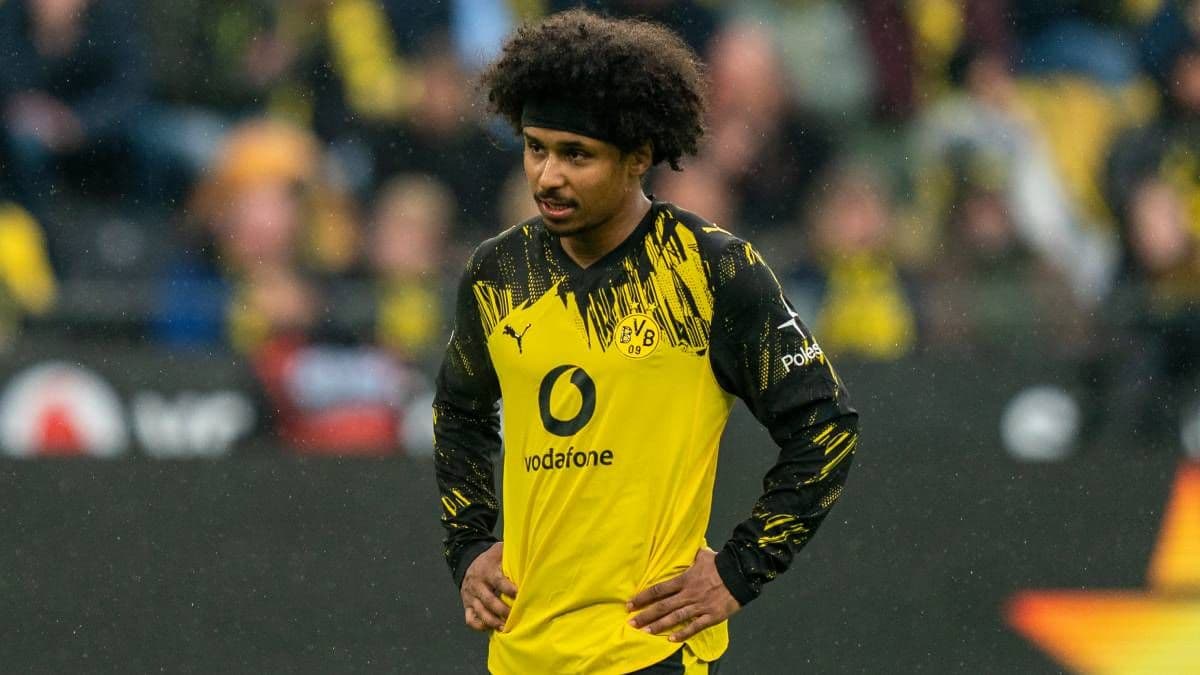
Borussia Dortmund's Season Review: Key Players and Performances
It was a season that never quite settled. Moments of genuine class, long spells of grind, and the nagging feeling that this squad still hasn’t hit its ceiling. Player by player, the story of Borussia Dortmund’s campaign reads like a team permanently on the edge of something bigger – without ever fully grabbing it.
Kobel, the Constant
At the back, Gregor Kobel was the one pillar that never moved.
Across 47 competitive matches, the Swiss keeper conceded 57 goals but still produced 18 clean sheets and more minutes than anyone else in the squad. Numbers that only scratch the surface. Week after week, he bailed Dortmund out with reflex saves that kept fragile leads alive and tight games from slipping away.
His defining night came in Frankfurt in the cup, where he turned the penalty shoot-out into his personal stage. The only blot: a needless pass against Freiburg that triggered Jobe Bellingham’s red card. One misjudgement in a season of authority. Rating: 2.
Defence: A New Boss, Old Questions
Nico Schlotterbeck’s year was a mirror of Dortmund’s: promising, then patchy.
Back from injury in September, the centre-back looked sharp at first, only for his form to sway. He was directly involved in several goals conceded, his uncertainty compounded by speculation over his future. Yet he still finished with a personal-best five goals from 37 matches – a reminder of what he can bring at the other end. Reasonable, but clearly short of his potential. Rating: 3.
While Schlotterbeck drifted, Waldemar Anton quietly took control.
The former Stuttgart defender logged the second-most minutes (3,927 across 44 games) and became the true anchor of this back line. Relentless in the tackle, switched on in every duel, he delivered exactly what Dortmund had hoped for when they brought him in: reliability, aggression, presence. No fuss, no drama, just consistently high-level defending. Rating: 2.
Around them, the supporting cast told different stories.
Chelsea loanee Aaron Anselmino arrived short of rhythm, made an eye-catching debut, then disappeared with injury. When he returned, he looked anything but rusty: strong in the tackle, composed on the ball, mature beyond his 20 years. Ten matches, 585 minutes, one goal, one assist – and then he was gone, recalled in winter when Chelsea triggered their buy-back clause. A brief glimpse of what might have been. Rating: 2.5.
Ramy Bensebaini, by contrast, finally looked settled. After an adaptation period, the Algerian sharpened his defensive work and added calm, technical quality in the build-up. With seven goals and three assists in 32 matches, he quietly became one of Dortmund’s most productive players behind the attacking spearhead of Guirassy, Brandt, Beier and Adeyemi. Rating: 2.5.
Young Italian defender Reggiani slipped into the side when injuries bit. Nine games, 603 minutes, one goal – and a lot of learning. Stationed on the right of the back three, he sensibly kept things simple and often leaned on Anton’s guidance. For a player thrown in by necessity rather than design, “decent” is a fair verdict. Rating: 3.5.
Not everyone emerged unscathed. One 20-year-old centre-back made his professional debut in the cup in Essen and did well, only to suffer a nightmare five days later in his first Bundesliga outing: a late penalty conceded, a red card, and a swift relegation down the pecking order. Reggiani overtook him, he dropped back to the U23s, and his season ended as a lesson rather than a breakthrough. No rating.
Full-Backs and Wing-Backs: Promise, Frustration, and a Lost Battle
On the flanks, the story was one of competition – and casualties.
One-time “problem child” Couto spoke of having backed up his words with action in the first half of the season. To a point, he did. His defensive duels still lacked bite, but the commitment was there and his high error rate dropped. Three goals and three assists from 27 games is not a poor return. Yet when Julian Ryerson hit form after the winter break, Couto slipped to the bench and stayed there. For a €25 million signing, it was not enough. Rating: 4.5.
Ryerson himself finished goalless, like Bellingham, but his rise pushed others aside. Bellingham’s own adaptation from England’s second tier was far from smooth. Early on, he played within himself, cautious in possession and shaky defensively. The turning point came as the season wore on: he grew in confidence, nailed down a starting spot and began 29 of his 45 appearances, adding four assists. Still raw, still goalless, but clearly moving in the right direction. Rating: 3.5.
Midfield: Nmecha Steps Up, Others Drift
In midfield, Felix Nmecha finally delivered the season Dortmund had been waiting for.
Across 42 appearances and 3,137 minutes, the German international controlled games with his dominance on the ball, his ability to accelerate play and his vision between the lines. Five goals and three assists only hint at his influence. When he was injured, the team’s structure and fluency suffered, underlining his new status as a central pillar. Rating: 2.
Not everyone in the engine room could say the same.
Emre Can lost the early months to injury, returned, and never quite found a rhythm. His performances fluctuated, and just as he might have built momentum, a cruciate ligament tear ended his season prematurely after only 16 games, 980 minutes and three goals. Rating: 3.5.
One Swede, heavily used in the first half of the campaign, racked up 45 matches and 3,462 minutes – the third-highest in the squad. He covered ground, obeyed tactical instructions and rarely hid, but he remained too quiet in the final third. Four goals and two assists were not enough to mask a mixed 2026. He will know he needs more incision. Rating: 4.
Marcel Sabitzer’s campaign was even more underwhelming. After a poor pre-season, he briefly looked like he might click into gear, then faded again. With his experience and technical quality, more is expected than one goal and four assists across 34 appearances. Too often, he drifted out of games and failed to stamp his authority on midfield. Rating: 4.5.
Salih Özcan’s story was simply one of absence. Left out of the Champions League squad, a planned summer move collapsed due to injury, and despite Niko Kovac’s promise of more minutes after the winter break, he played only 53 of them. Twelve appearances, 74 minutes, no goals, no assists – and now a free transfer at the end of his contract. No rating.
Creativity and Wings: Flashes of Class, Missed Opportunities
Julian Brandt remained one of Dortmund’s most dangerous players in the final third – and still left a hint of frustration behind.
Eleven goals and four assists from 41 games, with just 24 starts, is an impressive haul. Only Guirassy scored more. Yet the consistency expected from a player of his talent and experience never fully arrived in his seventh season. There were dips, off-days, and the feeling that he could have dominated more often. Dortmund, who chose not to extend his contract, now have to replace those 15 goal contributions. Rating: 2.5.
On the opposite trajectory stood a veteran creator. At 34, he finished second among Dortmund’s outfielders with 15 assists in the 2024/25 campaign, but this time he found himself reduced to a bit-part role. Just eight starts in 16 appearances, 732 minutes, no goals and two assists. When chances came, he didn’t seize them. By winter, frustration had boiled over and he returned to Brighton. Rating: 4.5.
Carney Chukwuemeka fell into a similar category of unfulfilled promise. The fee was high, the output modest. Across 38 matches he averaged just 32 minutes per outing, starting only ten times and playing a full 90 minutes for the first time in his professional career as late as mid-April in Hoffenheim. Three goals and two assists hint at ability, but his lack of fitness and stamina remained a glaring problem. His talent is not in doubt; his capacity to sustain it is. Rating: 4.5.
Adeyemi and the Split Season
Karin Adeyemi’s year felt like two different careers stitched together.
Before the turn of the year, he was electric: nine goal contributions, pace, directness, the sense that he was finally aligning his potential with productivity. Then 2026 arrived, and the lights dimmed. Just six starts, a month out injured, and a steep drop in form. He still finished with ten goals and six assists from 39 games, joint third-top scorer alongside Beier, but the second half of the season was overshadowed by disciplinary issues on and off the pitch and a sharp loss of momentum. With a World Cup looming, the disappointment was stark. Rating: 4.
Guirassy: Goals, Droughts and Drama
Serhou Guirassy’s numbers remain strong on paper: 22 goals and six assists in 46 matches. He scored twice as many as the next man on the list, Brandt, and contributed to 28 goals overall.
Yet the comparison with last season – 43 goal involvements in 45 games – tells the real story. The pressure finally told during an epic drought in the Bundesliga, when he found the net just once in 13 league matches. While the goals dried up, the controversy flowed: a public penalty dispute in Turin, a refusal to shake Kovac’s hand, and recurring issues with body language. Rating: 2.5.
He remained Dortmund’s main source of goals, but the relationship felt strained by the end.
Beier’s Breakthrough and a New Striker Finding His Feet
If the second half of the season belonged to anyone, it was Maximilian Beier.
Six goals and seven assists, often from positions that did not suit him best, turned him into Dortmund’s revelation of 2026. Whether drifting in from the left or working in deeper roles, he constantly affected games. Ten goals and ten assists in 44 matches is a standout return for a player who has likely played his way into the DFB’s World Cup plans. The challenge now is simple: keep this level. Rating: 2.5.
Alongside him, a new striker tried to make up ground from behind the curve.
He arrived in Dortmund injured, started late, and spent much of the season restricted to short cameos. The energy was there, the willingness to press and link play was obvious, but the cutting edge in front of goal lagged behind. Across 39 games and 1,181 minutes, he scored three times and set up seven. Decent numbers for a stop-start debut season, yet not enough for a club with Dortmund’s ambitions. He will be expected to raise those figures next year. Rating: 3.5.
The Young Visionary
Then there was Inacio, the teenager who turned heads in a handful of appearances.
“The 18-year-old sees things that others don’t see even at 30,” Kovac said. Seven games, 383 minutes, one goal – and a string of moments that suggested Dortmund might have something special on their hands. Constantly available between the lines, aggressive in his pressing, drifting into dangerous spaces, he only lacked a little precision in the final action. With sharper finishing, he might already have three or four goals. Next season will tell how quickly he can turn promise into production. No rating.
The Supporting Cast
Behind them, there was a quiet army of names who barely touched the pitch.
Nine players – Alexander Meyer, Patrick Drewes, Silas Ostrzinski, Yannik Lührs, Danylo Krevsun, Elias Benkara, Julien Duranville, Giovanni Reyna and Mussa Kaba – were named in matchday squads without seeing a minute of action. Cole Campbell, Almugera Kabar and Mathis Albert were handed only brief cameos: 16, 14 and two minutes respectively.
They are the shadows on the edge of the stage, waiting for a door to open.
In the end, Dortmund’s season reads like a ledger of contrasts: Kobel and Anton as pillars, Nmecha and Beier as risers, Guirassy and Adeyemi as symbols of what might have been, and a long list of players hovering between progress and stagnation.
The question now is not whether the talent is there – it clearly is. It’s whether this squad, with its mix of emerging stars and unsettled figures, can finally turn scattered performances into a relentless, coherent push for trophies next year.