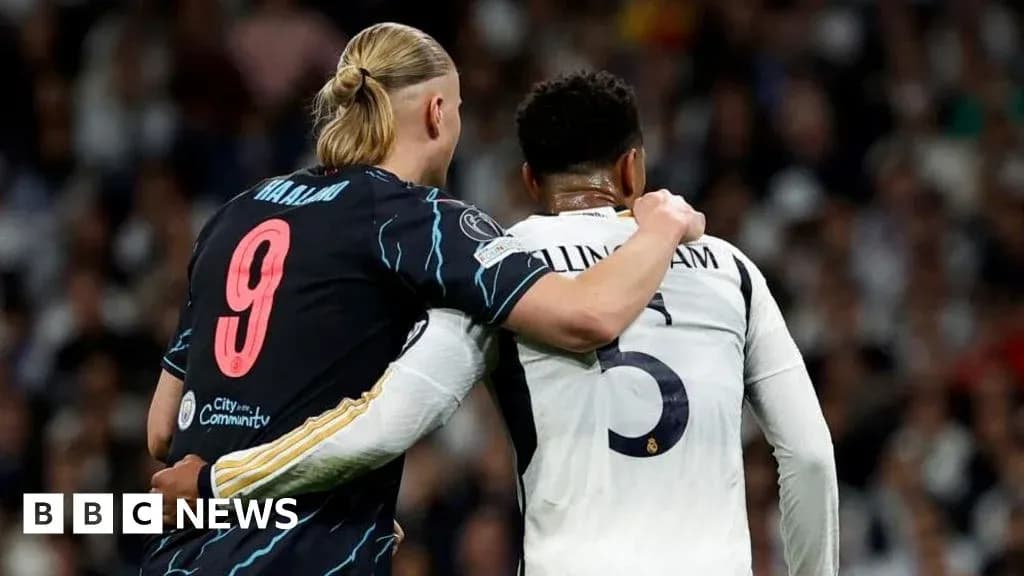
The Bellingham-Haaland Friendship: A New Era of Football Bonds
At first, it was just a quirk of a dressing room. Two teenagers at Borussia Dortmund, killing time, trading jokes and no-look passes. Now, the bond between Jude Bellingham and Erling Haaland has become something else entirely: a running saga that football fans replay, remix and romanticise on a loop.
Clips from their Dortmund days have roared back into life during this tournament, pushed to the surface by a social media culture that feeds on chemistry as much as it does on goals. The club itself spotted it early. BVB once rolled out a Valentine's Day video of the pair reading corny pick-up lines to each other, a tongue-in-cheek nod to a friendship that already felt like a double act.
Haaland, deadpan as ever, delivered one of the standout lines: "I'd like to take you to the movies but they don't let you bring in your own snacks." It was silly, harmless, perfectly timed. It also lit the fuse.
What started as an in-house gag has since morphed into a full-blown internet narrative. Some fans, inspired by the gay ice hockey romance novel Heated Rivalry, have playfully imagined a footballing equivalent for the duo – quickly christened "Cleated Rivalry". Both players are reportedly in relationships with women, yet that hasn't stopped supporters from leaning into the tension, the warmth, the way the two seem to orbit each other even when club colours pull them apart.
For a sport whose online culture often feeds off anger and division, the Bellingham–Haaland dynamic feels like a release valve. As one observer put it, so much of football on social media is "built around outrage and tribalism and turning every player into either heroes and villains". In that world, these clips do something rare: they re-humanise.
The numbers on their contracts say “multi-million pound assets”. The highlight reels say “ruthless, goal-obsessed machines”. Yet the off-pitch footage shows something different – two of the most competitive players on the planet who are also funny, affectionate and completely at ease showing they care about each other.
That, in itself, is striking. Two young male athletes, in an era still obsessed with performative toughness, happily displaying a warm, open friendship without feeling any need to manufacture hostility for the cameras. They can want to destroy each other on the pitch. They don’t have to pretend that means they can’t like or respect each other off it.
Part of the appeal lies in the contrast. Bellingham is polished, articulate, emotionally expressive. Haaland is more eccentric, dry, almost built in a lab to be meme-able. Together, they bring out sides of each other the public rarely sees when they’re locked into the role of elite athletes. The rehearsed media answers fall away; what’s left is two young men who, for all the fame and pressure, still look like they’re just enjoying the game and the company.
That sense of ease doesn’t come from nowhere. It’s rooted in backgrounds that feel, crucially, normal.
Haaland, as PR expert Mark Borkowski points out, comes from what he describes as a "pretty wholesome family". Borkowski draws a sharp line between past generations of stars and this one. In the 90s and 00s, he notes, "a lot of brands fell out with footballers because they were so badly behaved". This generation, he argues, is different – shaped by social media, hyper-visible, more attuned to how they present themselves and how they connect with people beyond their bubble. For Haaland and Bellingham, playing in Europe at club level has also broadened their horizons, made them more aware of different cultures and helped form who they are.
Bellingham’s own foundations are well documented, even if he keeps his private life largely out of view. He is widely reported to be in a relationship with US model Ashlyn Castro, but he does not talk about it. When he opens up, it is usually about family.
"Looking back, I think if I had a dad that didn't play football, I probably would never have got into football really, because there was nothing there for me that motivated me to play at the start," he told the England Football website. It’s a simple line, yet it says plenty about how he sees his path: not as destiny, but as something unlocked by the example at home.
His mother’s influence runs just as deep. "And then I have my mum who has taught me more about life outside football, but it merges quite well," he explained. The lessons she passed on – staying calm, staying cool, being a good example to his team-mates, trying to lead – are the same traits that now define him on the pitch. "I think a lot of that comes from my mum because she's a very good leader."
Haaland, speaking about his own relationship, once admitted with a smile: "I cook dinner… It's going to be a little embarrassing for her that I say this, but she likes video games." It’s a small detail, almost throwaway, yet it cuts through the mystique. The superstar striker, the phenomenon, is at home cooking and talking about his partner’s gaming habit. Ordinary, almost boring. Which is exactly why it resonates.
Put all of this together and the picture becomes clearer. The Bellingham–Haaland friendship works not just because of shared goals and shared dressing rooms, but because it sits at the crossroads of a new kind of football celebrity: hyper-exposed yet oddly more human, fiercely competitive yet unafraid to show softness, global icons who still sound like sons talking about their parents and young men laughing at bad jokes on Valentine’s Day.
In an era that constantly tries to turn footballers into brands, their bond keeps reminding everyone there are still real people behind the clips.