Belgium's Tactical Comeback Against Senegal: A 3-2 Extra-Time Victory
Belgium’s 3-2 extra‑time win over Senegal at Lumen Field in this World Cup Round of 32 tie unfolded as a tactical arm‑wrestle that gradually tilted towards Rudi Garcia’s side through structural tweaks and bench impact rather than pure dominance. The Belgians trailed 0-1 at half-time and 0-2 after 51 minutes, but used their control of possession (52%) and a heavy passing volume (699 passes, 602 accurate at 86%) to squeeze Senegal deeper, eventually turning territory into chances and, crucially, late goals.
Senegal, under Bouna Thiaw Pape, built their plan around a compact 4-3-3 and direct threat in transition. Despite having slightly less of the ball (48%), they matched Belgium for total shots (19-19) and shots on goal (5-5), and actually generated the higher xG at 3.54 compared to Belgium’s 1.8. That disparity underlines how Senegal repeatedly manufactured high‑quality looks, especially in the first hour, only to be undone by game state, fatigue and a more assertive Belgian reshaping after the break.
Team Formations
Belgium’s 4-2-3-1 started with Thibaut Courtois in goal, a back four of Timothy Castagne, Brandon Mechele, Arthur Theate and Maxim De Cuyper, a double pivot of Youri Tielemans and Hans Vanaken, and an attacking line of Leandro Trossard, Kevin De Bruyne, Jérémy Doku and Charles De Ketelaere. On paper this offered central control plus width from Doku and Trossard, but the first half showed structural issues: the double pivot was often outnumbered by Senegal’s three-man midfield, and with De Ketelaere as a high reference point, Belgium struggled to connect through the thirds.
Senegal’s 4-3-3, with Mory Diaw in goal, a back four of Krépin Diatta, Pathé Ismaël Ciss, Moussa Niakhaté and Ismail Jakobs, and a midfield of Habib Diarra, Idrissa Gana Gueye and Pape Gueye, was more vertical. Up front, Iliman Ndiaye, Ismaïla Sarr and Sadio Mané formed a fluid front three. Early on, Senegal used their midfield triangle to overload Belgium’s pivot, then spring quick attacks into the channels. That pattern produced the 25th‑minute opener: Habib Diarra’s strike capped a move where Senegal broke Belgian lines and attacked space before Belgium could settle.
Second Half Adjustments
The second half began with an aggressive Belgian adjustment. At 46', Romelu Lukaku (IN) came on for Charles De Ketelaere (OUT), giving Belgium a true penalty‑box focal point. Yet before the change could fully bite, Senegal struck again on 51 minutes: Ismaïla Sarr finished a move assisted by Moussa Niakhaté, a sequence consistent with Senegal’s direct, front‑loaded approach and their superior xG profile.
Garcia’s response was to tilt the midfield balance further in Belgium’s favour. On 56', Nicolas Raskin (IN) came on for Kevin De Bruyne (OUT) and Dodi Lukebakio (IN) for Jérémy Doku (OUT). While removing De Bruyne might seem counter‑intuitive, it signalled a shift towards higher running power and pressing intensity rather than pure creativity. Belgium sought to trap Senegal’s buildup, recycle possession quickly and keep the African side penned in. The passing statistics reflect this: Belgium’s 699 passes at 86% accuracy versus Senegal’s 639 at 84% show a sustained, patient circulation that increased as the game wore on.
At 63', Diego Moreira (IN) replaced Hans Vanaken (OUT), further freshening Belgium’s attacking midfield line. Even though Belgium only registered 5 shots on goal, their 19 total shots and 11 efforts inside the box show that the structure around Lukaku was now generating volume and proximity, even if the shot quality lagged behind Senegal’s.
Senegal's Tactical Changes
Senegal’s bench moves were initially like-for-like, preserving the 4-3-3. At 66', Lamine Camara (IN) came on for Pape Gueye (OUT), but Camara quickly went into the book at 67' — “Foul” — which limited his aggression in duels. Later, at 73', Pape Matar Sarr (IN) replaced Habib Diarra (OUT) and Ibrahim Mbaye (IN) came on for Iliman Ndiaye (OUT), subtly shifting the balance towards protecting the lead rather than chasing a third goal. This tilt towards conservatism, combined with Belgium’s mounting pressure, set the stage for the late turnaround.
Discipline also shaped the rhythm. At 64', Brandon Mechele (Belgium) received a yellow card — “Foul” — reflecting Belgium’s need to break up Senegalese transitions. Senegal’s single booking for Lamine Camara mirrored that physical edge in midfield, but overall Belgium committed more fouls (22 to 12), a by‑product of their higher pressing and frequent counter‑pressing after turnovers.
Key Moments
Belgium’s full‑back rotation was another key lever. At 78', Thomas Meunier (IN) replaced Maxim De Cuyper (OUT), adding more offensive thrust on the flank. Meunier’s advanced positioning paid off at 86', when Romelu Lukaku scored Belgium’s first, assisted by Meunier. The pattern — a wide overload, early delivery and a classic centre‑forward finish — was exactly what the earlier structure had lacked.
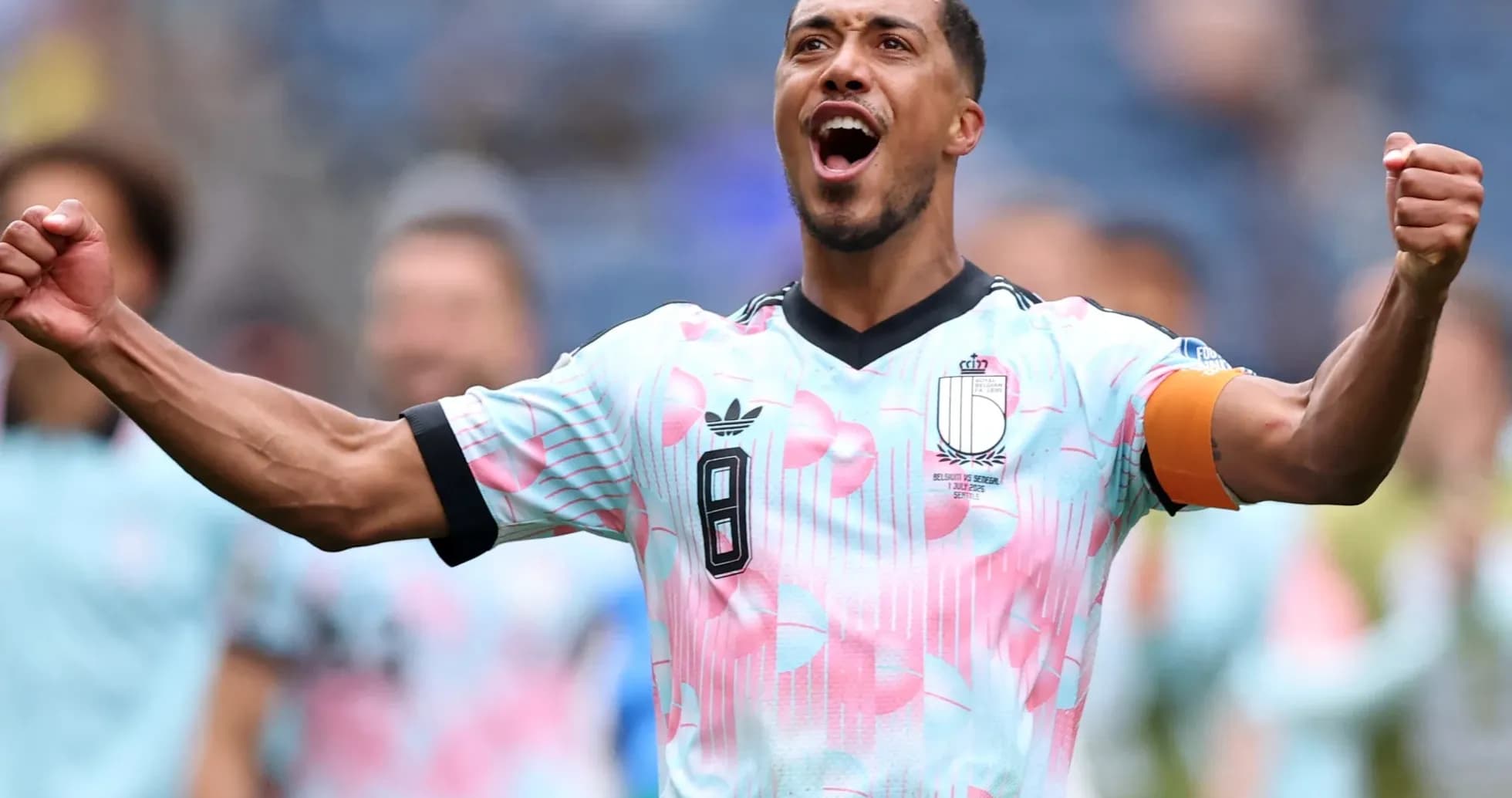
Momentum flipped entirely by 89'. Youri Tielemans, increasingly liberated to arrive higher as Senegal retreated, struck the 2-2 equaliser, assisted by Leandro Trossard. By then, Senegal’s defensive block was deeper, and their substitutions at 93' — El Hadji Malick Diouf (IN) for Ismail Jakobs (OUT) and Nicolas Jackson (IN) for Sadio Mané (OUT) — plus Idrissa Gana Gueye’s withdrawal at 96' for Bara Sapoko Ndiaye (IN) suggested an attempt to refresh legs rather than reassert control of the ball.
Extra Time
In extra time, Belgium continued to dictate tempo. Amadou Onana (IN) replaced Leandro Trossard (OUT) at 109', reinforcing central presence and giving Tielemans more freedom between the lines. The decisive moment came deep into added time: at 120+5', Tielemans converted a penalty to complete his brace. A VAR check at 120' had already confirmed the penalty, underlining how Belgium’s sustained pressure and box occupation eventually forced a decisive mistake from Senegal’s defence.
Between the posts, Thibaut Courtois (Belgium) made 3 saves, while Mory Diaw (Senegal) also recorded 3 saves. The goals prevented metric at -0.61 for both sides indicates that each goalkeeper conceded slightly more than the underlying shot quality would predict, consistent with a game where clinical finishing — especially from Tielemans and Sarr — trumped shot volume.
Statistically, the match profile is striking. Belgium’s 19 shots, 11 inside the box and 5 on target, coupled with 4 corners and a higher foul count, paint the picture of a team that gradually took territorial control and attacked in waves, even if their xG of 1.8 suggests they over‑performed their chances. Senegal, with the same 19 shots but fewer blocked attempts (3 versus Belgium’s 5) and a significantly higher xG of 3.54, can argue they crafted the clearer opportunities, particularly before fatigue and tactical retreat set in.
Yet knockout football rewards game management and bench impact. Belgium’s structural shift around Lukaku, the introduction of more direct wide threats and the late addition of Onana to stabilise midfield allowed them to translate possession and passing superiority into a dramatic 3-2 comeback, while Senegal’s gradual move from proactive pressing to reactive defending ultimately ceded the initiative at the worst possible time.