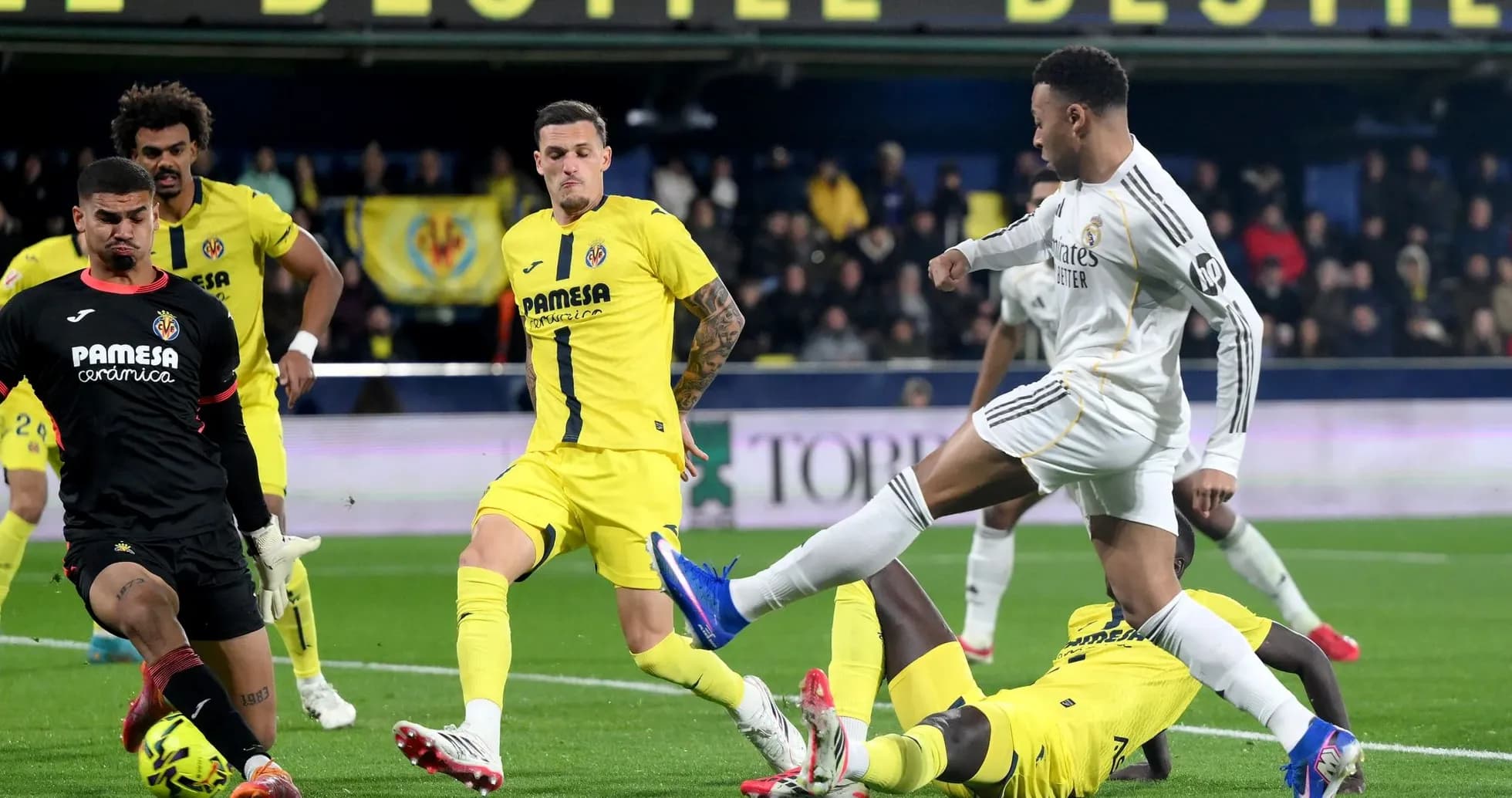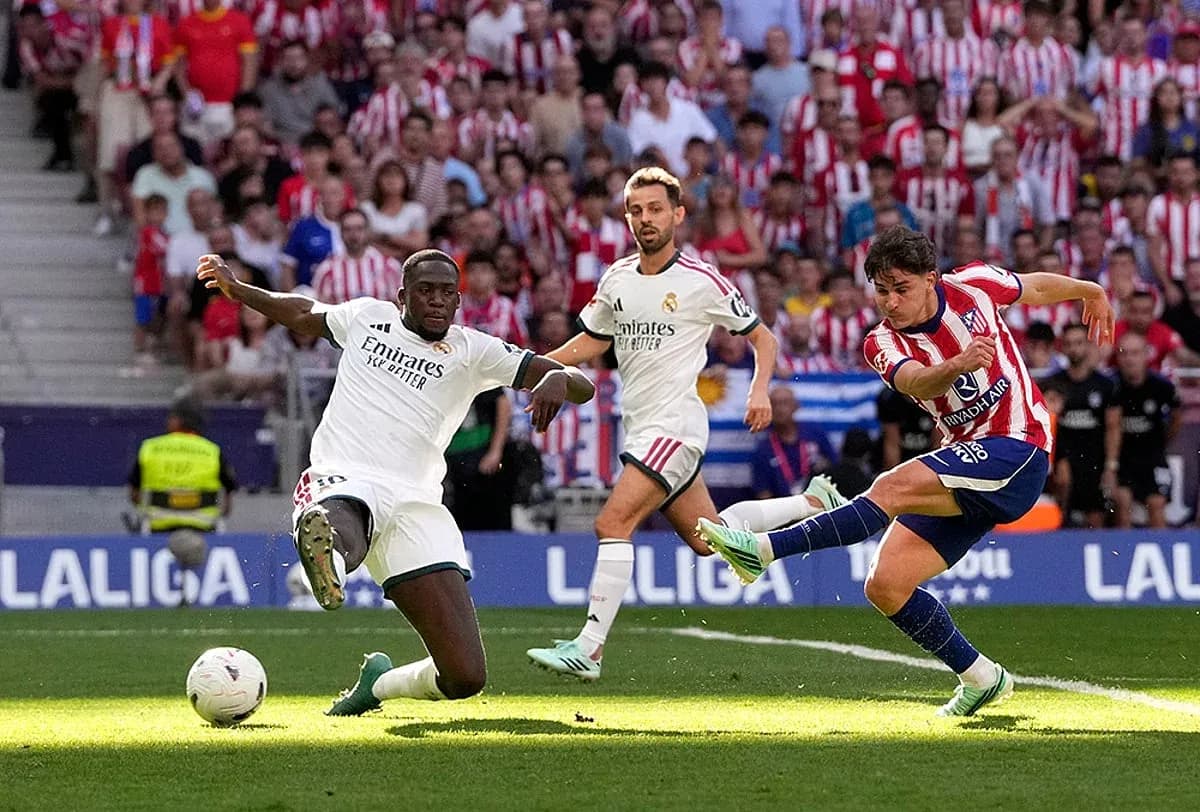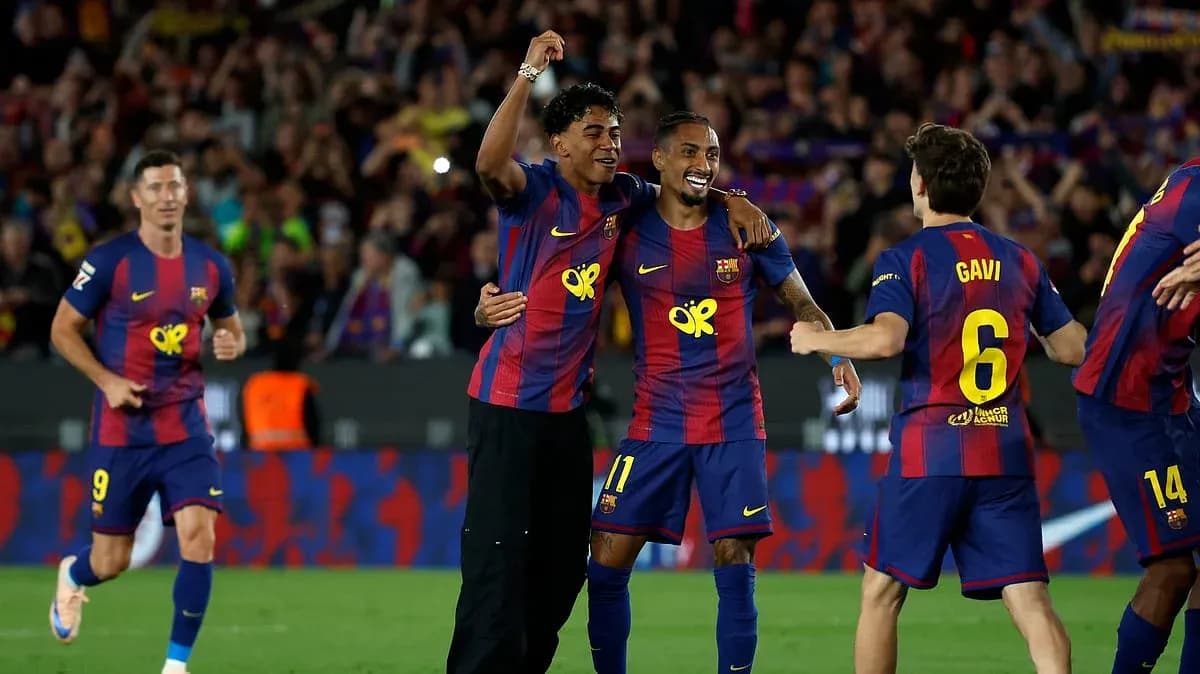
Barcelona Dominates Real Madrid in La Liga Clásico
On a warm La Liga night at Camp Nou, Barcelona did not just beat Real Madrid 2-0; they underlined why they sit as league leaders heading into this game, with 91 points and a towering goal difference of 60, while Madrid arrived as the chasers on 77 points and a goal difference of 37. In a season framed as a power shift, this clásico felt less like a coin flip and more like a tactical confirmation of Barcelona’s new identity under Hansi Flick.
I. The Big Picture – Seasonal DNA and the 90-minute story
Both managers mirrored each other on the board with a 4-2-3-1, but the two shapes told very different stories. Barcelona’s version was a high-possession, high-press machine built on structural dominance. Real Madrid’s was a compromise: a patched-together side forced into an improvised attacking structure by a brutal injury list.
Heading into this game, Barcelona’s numbers at home were outrageous: 18 wins from 18, 54 goals scored at home at an average of 3.0, and only 9 conceded at 0.5 per game. Overall, they had 91 goals for and 31 against in total, which matches the goal difference of 60 in the standings. Real Madrid, by contrast, were strong but human: on their travels they had 10 wins, 4 draws and 4 defeats, scoring 31 away goals at 1.7 per game and conceding 19 at 1.1.
The match itself followed that logic. Barcelona went 2-0 up by half-time and then managed the game with the confidence of a side that has failed to score in exactly 0 home matches this league campaign and kept 10 home clean sheets. Madrid, who had 7 away clean sheets heading into this fixture, simply could not impose their usual control.
II. Tactical Voids – Absences and discipline
The team sheets read like a medical report for Madrid. Kylian Mbappé, Eder Militao, A. Güler, F. Mendy, Rodrygo and F. Valverde were all listed as Missing Fixture, alongside D. Carvajal and D. Ceballos. That is an entire spine and a large chunk of their top-end creativity and transition threat removed. The irony is sharp: Mbappé, the league’s top scorer with 24 goals and 8 penalties scored but 1 missed, watched from the stands of the data, not the stadium.
Without them, Alvaro Arbeloa leaned on Vinicius Junior as the primary outlet, with J. Bellingham and Brahim Diaz trying to knit play behind G. Garcia. The back line, with T. Alexander-Arnold and F. Garcia as full-backs, had to be braver in possession than the context really allowed.
Barcelona had their own notable absentees. A. Christensen and Lamine Yamal were both Missing Fixture, stripping Flick of his most progressive centre-back and the league’s leading assist provider and one of its most devastating 1v1 threats. Yamal’s profile – 16 goals, 11 assists, 244 dribble attempts with 135 successful – usually stretches defences horizontally and vertically at once. Without him, Flick shifted the creative load onto Pedri, Dani Olmo and Fermín between the lines, with Marcus Rashford attacking the left half-space and Ferran Torres leading the line.
Disciplinary trends framed the risk. Barcelona’s yellow-card distribution this season leans heavily into the middle of games: 27.59% of their yellows between 46-60 minutes and 20.69% between 76-90, suggesting intensity spikes after half-time and late on. Madrid’s yellows peak between 61-75 minutes at 22.06%, with another 17.65% in the final quarter-hour. Both sides are combustible in the second half, but this clásico never descended into chaos; it was decided long before the card curves usually bite.
III. Key Matchups – Hunter vs Shield, Engine Room wars
Hunter vs Shield
In theory, the headline duel was Vinicius Junior against Barcelona’s defensive structure. Vinicius arrived with 15 goals and 5 assists, 189 dribble attempts with 86 successes, and 80 fouls drawn. But Barcelona’s collective shield was formidable: in total this campaign they concede only 0.9 goals per game, and at home just 0.5. With P. Cubarsi and E. Garcia anchoring the back line and J. Cancelo pushing aggressively from full-back, the plan was clear: compress the space around Vinicius, then punish the gaps left behind him.
At the other end, Ferran Torres embodied Barcelona’s new edge. With 16 league goals at 6.85 average rating, he is less a static No.9 and more a pressing trigger. Supported by Rashford and Olmo, Ferran repeatedly attacked the channel between A. Rudiger and F. Garcia, exploiting Madrid’s need to push Alexander-Arnold high. In a side averaging 3.0 home goals, his movement was the spearhead of a relentless wave.
Engine Room – Playmaker vs Enforcer
The midfield battle was where the match tilted decisively. Barcelona’s double pivot of Gavi and Pedri sat behind an advanced line of Rashford–Olmo–Fermín. Pedri’s season numbers – 1,908 passes with 59 key passes and 91% accuracy – illustrate how he dictates tempo under pressure. Gavi’s aggression and coverage allowed Olmo and Fermín to take higher starting positions between Madrid’s lines.
Madrid countered with E. Camavinga and A. Tchouameni as the double pivot, shielding Bellingham. On paper, this should have offered control. In practice, the absence of Valverde’s two-way running and Güler’s passing variety left Bellingham isolated. Camavinga and Tchouameni were forced to cover huge lateral distances, especially once Barcelona overloaded the half-spaces with Fermín (9 assists this season) and Olmo (8 assists). The result was a gradual but inexorable territorial squeeze.
IV. Statistical Prognosis – xG logic and defensive solidity
Even without explicit xG numbers, the season data sketches the expected shot quality story. Barcelona’s attack, with 91 goals in total and an average of 2.6 per game, combines volume with efficiency. They have not missed a penalty in the league this season (7 scored from 7, 100.00%), which further boosts their expected conversion once they reach the box. Madrid, while strong with 70 goals at 2.0 per game and a perfect 12 from 12 from the spot, are simply operating from a slightly lower attacking baseline and, in this fixture, without their primary finisher.
Defensively, the contrast is even clearer. Both sides concede 0.9 goals per game in total, but Barcelona’s home split of 0.5 against Madrid’s away 1.1 hints at where high-quality chances were more likely to emerge. In a match where Barcelona’s press pinned Madrid back and their midfield recycled possession with ruthless efficiency, the underlying xG pattern almost certainly mirrored the scoreboard: Barcelona generating multiple high-value chances, Madrid limited to sporadic breaks and low-probability shots.
Following this result, the narrative is not just of a clásico won, but of a season-long structure validated. Barcelona’s unbeaten home record remains intact, their attacking averages upheld, and their defensive numbers reinforced. Real Madrid, stripped of key weapons and forced into reactive football, were not disgraced, but they were outgunned by a side whose data profile and tactical cohesion now look every inch like champions.