Aston Villa's Struggles Continue After Defeat to Nottingham Forest
Tyrone Mings stayed down on the Villa Park turf at full-time, staring at the grass as the noise swirled around him. Nobody said this season would be easy. Right now, it looks anything but.
Aston Villa’s 2-1 defeat to Nottingham Forest was more than just another bad result. It was another crack in the aura that once made this place feel untouchable, another reminder that last season’s glory is fading quickly in the rear-view mirror.
Three defeats from their opening four league games. One point on the board. If Coventry beat Brighton on Sunday, Unai Emery’s side will be bottom of the Premier League.
For a team that finished fourth in May and lifted the Europa League, the comedown has been brutal.
Villa’s slow start, Forest’s big statement
This is the fourth time Villa have opened a top-flight campaign without a win in their first four matches, matching the slow starts of 1992-93, 1997-98 and 2025-26. It also mirrors last season’s early stumble, but there is a key difference: back then, the surge came. Right now, there is little sign of one.
Forest, by contrast, walked away with something they have not tasted here for three decades. A first win at Villa Park since 1994. It felt fully earned.
Oliver Glasner, unbeaten in all eight meetings with Emery, has had better nights in his career, but few as symbolic as this: a first victory as Forest boss, away at a side who humiliated his former club Crystal Palace in Europe last season.
The pattern of the game underlined just how far Villa have slipped.
Liam Delap, sharp and relentless all afternoon, needed just 45 seconds of the second half to slice Villa open, finishing clinically to put Forest ahead and set the tone. He had another goal ruled out and bullied a patched-up back line that never came to grips with him.
Villa did at least end their barren run in front of goal. After 372 Premier League minutes without scoring, Brazilian forward Alysson glanced in John McGinn’s cross with a deft header, his first goal in English football, and for a brief moment Villa Park woke up. The equaliser came against the run of play, but this ground has seen that story before: Villa level, Villa surge, Villa win.
Not this time.
Jesus strikes, Villa crumble
The pressure finally told at the other end. With two minutes left, Igor Jesus stole in front of Aaron Wan-Bissaka and finished, punishing a defence that had been creaking all afternoon. Forest had 22 shots and 32 touches in Villa’s box; the winner felt like a delayed inevitability rather than a late twist.
By then, Villa were hanging on with 10 men in all but name. Full-back Ian Maatsen had been forced off with an ankle injury after Emery had already used all five substitutes, leaving the hosts a player short and even more vulnerable.
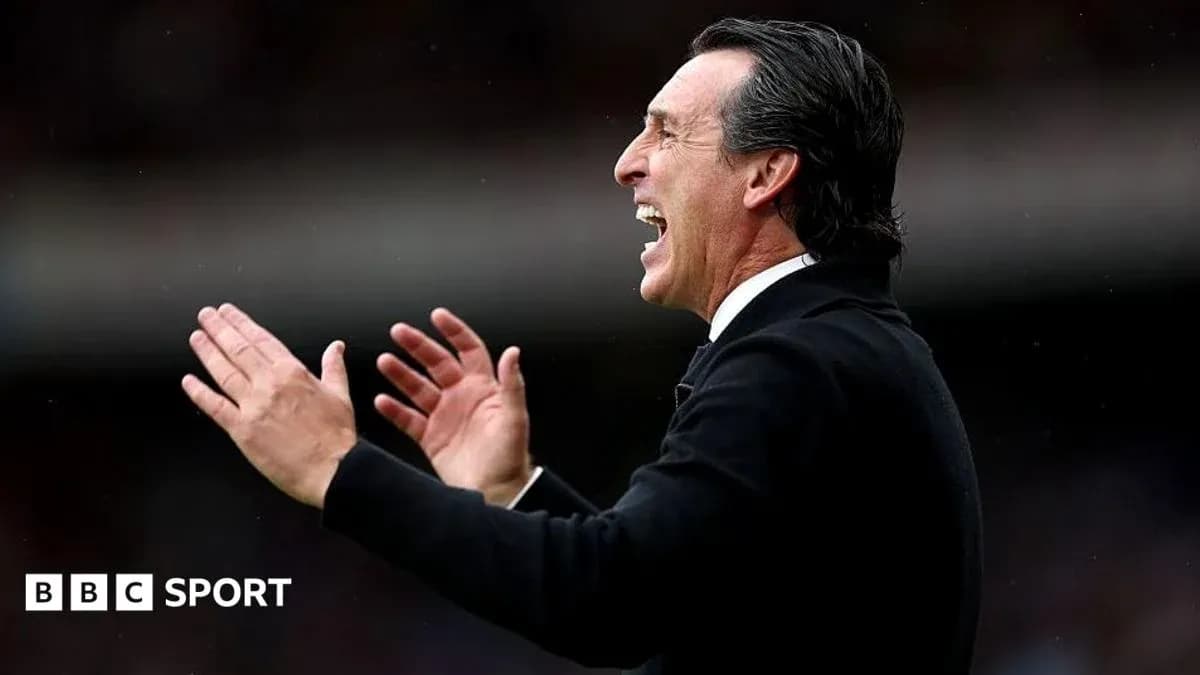
Emery did not hide his anger at the challenge from James McAtee that injured Maatsen.
“After watching it on TV, I think the VAR should call the referee because it's a clear tackle behind the player and, for me, it should be a red card,” he said. “Of course, they deserved it (the win), but the decision of the referee should be different.”
He pointed to Joao Gomes’ dismissal at Brighton as an example of decisions going against his side, but he refused to let that mask what he had just seen from his players.
“We played so so poor, and this is our work and our responsibility or my responsibility,” he added.
The concern for Villa is that Maatsen’s ankle problem could sideline him for a significant spell. That would thrust new signing Matteo Ruggeri into the spotlight sooner than planned, at a time when the rest of the defence is already stretched.
Pau Torres went off injured in the first half, further thinning a back line that has already lost stability. Taylor Harwood-Bellis, signed for £30m in the summer, was again left out of the squad entirely. With a Carabao Cup tie at Coventry on Wednesday and a trip to Tottenham to follow, that omission cannot last much longer.
Blunt attack, fragile home
Forest’s control of the contest made Villa’s attacking impotence even more stark. Emery’s side created almost nothing of substance. The one moment that summed up their afternoon came from a chaotic goalmouth scramble: Victor Lindelof somehow failed to score as Matz Sels, Murillo and the post combined to repel him.
Nicolas Jackson, booked early, looked on edge and Emery admitted he substituted the striker at half-time because he feared a second yellow. Tammy Abraham, a player the club were ready to move on in the summer, came on in his place but offered little threat.
Alysson’s goal briefly changed the mood, but the introductions of Johan Manzambi and Ibrahim Mbaye – a combined £98m worth of talent – could not tilt the game back Villa’s way. Both made their debuts as second-half substitutes and both watched the match slip away from them.
Alejandro Garnacho, on loan from Chelsea, did not get on the pitch at all. For the second time, Emery left him unused, unconvinced so far that the winger is ready to influence games.
Forest, by contrast, looked like a team with a clear plan and a sharp edge. Glasner’s side pressed, broke with purpose and refused to let Villa settle. They have now won at Villa Park in the league and in the Carabao Cup under their new manager’s guidance, adding to the 3-0 win Palace claimed here last August when Glasner was still in south London.
That result ended Villa’s 12-month unbeaten league run at home. Since then, the fortress has steadily crumbled.
Last season, they lost four of their final 15 home league games. Even the points they did collect often came with late drama – stoppage-time rescues against Leeds, late winners over Brighton and Sunderland. The 3-1 FA Cup defeat to Newcastle exposed vulnerabilities that have not gone away.
This season has started with a 1-0 home loss to champions Arsenal and now a deserved defeat to Forest. The trend is no longer a blip. It is a problem.
A shrinking fortress, a shrinking margin for error
There are mitigating factors. Emery has had to oversee a major rebuild after several key departures. The North Stand redevelopment has reduced capacity and left one end of the ground empty, dulling the atmosphere that once drove Villa on.
But the drop-off at home is now impossible to ignore.
This was the stadium where, when Villa equalised, the script almost always ended with them on top. Last spring they smashed Forest in the Europa League semi-final on their way to lifting the trophy. They put four past Liverpool here to clinch a Champions League place. When the stakes rose, so did Villa Park.
On Saturday, the equaliser brought no surge, no onslaught, no sense of inevitability. Instead, Villa lost their shape, their composure and, eventually, the game.
“I don't know why,” Emery admitted. “I want to see the match again and to understand why we lost our shape.”
That is the most worrying part for Villa. Their manager has been the man with the answers since he walked through the door, solving problems, steadying nerves, pushing the club into territory it had not seen for a generation.
Now, after three defeats in four, injuries piling up and the home aura fading, he is the one searching.
The season is still young. The table, at this stage, is more warning light than verdict. But with Coventry away in the cup and Tottenham looming in the league, the question hangs heavy over Villa Park: how long can a team built on resilience and control afford to look this fragile?