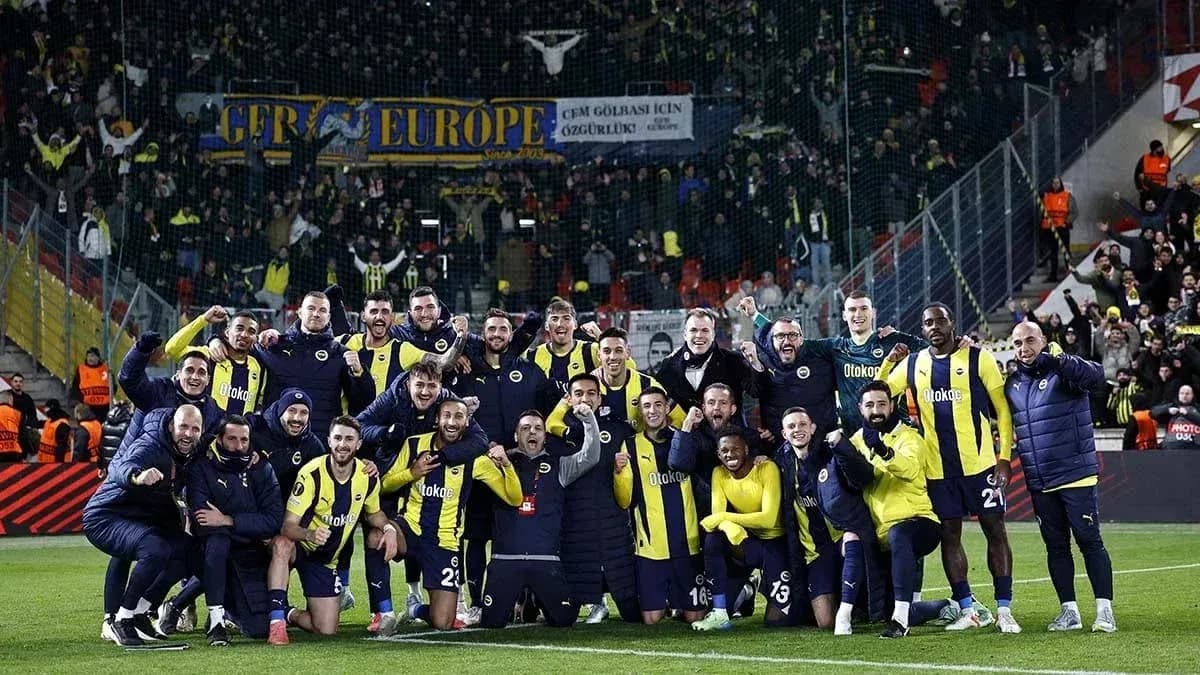
Aston Villa vs Fenerbahçe: Champions League Showdown
Under the lights of Villa Park in Birmingham on 14 October 2026, Aston Villa step into the UEFA Champions League league phase still searching for their first footprint in this campaign, while Fenerbahçe arrive as a side already hardened by European rhythm. For Villa, this is about announcing themselves on the continent in front of a demanding home crowd; for Fenerbahçe, it is about proving that their recent European consistency can travel and that their league-phase momentum is no accident.
Season Context
Aston Villa enter this league phase with a blank slate: 0 matches played, 0 goals scored, 0 conceded and 0 points so far in the Champions League table. Listed 3rd in the League Phase section of the standings, they have no statistical profile yet in this competition, which makes this home opener both a launchpad and a test of how quickly a largely Premier League-built squad can adapt to the nuances of European nights.
Fenerbahçe sit 11th in the League Phase standings, also officially on 0 games, 0 goals and 0 points in the core table, but with a clear label of ambition: they are marked in the “Play Offs” zone. Their underlying European sample from the predictions dataset shows they have already played 6 Champions League fixtures, and that hidden body of work underpins the expectation that they are not just participants but genuine contenders to extend their continental journey beyond the league phase.
Form & Momentum
Aston Villa’s form line in the standings is still empty, a reminder that this is their first real step into this Champions League campaign. With 0 games, 0 goals scored and 0 conceded, there is no numerical trend to lean on yet; momentum here is more emotional than statistical, built on the energy of Villa Park and the hunger of a squad filled with experienced names but untested as a unit at this level.
Fenerbahçe, by contrast, arrive with a clearly defined rhythm. Their Champions League run in the predictions dataset reads “WDWWDW”, an unbeaten stretch across 6 matches that has produced 8 goals scored and only 3 conceded (1.3 scored and 0.5 conceded per game). That balance between steady attacking output and tight defending makes them look robust rather than reckless, and it explains why they have already collected 4 wins and 2 draws without a single defeat in that sample.
Head-to-Head Patterns
The recent history between these two clubs tilts subtly towards Aston Villa, even if the sample is small. The standout meeting came on 22 January 2026, when Aston Villa travelled to Istanbul and emerged with a 1-0 away win at Chobani Stadium in the UEFA Europa League (0-1, UEFA Europa League, season 2025, January 2026). In that match, Fenerbahçe were the home side and failed to break down Villa, while the English club showed they could manage an away European tie with control and discipline.
Beyond that single competitive clash in the data, the model’s head-to-head comparison leans heavily towards Aston Villa, reflecting that win as a key reference point. It paints a picture of a matchup where Villa have already shown they can handle Fenerbahçe’s intensity, especially when asked to defend a narrow lead under pressure. For Fenerbahçe, this fixture doubles as a chance for tactical revenge and a benchmark of how much they have grown since that Europa League setback.
Tactical Preview
With no recorded Champions League matches yet this year, Aston Villa’s tactical identity in this competition is more about personnel than patterns. The squad list suggests a side capable of mixing Premier League physicality with technical quality: Pau Torres and Tyrone Mings offer left-sided composure and aerial strength at the back, while full-backs like M. Cash and A. Wan-Bissaka hint at a blend of overlapping thrust and one‑v‑one defensive solidity. In midfield, the presence of L. Goretzka, B. Kamara, João Gomes and J. McGinn points to a powerful, box‑to‑box engine room able to press and carry the ball through lines, while wide and attacking options such as L. Bailey, A. Garnacho, N. Jackson and T. Abraham give Villa multiple ways to stretch the pitch and attack crosses. With no goals for or against in the standings, their Champions League tactical story is about potential rather than proven output.
Fenerbahçe, by contrast, bring a clearly defined structure into Villa Park. Their most-used shape in Europe is a 4-2-3-1, deployed in all 6 of their recent Champions League fixtures, and it has delivered both stability and threat (8 goals scored and just 3 conceded in those 6 games). The double pivot can be anchored by the work rate and reading of the game of N. Kanté and M. Guendouzi, providing a screen that explains their low concession rate (0.5 goals per game). Ahead of them, creativity and end product come from a high-calibre line of attackers: Talisca has been one of the standout performers in this Champions League run with 4 goals in 6 appearances, while M. Greenwood has added 2 goals and 1 assist across his 6 games, and K. Aktürkoğlu has supplied 2 assists and high involvement in build-up and defensive work. Up front, a focal striker such as R. Lukaku or V. Muriqi can give them a direct option to complement the technical interplay behind. Clean sheets in half of their recent European matches (3 in 6) underline how well this structure functions on both sides of the ball.
This sets up a fascinating tactical contrast: Aston Villa’s deep, versatile squad trying to imprint a style at home in Europe, against a Fenerbahçe side whose 4-2-3-1 has already been stress-tested and proven effective against continental opposition.
Statistical Snapshot
- Competition: UEFA Champions League, season 2026 — 14 October 2026.
- Venue: Villa Park, Birmingham.
- Prediction: Win or draw for Aston Villa — Combo Double chance : Aston Villa or draw and -2.5 goals.
- Win Probabilities: Home 50% / Draw 50% / Away 0%.
- Model: Aston Villa 0 — Fenerbahçe 0.
Betting Verdict
The analytical model strongly leans towards Aston Villa avoiding defeat, with the prediction explicitly favouring a double chance on the home side or draw and a low-scoring contest under 2.5 total goals. That conservative goals angle is supported by Fenerbahçe’s recent European defensive record (only 3 conceded in 6 games) and by the fact that Villa’s Champions League campaign is just beginning, often a recipe for a cautious first home outing. At the same time, Aston Villa’s recent head-to-head success in Istanbul and Fenerbahçe’s solid but not explosive scoring rate (1.3 goals per game in that 6‑match sample) both reinforce the idea of a tight, tactical battle rather than a shootout. Taken together, the data-backed case points towards backing Aston Villa or draw in combination with a low goal line as the most logical pre‑match position.