Argentina's World Cup Celebration Sparks Controversy
Argentina’s World Cup joy may come at a cost.
Fresh from a gripping 2-1 semi-final win over England in Atlanta that sent the world champions into the 2026 World Cup final, Argentina now face possible sanctions from FIFA after a politically charged celebration on the pitch.
Messi turns the tide, then controversy erupts
England had one foot in the final when Anthony Gordon struck in the 55th minute, a crisp finish that briefly silenced a largely pro-Argentina crowd and put the Three Lions in control.
Then Lionel Messi took over.
The captain once again bent the game to his will, threading the pass for Enzo Fernandez to level and then supplying Lautaro Martinez for the winner. In a matter of minutes, Argentina flipped the narrative, riding Messi’s vision and their trademark relentlessness into yet another World Cup final.
The drama should have ended with the final whistle. It didn’t.
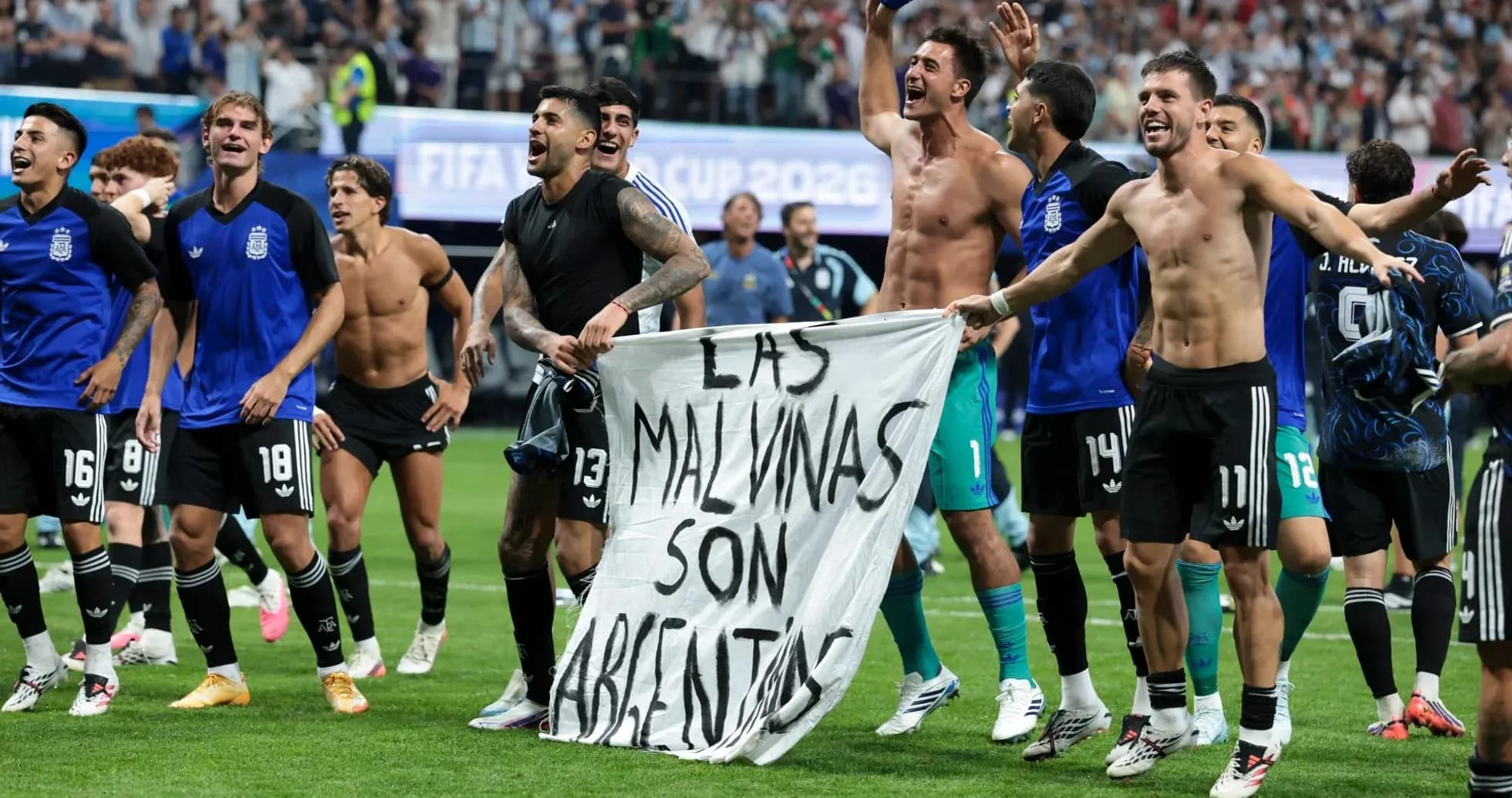
As the celebrations spilled across the turf in Atlanta, Argentina’s players unfurled a banner reading: “Las Malvinas son Argentinas” – “The Falklands are Argentine.”
A message far beyond football
Those four words carry a heavy historical weight. They reference the 1982 conflict between Britain and Argentina over the Falkland Islands, a war that cost the lives of 255 British servicemen and 649 Argentinian personnel.
On a night that already had deep sporting resonance – Argentina knocking out England on the biggest stage of all – the banner dragged decades of geopolitical tension into the heart of FIFA’s showpiece event.
For FIFA, that is precisely the line its regulations are designed to guard against. The governing body’s rules explicitly prohibit political statements at matches it organises, whether on shirts, banners, or any other visible display on the field of play or in its immediate surroundings.
The banner in Atlanta falls squarely into that territory. Sanctions now loom.
FIFA’s rulebook meets Argentina’s passion
FIFA has not yet announced the scale or nature of any punishment, but its disciplinary framework allows for fines and other measures when teams or federations breach the ban on political messaging.
The incident leaves world football’s most powerful organisation with a familiar dilemma: how to police political neutrality in a sport that so often becomes a vessel for national identity and historical memory.
Argentina, powered again by Messi’s brilliance, will chase another star on their crest in the final. Yet as they prepare for one more game on the field, a different kind of battle is forming off it – one that will test how far FIFA is willing to go when football’s emotional fault lines collide with its own rules.