Argentina Overcomes England: Tactical Analysis of the 4-4-2 vs 4-2-3-1 Matchup
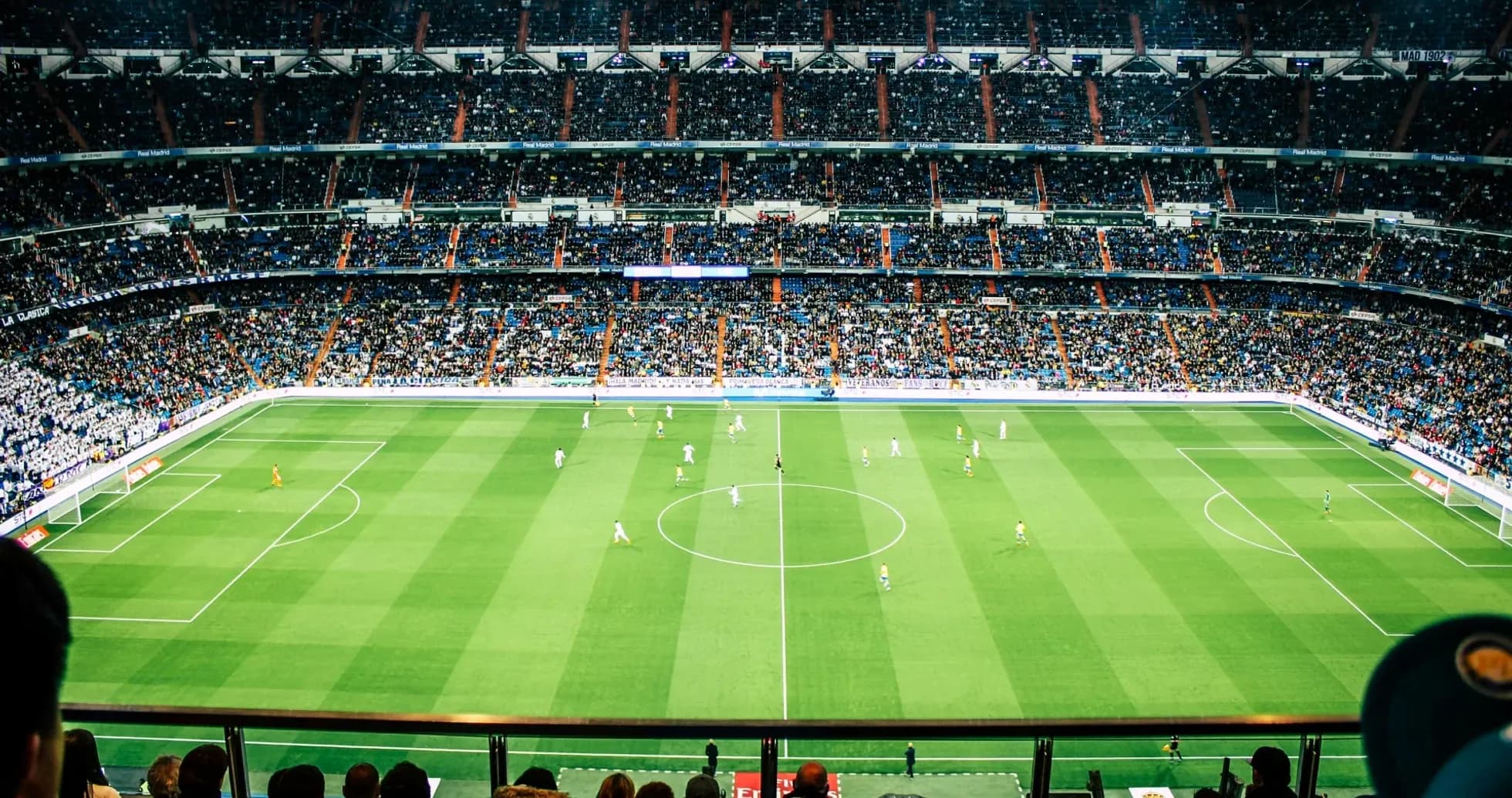
England’s 4-2-3-1 under T. Tuchel was built to compress space centrally and spring quickly into the channels, but over 90 minutes at Mercedes-Benz Stadium it was Argentina’s 4-4-2 under L. Scaloni that imposed territorial and technical control. The statistical profile is stark: Argentina held 64% possession, attempted 590 passes with 537 accurate (91%), and generated 15 total shots to England’s 5. England, by contrast, completed 272 of 324 passes (84%) and were forced into a reactive, low-block game that could not be sustained once the Argentine bench was fully activated.
Structurally, England’s back four of R. James, J. Stones, M. Guéhi and D. Spence sat relatively narrow, with D. Rice and E. Anderson as a double pivot screening central zones. Ahead of them, M. Rogers and J. Bellingham operated as the advanced midfielders, with A. Gordon and H. Kane tasked with leading transitions. The plan was clear: concede the ball, protect the middle, and look to exploit the space behind Argentina’s full-backs on the break. England’s 36% possession and limited shot volume (5 total, 2 on goal, 2 inside the box) show how rarely they could string phases together, but also how focused they were on creating only high-value moments.
Opening Goal
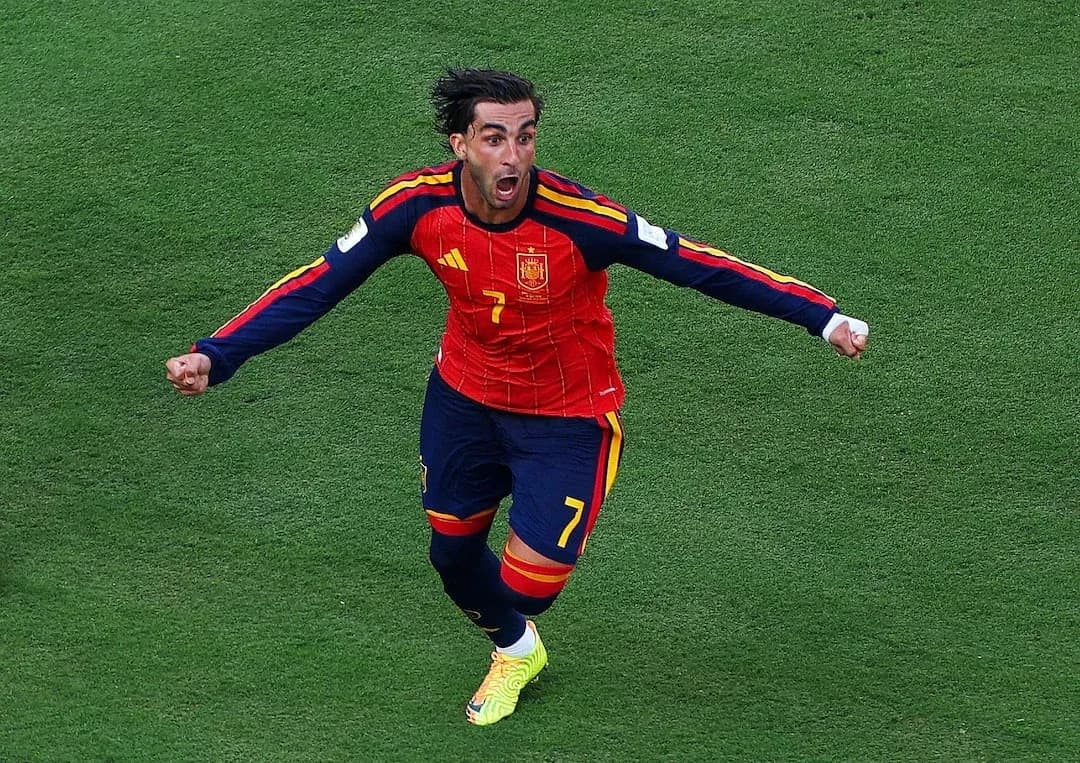
The opening goal on 55 minutes encapsulated England’s best attacking idea. A. Gordon drifted into a half-space channel as England broke Argentina’s first line, and M. Rogers found him with the decisive pass. Gordon’s finish for 1-0 rewarded a pattern England had been searching for: using Bellingham and Rogers between the lines to draw Argentina’s midfield, then releasing a wide forward into space. Given England’s expected goals of 0.53 from just 5 attempts, their efficiency in turning a low shot volume into a lead was notable, but it also underlined how thin their attacking margin for error was.
Argentina's Structure
Argentina’s base 4-4-2 featured E. Martínez in goal, a back four of N. Molina, C. Romero, Lisandro Martínez and N. Tagliafico, with a midfield band of G. Simeone, L. Paredes, A. Mac Allister and E. Fernández behind the front pair of L. Messi and J. Álvarez. On the ball, this often morphed into a 2-3-5, with one full-back advancing and the near-side midfielder tucking in. Their 7 shots inside the box and 15 overall attempts reflect a sustained ability to pin England deep and circulate until a gap appeared.
Substitutions and Tactical Changes
The turning point was Scaloni’s aggressive substitution wave from 64 minutes onward. First, at 64', Nicolás González (IN) came on for Leandro Paredes (OUT), adding verticality and direct running from wide areas. Then, in a triple change on 72', Gonzalo Montiel (IN) for Nahuel Molina (OUT), Rodrigo De Paul (IN) for Giuliano Simeone (OUT), and Nicolás Otamendi (IN) for Lisandro Martínez (OUT) collectively rebalanced the side. De Paul’s introduction in particular sharpened Argentina’s tempo and passing angles around England’s block, allowing Messi to receive more frequently between the lines rather than dropping excessively deep.
Tuchel’s response was more conservative. At 72', Ezri Konsa (IN) replaced Anthony Gordon (OUT), effectively sacrificing one of England’s key transition outlets and nudging the team into an even more defensive posture. Later, at 82', Dan Burn (IN) for Reece James (OUT) and Nico O’Reilly (IN) for Declan Rice (OUT) further altered the defensive structure, but without adding significant ball progression. The late double change at 90', with Ivan Toney (IN) for John Stones (OUT) and Marcus Rashford (IN) for Djed Spence (OUT), came after Argentina had already overturned the scoreline and felt more like a desperate reshuffle than a planned attacking adjustment.
Goalkeeping Performances
In goal, J. Pickford (England) was central to keeping the game close for as long as it was. He made 3 saves and, according to the data, prevented 0.02 goals, reflecting that while Argentina’s xG of 1.84 was substantial, the finishing quality and defensive pressure meant he was not constantly facing clear one-on-ones. Still, his interventions underlined England’s dependence on last-line resilience. At the other end, E. Martínez (Argentina) faced only 2 shots on goal, making 1 save and recording 0.02 goals prevented. His relative quietness underscores how effectively Argentina controlled territory and limited England’s ability to test him after taking the lead.
Fouls and Discipline
Defensively, England committed 11 fouls and collected 1 yellow card, with Elliot Anderson booked for “Foul” at 37'. Their shape was compact and disciplined for long stretches, but the cumulative pressure of defending deep against a technically superior side told in the final quarter-hour. Argentina, who committed 15 fouls and received 3 yellow cards (Lisandro Martínez and Cristian Romero both for “Foul”, Rodrigo De Paul for “Argument”), were more aggressive in counter-pressing and duels, especially after going behind. That edge in regaining the ball high helped sustain their attacks and keep England pinned.
Set-Pieces and Metrics
Set-pieces and territorial metrics further highlight Argentina’s ascendancy: 6 corner kicks to England’s 1, and 3 offsides to England’s 1, suggesting a team consistently playing on the front foot and probing the last line. England’s single corner and modest offside count are consistent with a side attacking sparingly and mostly from deeper starting positions.
In the end, the tactical story is of a semi-final where a compact, transition-oriented England game plan produced an early second-half breakthrough but could not withstand Argentina’s structural superiority, bench impact, and sustained territorial pressure. Argentina’s 4-4-2, enriched by De Paul and González, gradually overwhelmed England’s 4-2-3-1, and the numbers – from possession and passing accuracy to xG and shots – align neatly with a 2-1 comeback that felt, tactically, like the logical outcome of the match’s evolving dynamics.