
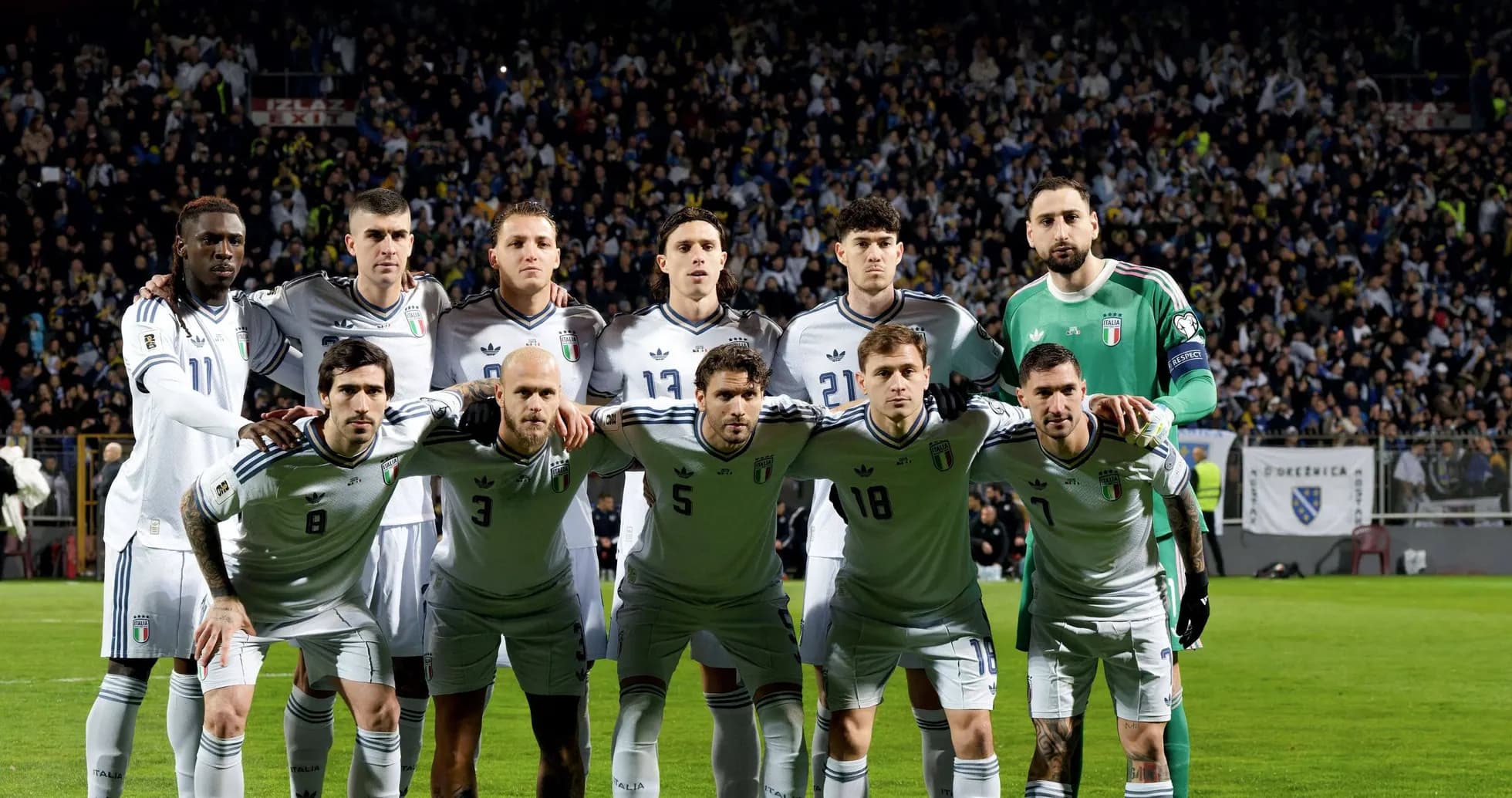
Andrea Pirlo Set to Lead Italian National Team in Major Rebuild
Andrea Pirlo stands on the brink of the biggest job in Italian football, and perhaps the most delicate reconstruction the Azzurri have faced in decades.
According to La Gazzetta dello Sport, the current United (UAE) coach is now very close to taking charge of the national team, after Paolo Maldini and Leonardo moved decisively in his direction once Pep Guardiola turned down the role. When Guardiola stepped away, the search didn’t reset. It sharpened. The spotlight fell straight on Pirlo.
A new Italy, a younger bench
Inside the Italian federation, the profile is clear: a younger coach, steeped in modern football, willing to listen, share ideas and work within a broader technical structure. That template has pushed Pirlo ahead of heavyweight rivals such as Antonio Conte and Roberto Mancini.
The choice is not just about age. It is about style, openness, and the readiness to embrace a long-term rebuild rather than chase a quick fix. Pirlo fits that brief. The federation wants a coach who can grow with a project, not simply manage a cycle.
Doubts about personality, a powerful safety net
Pirlo’s critics have circled one issue: his perceived lack of a forceful, domineering personality in the dressing room. And the Italy dressing room is no gentle environment. It is layered with egos, history and expectation. Managing it is often as complex as managing a tactical system.
That is where Maldini and Leonardo step in.
Both have been handed significant power by Giovanni Malagò, president of the Italian Olympic Committee, who has entrusted them with a large slice of the national team’s future direction. They are prepared to shoulder the political and hierarchical battles around the squad, ready to impose their authority on anyone who might undermine Pirlo’s position.
In other words, Pirlo would not walk into Coverciano alone. He would arrive backed by two of the most respected figures in Italian football, men who understand exactly how to protect a coach and shape an environment.
Advanced talks and a “revolutionary” project
Negotiations with Pirlo have already reached advanced stages, according to the reports. The former midfield maestro is described as eager — desperate, even — to dive into a project of a “revolutionary” nature as soon as he is officially chosen.
This is not just about choosing line-ups and training sessions. The vision stretches far beyond the senior squad.
Pirlo is expected to sign a contract running until the 2030 World Cup, a horizon that signals patience and ambition. Maldini, in particular, is said to see this as the start of a vast, structural overhaul. The idea is to rebuild Italian football from the bottom up, beginning with the youth sectors at the ages of 12 and 13.
That kind of work is painstaking. The estimates are stark: eight to ten years to truly reshape the system. It means rethinking how players are identified, educated and developed long before they pull on the senior shirt. It means accepting that the next great Italy might be forged not for tomorrow, but for the next decade.
A decisive weekend in Rome
All eyes now turn to the federation’s schedule. Everyone at the Italian Football Federation is bracing for a weekend heavy with work and quiet negotiations. The federal council meets on Tuesday. Formally, it does not appoint the coach; the statutes limit its role to a consultative one.
Yet timing matters. That meeting could become the stage for the official announcement, the moment Pirlo steps from candidate to commissario tecnico in waiting.
If that happens, the weekend will not just be preparation. It will be the last act before a new era is unveiled.
Money, power and a calculated gamble
On the financial front, the numbers underline the federation’s strategy. Estimates suggest Mancini would have accepted around two million euros per year. Pirlo’s salary is not expected to exceed 1.5 million euros per season.
The gap is not insignificant. It reflects both market realities and the bet the federation is placing: a younger coach, a smaller wage, but a broader, longer project in which the real investment lies in structure and support staff rather than just the man on the touchline.
For Pirlo, it is a chance to redefine his coaching career on the biggest stage his country can offer. For Italy, it is a calculated risk: entrusting a generational rebuild to a coach still writing the early chapters of his managerial story.
If the deal is confirmed next week, the question will no longer be whether Pirlo is ready for Italy — but whether Italy is ready to follow him through ten years of hard, uncomfortable change.




