
Andoni Iraola's Liverpool Rebuild: A Clear Vision
Andoni Iraola did not bother with illusions.
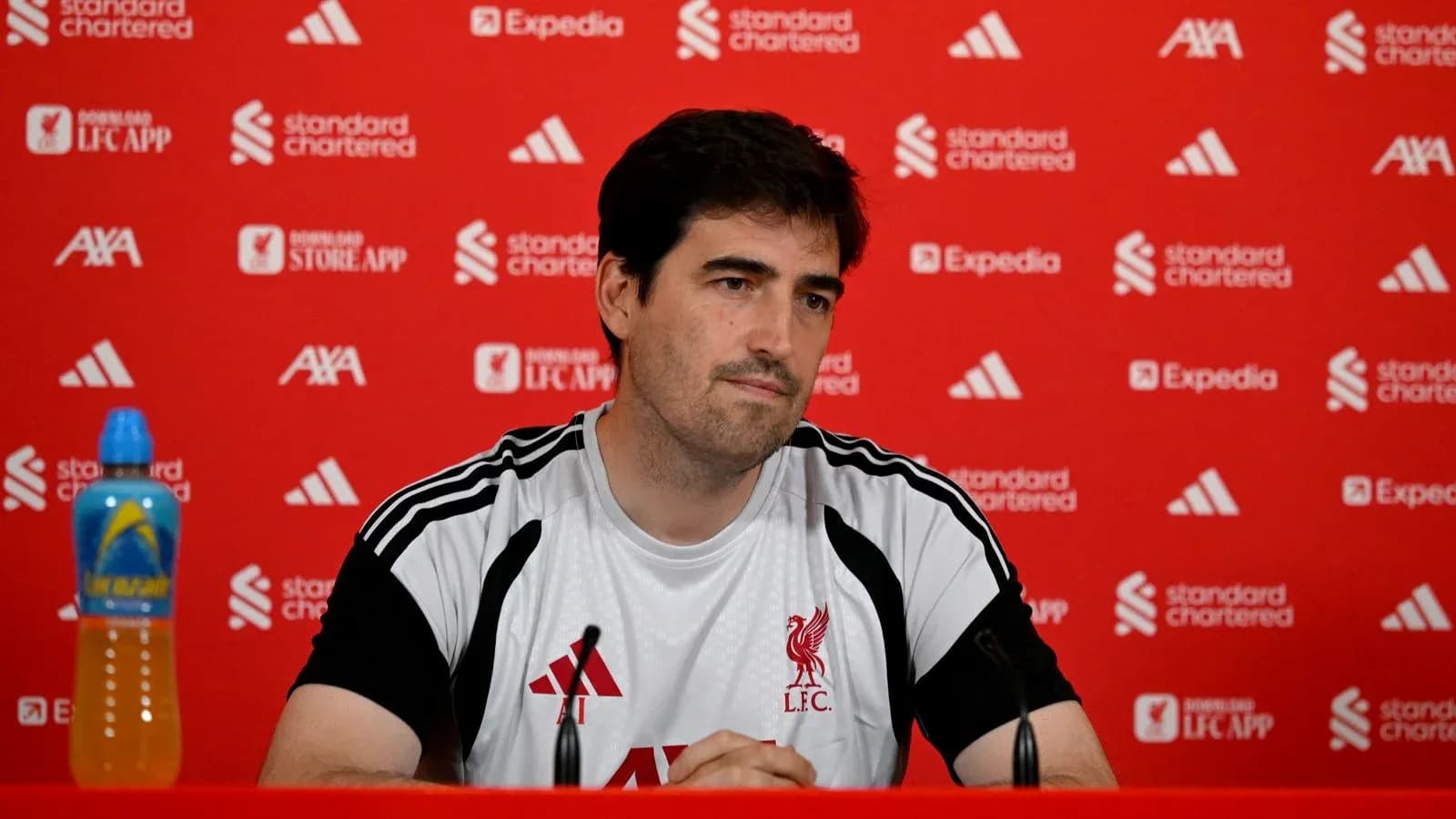
Sitting in front of the cameras at Anfield for the first time as Liverpool head coach, the Basque was blunt about the size of the rebuild and the speed at which it has to happen.
“We have signed two players already but we need more players. We know this. The club is working on this,” he said, referring to Jeremy Jacquet and Victor Munoz. They are the first pieces, not the finished picture.
As opening statements go, it was a clear one: Liverpool are short, and time is even shorter.
A bigger stage, a heavier schedule
Iraola arrives with a growing reputation after dragging Bournemouth into sixth place in the Premier League last season, finishing just one spot behind Liverpool. That achievement earned him the Anfield job; it also framed the contrast he now faces.
At Bournemouth, his side played 40 matches in all competitions. At Liverpool, that number is a starting point, not a ceiling.
“It is a big challenge for me. It is a big change,” he admitted. “Here, most weeks we will not have a clean week, we will have a midweek game, but it is a great opportunity.
“There is a chance to use more players. It is impossible to deal with this kind of season with 15 players. You need the squad.”
That word kept returning: squad. Not just a starting XI, not just a bench, but layers of options to survive the grind of a Liverpool season that traditionally bites hardest when the nights are longest.
“We have to get ready because this kind of hard season, injuries and situations will happen. We have to get ready in squad depth to deal with the demands of the competition. December and January. Those months are hard.”
He knows exactly where the calendar hurts.
Goals gone, leaders missing
The scale of the task is stark. Liverpool begin this new era without Hugo Ekitike, the only player to reach double figures in the Premier League for them last season. Mohamed Salah, the club’s all-time leading Premier League goalscorer, has gone too.
Those are not just names. They are goals, presence, reference points for a dressing room that has already lost several senior figures.
“We have to accept the difficult situation right now. A lot of senior players leaving, very important players. Also, some of the very important players are injured,” Iraola said.
“Ekitike, [Conor] Bradley and [Geovanni] Leoni. They are long-term injuries. In terms of improving the team, we have to consider replacing important players who were making important numbers and the players who will be missing time.
“The three players, I love them. They are long-term solutions but we have to try and find solutions.”
So the picture is clear. The coach likes what he has, but he does not have enough of it, and some of what he does have is unavailable for months. Recruitment is not a luxury; it is survival.
Iraola’s way, not a copy
If there was any doubt about what Liverpool have hired, Iraola removed it quickly. This will be his team, not a continuation of Arne Slot’s.
“I will try to be the same coach. I understand I will make mistakes and say things I shouldn’t,” he said, with a hint of steel under the humility.
“You have to be yourself and I will try to be. I cannot say everything here to you; some have to be private. But with the players, who have big personalities and egos, I will try not to change.”
Liverpool have turned to him for a reason: the aggressive, front-foot football that lit up Bournemouth. He does not intend to dilute that now the badge is heavier.
He has already started the process of reshaping, not tearing down.
“I talked to players, I talked to the staff about the things that are working well, the things we can do differently. I wouldn’t say better, I would say differently.”
That distinction matters. This is not a revolution for its own sake. It is a recalibration, built on what he calls “core principles” that he wants everyone inside the club to understand.
Living in the opposition half
Ask Iraola what his Liverpool should look like, and the answer comes quickly: a team that suffocates you high up the pitch.
“After, we will have a lot of questions about facing low blocks,” he said. “I prefer to face low blocks in terms of the way we will be in control of the games, probably, we will concede less chances, spend a lot of time in the opposition half.
“Some teams give you that situation straight away, that is fine. Other teams do not give you that situation straightaway because they will try to control the game, play in your half.
“I am looking forward to spending as much time inside the opposition half – with the ball and without the ball – because I feel we are closer to scoring from that position.”
That is the blueprint: push the line up, keep the ball high, hunt without it. It is a plan that demands energy, depth, and total buy-in. Hence the insistence on more signings and a broader squad. The style and the recruitment are not separate conversations; they are the same one.
Winning back Anfield
Behind all of this sits another challenge: reconnecting with a fanbase that grew restless under Slot’s more measured approach.
“I would like to give them a team they can feel proud of. Football, especially in Liverpool, is about connecting with the people,” Iraola said.
“I have been on the other side at Anfield, you can feel the stadium. I would love to have this every game we play. It has to come from us on the pitch.
“We have to be a team that works hard, intense and aggressive. So, everyone can be identified and feel comfortable supporting this team.”
That is the deal he is offering: intensity for identity, aggression for connection. He will bring his football, his personality, his demands. The club must bring him players. The crowd must bring the noise.
The rebuild has started with honesty. What comes next will show whether Liverpool can match the ambition of the coach they have just entrusted with their future.




